After living in Japan for many years, I've had my fair share of experiences dealing with immigration procedures. From renewing my residence card to preparing employment documents, I've learned that even a seemingly simple application can involve quite a bit of paperwork. Recently, I decided to apply for a change of residence status from a work visa to a dependent visa due to a change in my personal circumstances.
For foreigners who are married and living in Japan, changing to a dependent visa can be an option, especially if you no longer want your residence status to be based on your own employment. However, while a dependent visa offers some flexibility, it also comes with certain limitations, particularly when it comes to working. Here's what you need to know about changing to a dependent visa in Japan, along with my personal experience preparing and submitting the application.
What Is a Dependent Visa in Japan?
A dependent visa, officially known as the Dependent (Family Stay) residence status or 家族滞在 (Kazoku Taizai), allows eligible foreign residents to live in Japan as dependents of their spouses or parents. For example, if your husband or wife is a foreign national working in Japan under an eligible work-related residence status, you may qualify to apply as their dependent. This residence status is also available to eligible children and dependents of certain other foreign residents, including even some international students. It's important to keep in mind that a dependent visa is different from the spouse visa available to people who are married to Japanese nationals or permanent residents.
If you're already living in Japan under another residence status, such as Engineer/Specialist in Humanities/International Services, you can apply to change your status without necessarily having to leave the country. However, your application will still need to meet immigration's requirements, including evidence that your spouse can financially support you if you no longer have full time employment.
Can You Work on a Dependent Visa?
One of the most important things to understand is that a dependent visa does not automatically allow you to work in Japan. However, you can apply for Permission to Engage in Activity Other Than That Permitted Under the Status of Residence Previously Granted, also known as 資格外活動許可 (Shikakugai Katsudo Kyoka). With the appropriate permission, dependent visa holders can generally work up to 28 hours per week. Unlike some work-related residence statuses, which restrict the types of professional activities you can perform, general work permission for dependents offers more flexibility when choosing jobs.
For example, you may be able to work part-time for different companies, teach English online, or take on certain freelance projects and you can hold multiple part time jobs at the same time. If you receive comprehensive work permission, you generally don't need to obtain separate permission every time you change employers.
However, some activities, particularly certain types of self-employments, may require individual permission. Another thing worth mentioning is that there is no universal monthly salary cap attached to the 28-hour immigration work permission. However, you must continue meeting the requirements of your dependent residence status. Your income can also affect your eligibility for health insurance and pension coverage through your spouse, which I'll explain below.
Health Insurance, Pension, and Taxes
If your spouse is enrolled in Japan's employee health insurance and pension system, commonly known as shakai hoken, you may be eligible to receive coverage as their dependent. Generally, the income threshold for dependent coverage is less than ¥1.3 million annually, or approximately ¥108,000 per month. However, other conditions apply, including your employment situation and your spouse's income. If you exceed the applicable threshold or otherwise become ineligible, you may need to enroll in your own health insurance and pension system. It's also important to understand that immigration's 28-hour work limit and the income requirements for social insurance are two separate things. Even if you work fewer than 28 hours per week, your earnings may still affect whether you qualify for dependent insurance coverage.
Similarly, if you're working as a freelancer, you may need to file your own tax return depending on your income and circumstances. Make sure to check these carefully if you are planning to go through this route. Before changing your residence status, I also recommend checking with your spouse's employer or insurance provider about dependent coverage and if they are willing to help the process of adding you as a benefactor of your spouse’ health insurance coverage or if there are separate procedures for this.

Documents Needed to Change to a Dependent Visa
Now, let's talk about the application process. When I decided to change my residence status, I prepared several documents before visiting the immigration office. Although the exact requirements may vary depending on your circumstances, here are the main documents I prepared. 1. Personal Documents First, I prepared the following:
Valid passport
Current residence card
Identification photograph measuring 4 cm × 3 cm
Application for Change of Status of Residence
Application for Permission to Engage in Activity Other Than That Permitted Under the Status of Residence Previously Granted
You can download the application forms from the Immigration Services Agency website or obtain them at the immigration office. For the photograph, you can visit one of the many ID photo booths available throughout Japan and most immigration offices have them readily available inside as well. I also prepared a letter of explanation in Japanese describing why I wanted to change my residence status from a work visa to a dependent visa. Although an explanation letter isn't necessarily required for every application, I thought it would be helpful to explain my circumstances clearly and why I opted to change my status instead of renewing my 5-year work visa.
2. Marriage Documents
Next, you'll need documents proving your relationship with your sponsoring spouse. In our case, we got married in Japan, so I prepared documents from the city hall where we registered our marriage. These included our marriage registration documents, such as the konin todoke (婚姻届), and the certificate confirming that our marriage registration had been accepted, known as the konin todoke juri shomeisho (婚姻届受理証明書). If you got married outside Japan, you may need to submit a marriage certificate issued by the relevant authorities of the other country, along with a Japanese translation. If you've also registered your marriage in your home country, you can consider including those documents as additional supporting evidence.
One thing I learned during my application is that immigration may request additional documents even after you've submitted your initial paperwork. For example, because my husband is an American citizen, immigration later requested marriage documentation issued by the United States despite our marriage taking place in Japan. To explain our situation, I prepared a letter in Japanese and included information from official U.S. government sources regarding marriage documentation and policies. This was a particularly important part of my experience because it showed me how useful it can be to provide a clear explanation when a requested document doesn't apply to your circumstances. Of course, this doesn't mean that an explanation letter will automatically replace a document immigration request as each application is reviewed individually.
3. Documents From Your Sponsoring Spouse
Since your spouse will be financially supporting you, immigration also needs evidence of their employment and financial situation. For our application, we prepared:
A copy of my husband's residence card
Certificate of employment
Employment contract
Resident tax certificate
Tax payment certificate
Three months of payslips
Certificate of residence (juminhyo)
The resident tax documents can usually be obtained from your local city hall or tax office. Depending on your spouse's employment situation, immigration may request different documents to confirm their income and ability to support you. I also decided to include copies of my own tax documents from previous years because I was changing from a work-related residence status. These weren't necessarily required in my situation, but I thought providing additional information about my previous employment would be helpful.
Applying for Permission to Work as a Dependent
Since I planned to continue working part-time after changing my residence status, I also prepared an application for permission to engage in other activities. At the time of my application, I had several freelance contracts for work that I could do remotely. Therefore, I submitted copies of these contracts along with an explanation of my planned working arrangements.
In my letter, I explained that I would be working from home and that I intended to keep my total working hours within the permitted 28 hours per week and would strictly track these hours every week. If you're planning to continue working after changing your residence status, it's helpful to prepare documents explaining what kind of work you'll be doing as well. For freelancers, it's particularly important to confirm which type of work permission applies to your activities. You should also remember that submitting an application for work permission doesn't mean you're automatically allowed to start working under the dependent status. You must wait until the appropriate permission has been granted. If you applied for the permission at the same time as the dependent visa change, it is possible, but not guaranteed that you may receive both on the same day you pick up your new card.
Visiting the Immigration Office
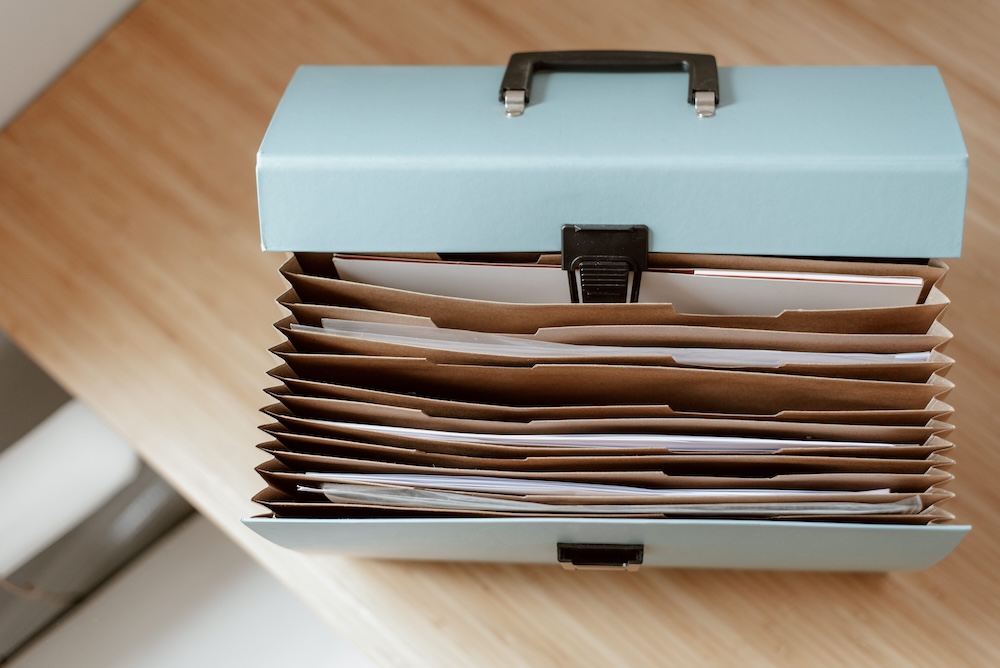
Once I had prepared all my documents, the next step was to visit the immigration office. Here are some personal tips I gathered after my first time applying for a change of status. Arrive early, especially if you're visiting a busy immigration office. Depending on the day and location, you may have to wait quite a while before your number is called and that can take somewhere around 3-5 hours, depending on the number of applicants. Complete your application forms before arriving as this will save you time and allow you to check everything carefully at home. Another helpful tip is to organize your documents into separate folders. For example, you can keep your personal documents, marriage certificates, and your spouse's employment documents in different sections.
If you forget to make copies, some immigration offices have copying facilities nearby. However, it's still best to prepare everything beforehand. When I submitted my application, the immigration staff reviewed my documents and marked my residence card to indicate that my change-of-status application was being processed. After that, I simply had to wait for immigration to review my application and contact me if additional information was needed. One thing I strongly recommend is keeping copies or photographs of every document you submit in case immigration contacts you later, requesting additional paperwork or clarification.
What Happens After You Submit Your Application?
After submitting your documents, immigration will review your application. Processing times can vary depending on your circumstances, the immigration office, and whether additional documents are required. In some cases, immigration may send a letter requesting more information. If this happens, carefully read the instructions and submit the requested documents within the specified deadline.
Once your change of residence status is approved, you'll receive instructions about the next steps, including collecting your new residence card and paying the applicable processing fee. Remember to check the details on your new residence card, including your period of stay. If you've also applied for work permission, make sure you understand the conditions of the permission granted before beginning or continuing any work under your new status. Finally…Before applying, make sure to review the latest requirements on the official Immigration Services Agency website and consult with the Pension Service regarding your situation.
Disclaimer: This article is based on my personal experience and general information available as of October 2026. Immigration requirements and individual circumstances may vary. Always confirm the latest information with the Immigration Services Agency before applying.