Japanese business culture is famous for its many rules and traditions. Even if you have a lot of work experience in another country, working in a Japanese office can be a minefield of embarrassing faux pas if you don't know the correct etiquette. Things such as knowing the right order for email addresses in a group email or understanding where to sit at a work function are considered important points of etiquette. These rules are heavily engrained in Japanese business culture and may be encountered in any industry, from tiny manufacturing companies all the way through to massive corporations. Needless to say, they can often come as a surprise to foreign staff.
Of course, when living in Japan, many people quickly become familiar with the more obvious differences. Things like bowing and being extremely punctual become almost second nature once you're working for a Japanese company. But what about the less obvious ones? In this article, we will look at a few of the lesser-known pieces of workplace etiquette in Japan. These are things that are often considered assumed knowledge and as such often go unexplained to newcomers.
Kamiza and Shimoza - Seating in Meetings
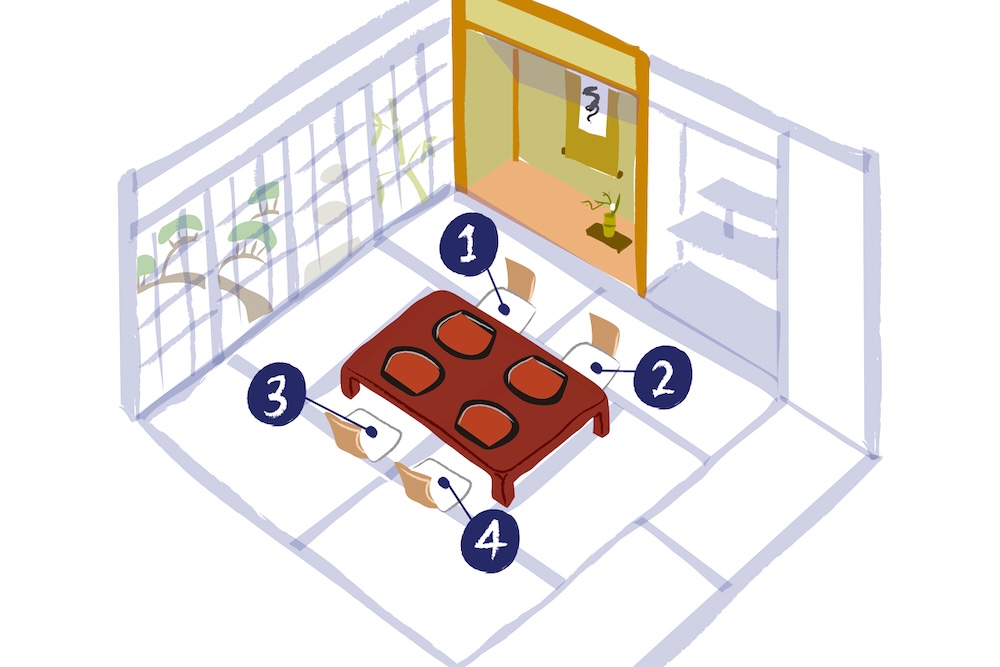
Many of the etiquette rules in a Japanese workplace are based on seniority and in keeping with this, the order of seating in meetings often follows a strict hierarchical pattern.
Typically, a meeting room will have a designated position for the most senior person (or clients in the case of a client meeting). This seat is called the kamiza (上座) and is usually the furthest seat from the entrance, though it can vary depending on the layout of the room. From this seat, the order of rank is usually followed sequentially with the most junior person in the room sitting closest to the door. This position near the exit is called the shimoza (下座). The person sitting in the shimoza is generally expected to attend to any additional tasks that may be required throughout the course of the meeting such as retrieving documents or refreshments.
This hierarchical seating arrangement is important to know because it also applies to other workplace situations such as riding in elevators or even things such as after work functions or end of year parties.
Email Address Order in Group Emails
Similar to meetings, when sending group emails, the list of addressees should also be ordered according to seniority, with the highest ranked person first. This seems pretty straightforward but can quickly get complicated once clients and other companies start getting mixed in.
If clients are included in a group email, they should be listed first in order of rank before listing members of your own company. When the email is being sent across multiple companies, the company most closely involved with the subject of the email should be listed first, followed by the next company and so on. One handy tip for this particular piece of business etiquette is that if you’re following on from previous emails, it’s a good idea to mirror the order of any previous correspondence.
Exchanging Business Cards
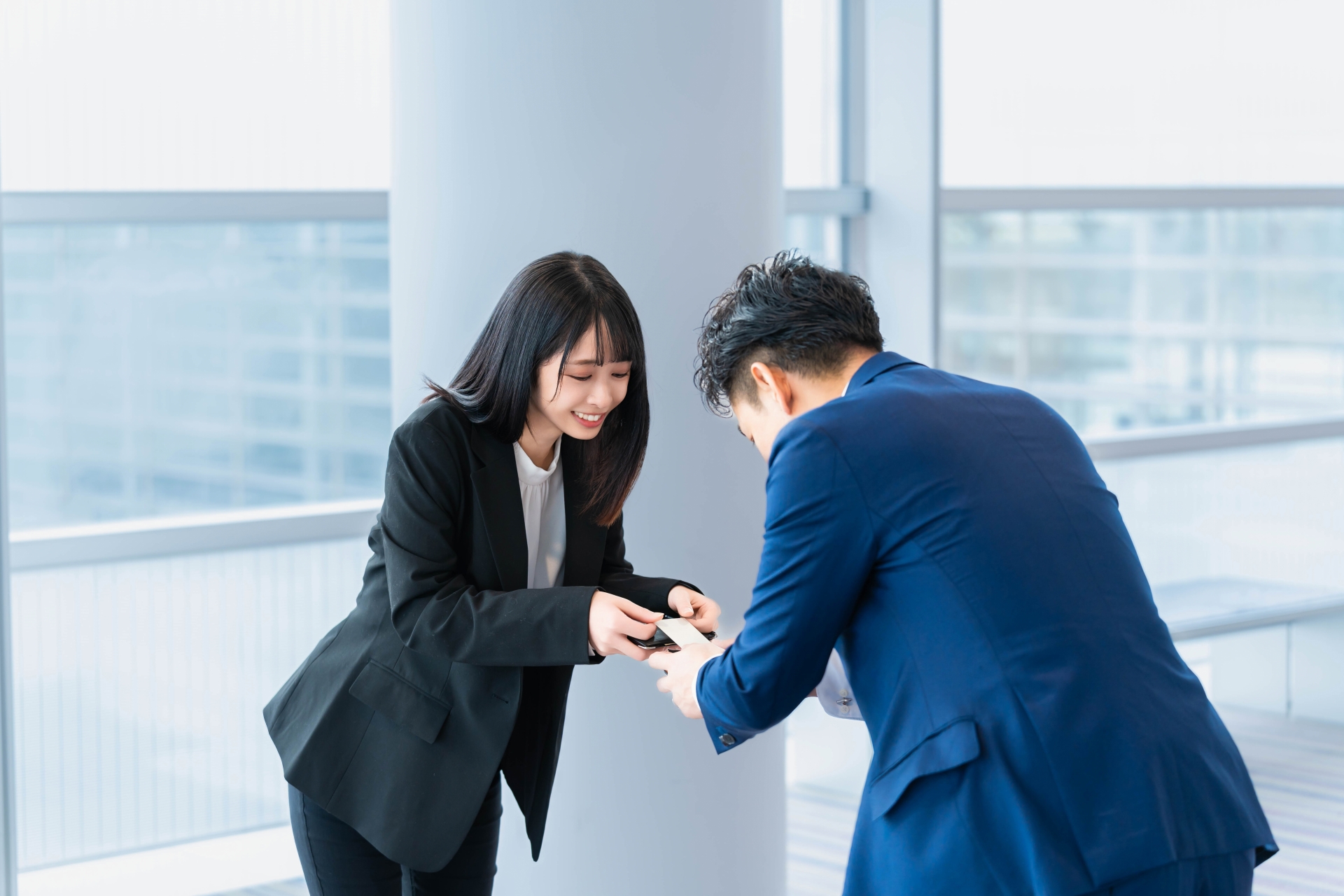
There are so many rules around business cards in Japan that it would be almost impossible to cover them all in a single article. For the sake of brevity, we will go over just a few of the most important ones here.
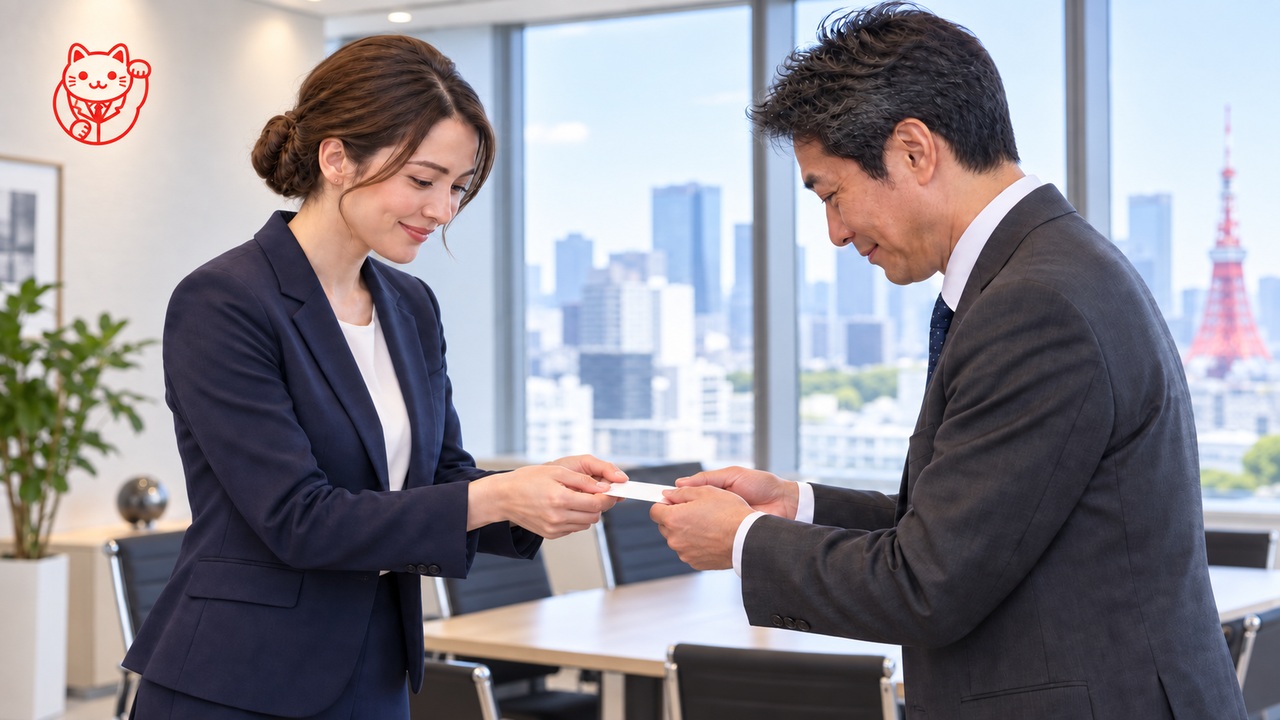
When exchanging business cards, the visiting party is generally expected to present the business card first. Always use both hands when receiving and giving business cards and be sure to bow respectfully while doing so. When receiving a card, always take a moment to read the contents carefully. When presenting a card, ensure that you are not covering any part of the text or logo on the card and always make sure it is facing the other party so that they can read it immediately without having to turn it around. Never put the other party’s card away immediately. If the card exchange will be followed by a sit-down meeting, place the other party's card on the table in front of you for the duration.
Slightly related to this, the etiquette of using both hands when handling business cards can also be applied to general document handling in the office. While not as formalized as business cards, it is considered polite to use both hands when passing documents on to other people, ensuring that the document is facing the right way for the other party to read. This applies regardless of whether the other party is a client or a colleague. Handing over documents casually to someone else using only one hand can often be considered rude.
Giving Gifts in the Workplace

This is very much one of those things that goes unspoken but is definitely something you will come across in a Japanese workplace. It usually happens after someone in the office goes on a holiday and comes back with a little gift for everyone in the form of a small snack or treat from wherever they travelled to. In fact, even if you don’t work for a Japanese company, if you've ever spent any time in a souvenir shop in Japan, you’ll no doubt have noticed the abundance of regional souvenirs available, neatly packaged in boxes and individually wrapped for giving to friends, family and colleagues. This gift giving is very much a part of Japanese culture and is very present in the workplace as well.
If you take an extended period of time off work, it is considered polite to bring back souvenirs (omiyage お土産) for your coworkers. In many cases, these gifts are a form of saying thank you to people who had to work while you were on vacation, but they are always appreciated no matter the occasion. Depending on the workplace, forgetting to do this may not be a big deal and you are sometimes given some leeway as a foreigner. However, if people in your workplace always bring back souvenirs and you never do, this could lead to friction.
When buying gifts for your co-workers, always make sure that you buy enough for everyone and that no one is left out. If you work for a large company, you will usually only give souvenirs to people you work with closely such as your immediate colleagues and direct supervisor/manager. Try to make sure that the gifts are generally identical and individually packaged so that they are easy to distribute and easy for people to take home.
Learning the Unwritten Rules
There are many unwritten rules in Japanese workplaces concerning etiquette that often go unexplained. For foreigners working in Japan, these are things that can sometimes go completely unnoticed until they are directly pointed out. Of course, all workplaces are different and some particular pieces of etiquette may be more adhered to than others depending on the company you work for. That said, even if you never encounter the rules mentioned here, knowing and understanding workplace etiquette in Japan can go a long way to making a favorable impression on your coworkers and clients regardless of where you work.