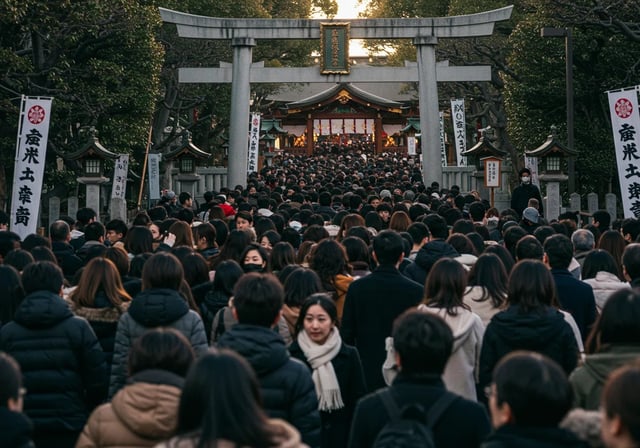
Every August, Japan enters one of its busiest travel periods of the year.
If you haven’t been in Japan very long, this sudden change can be confusing.
Why are so many people taking time off? Why does everyone seem to be traveling at the same time? Why do coworkers suddenly disappear for several days?
The answer is often お盆(ぼん) (Obon), one of Japan’s most important annual traditions.
While many foreigners first encounter Obon through its effect on work schedules, it is much more than a summer vacation. Obon is a time connected to family, remembrance, local traditions, and honoring ancestors.
Understanding Obon gives important insight into both Japanese culture and everyday life in Japan.
What Is Obon?
お盆 is a traditional Japanese period dedicated to honoring ancestors.
The holiday has roots in Buddhist customs and is based on the belief that ancestral spirits return to the world of the living during this time. Families use the occasion to welcome these spirits, visit family graves, and spend time together.
Obon is typically observed around mid-August, although the exact timing varies depending on the region. Some areas observe it in July instead, following older calendar traditions.
While Obon is not a national holiday in Japan, it is still one of the most important times of the year for family gatherings and travel.
For many Japanese people, Obon carries a similar emotional importance to major family holidays in other countries. For example, Dia de Muertos in Mexico. It is a time when people return to their hometowns, reconnect with relatives, and participate in traditions passed down through generations.
Why Do People Return Home During Obon?
One of the biggest parts of Obon is 帰省(きせい) (returning to one’s hometown).
Japan has a highly mobile population, and many people move away from their hometowns for university, work, or other opportunities. Obon provides an important chance for people to return home and spend time with family.
During this period, many people visit their parents or other relatives, visit family graves, share meals together, and participate in local festivals.
Because so many people travel at the same time, Obon is one of the busiest travel periods in Japan.
Anyone planning to travel during this period should expect:
- Crowded trains and buses
- Higher accommodation prices
- Heavy highway traffic
- Limited availability for popular destinations
For foreigners living in Japan, this is one of the first times they may experience how strongly seasonal events influence daily life.
Visiting Graves and Honoring Ancestors
A central part of Obon is 墓参(はかまい)り (visiting graves).
During Obon, many families visit ancestral graves to clean them and leave offerings. This may include flowers, incense, food, and other items meant to show respect and remembrance.
For many Japanese families, this goes beyond religious activity. It is also a way to reconnect with family history and maintain relationships between generations.
Foreigners may notice that Japanese cemeteries become much busier during this period. Families often travel long distances specifically to participate in this tradition.
While practices vary between families, the general idea is the same: Obon is a time to remember those who came before and show gratitude for family connections.
Bon Odori: A Community Celebration
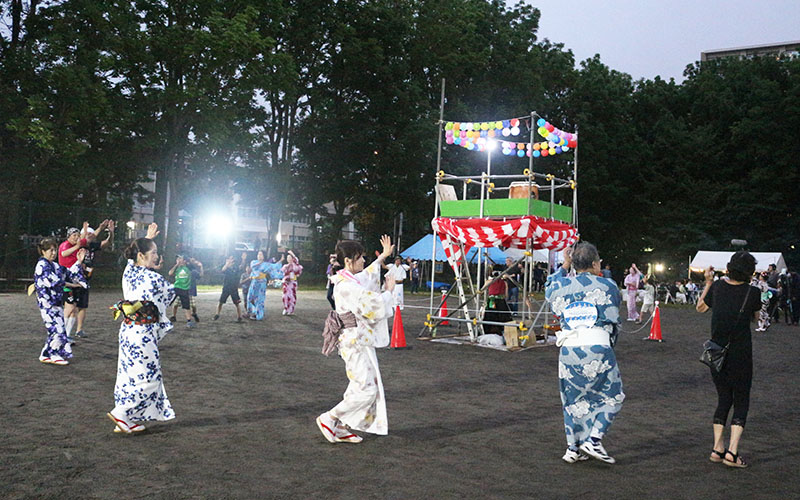
One of the most recognizable parts of Obon is 盆踊(ぼんおど)り (Bon dance).
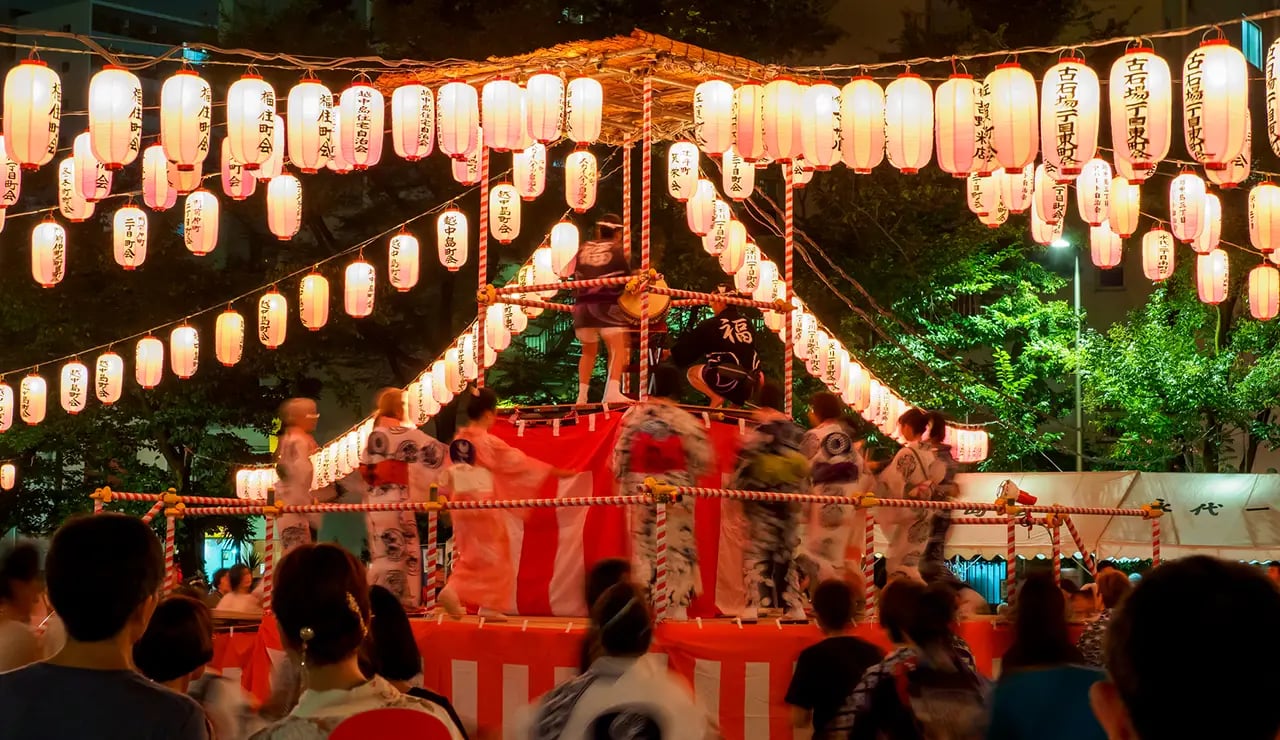
During summer evenings, communities across Japan hold festivals featuring music, food stalls, and traditional dancing. Participants often dance around a raised platform called a 櫓 (yagura, festival tower). Unlike the personal visits to family graves, this part of Obon is very much open to the public!
Additionally, unlike some traditional performances where visitors are expected to watch quietly, bon odori is often open for anyone to join in.
And don’t worry, you definitely do not need to be an expert dancer or know every movement perfectly. The steps are relatively simple, and many people simply follow along with the group.
If you’re hoping to build connections in Japan, local Obon festivals can be a wonderful way to meet neighbors, practice Japanese, and experience a tradition beyond the usual tourist activities.
Welcoming and Sending Off Ancestors
Another important part of Obon traditions involves welcoming and sending off ancestral spirits.
Some families prepare 迎え火 (mukaebi, welcoming fires) to guide spirits back home at the beginning of Obon. At the end of the holiday period, 送り火 (okuribi, sending-off fires) are used to symbolically guide them back.
This can often vary depending on region and family, of course. Some households use lanterns, while others participate in larger community events.
One of the most famous examples is 五山送り火 (Gozan no Okuribi) in Kyoto, where large symbols are lit on mountains surrounding the city as part of a major sending-off ceremony.
Some families also display 精霊馬 (shōryōuma, spirit horses) made from cucumbers and eggplants, which traditionally symbolize welcoming ancestors quickly and sending them off at a gentler pace.
These traditions reflect one of the central themes of Obon: maintaining a connection between the past and present.
How Obon Affects Work in Japan
If you work in Japan, you might first notice Obon because of its impact on your workplace.
However, one important thing to understand is that Obon is not an official national holiday.
Instead, many companies provide employees with vacation time during this period. Other businesses may remain open as usual, depending on the industry.
Schools are already on summer vacation in August, so teachers and ALTs may experience Obon differently from office workers.
Depending on your position and contract, you may:
- Have several days off
- Be asked to complete desk work
- Have fewer responsibilities while schools are quiet
- Work normally if your organization does not close
It is important not to assume that every workplace follows the same schedule. For example, in my city’s public schools, pretty much every teacher uses their annual leave on the days of Obon.
Because of this, don’t be surprised if businesses in general seem a little slower during this time. You may notice slower email responses, fewer meetings, delayed paperwork, and coworkers taking extended leave.
Just remember that a quiet office during Obon is simply part of Japan’s seasonal rhythm.
What Obon Means for Foreign Teachers in Japan
For English teachers, especially ALTs, Obon can be an interesting time of adjustment.
Since Japanese schools are closed for summer vacation, many teachers have fewer classroom responsibilities. However, what happens during this period depends heavily on your employer and contract.
It’s important to understand your specific contract rather than relying on what other employees experience.
Obon can also be an opportunity to connect with coworkers. Asking Japanese colleagues about their hometown traditions or plans can be a natural conversation starter.
Simple questions like:
「 お盆(ぼん)は実家(じっか)に帰(かえ)る予定(よてい)ですか?」 ("Are you planning to go home for Obon?")
「 お盆(ぼん)は毎年(まいとし)どんなふうに過(す)ごしますか?」 ("How do you usually spend Obon each year?")
can show genuine interest in Japanese culture and help build workplace relationships.
Regional Differences in Obon Traditions
Like many Japanese traditions, Obon is not exactly the same everywhere.
The timing, foods, festivals, and customs can vary depending on the region.
Some areas observe Obon in July, while many others celebrate in August. Local communities may also have their own dances, festivals, and rituals.
This regional variety is one of the reasons living in different parts of Japan can feel so different. A person living in Tokyo may experience Obon differently from someone living in a small rural town.
In other words, the best way to understand this holiday period is often by participating in the traditions of the community where you live!
How Foreigners Can Participate Respectfully
You do not need to be Japanese to appreciate or participate in many Obon traditions.
Some ways to engage include:
- Attending a local bon odori festival
- Asking coworkers about their hometown customs
- Learning about local traditions
- Respecting family and community spaces
- Showing curiosity rather than expecting every region to celebrate the same way
One of the best parts of living abroad is learning how everyday traditions shape the people around you.
And Obon is a great opportunity to better understand that very community (that you are now part of!).
A Tradition That Connects Past and Present
For many foreigners, Obon is first noticed because of crowded trains, busy travel seasons, or changes at work. But look a little closer, and there’s a much deeper tradition there.
Obon reflects important values in Japanese society: respect for family, appreciation for ancestors, and maintaining connections across generations.
For foreigners building a life in Japan, learning about traditions like Obon is one of the best ways to move beyond simply living in Japan and start feeling connected to it.