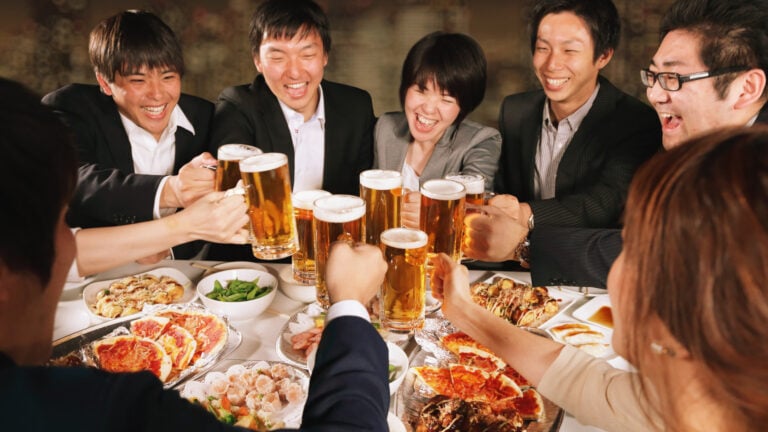
Every December, as the year winds down, workplaces across Japan gather for one of the country’s most enduring professional traditions: the bōnenkai (忘年会). Translated literally as “a gathering to forget the year,” this is more than the typical nomikai (飲み会). It’s a social reset button, and a window into how Japanese companies maintain group cohesion and navigate workplace hierarchies.
For foreigners entering the Japanese workforce, understanding why bōnenkai matter (and what your role in them might be) can provide valuable insight into Japan’s approach to teamwork, communication, and office culture. While participation is usually optional, these gatherings often play an important role in workplace relationships, professional dynamics, and a company’s overall social rhythm.
Let’s dive into what bōnenkai are, why they remain relevant, and how they reflect deeper cultural expectations in Japanese workplaces.
What Exactly Is a Bōnenkai?
A bōnenkai is a year-end party held sometime in December, most often at an izakaya (居酒屋), restaurant, or rented banquet room. Companies, departments, clubs, and even friend groups hold them to celebrate the end of the year by reflecting on the past twelve months’ highs and lows, and then figuratively “forgetting” the challenges or mistakes.
The focus is not on gifts, games, or corporate announcements. Instead, it is a chance for coworkers to relax outside the office, strengthen rapport, and close the year on a positive note before everyone goes into the holiday season.
For many Japanese employees, the bōnenkai marks the symbolic end of the work year, and serves as a moment to reflect, decompress, and reconnect with colleagues in a setting that is more casual than everyday office life, yet still structured by etiquette and hierarchy.

Why Bōnenkai Matter in Japanese Work Culture
To understand why bōnenkai have stayed relevant in modern Japan, it helps to look at the deeper values they reflect. These gatherings are not simply opportunities to drink; they are part of how Japanese companies reinforce group identity, maintain communication channels, and smooth out interpersonal dynamics.
1. Strengthening Group Cohesion
Japanese workplaces tend to value team harmony, collaboration, and a shared sense of responsibility. Like the very common nomikai (飲み会), the bōnenkai similarly creates a setting where colleagues can interact more freely than they would at their desks, strengthening personal ties that translate into smoother communication back at work.
Even employees who rarely speak to each other during office hours may share a conversation at a bōnenkai. In a society that can be formal and structured, these relaxed moments help build trust.
2. Smoothing Over Workplace Tensions
The literal meaning “to forget the year” touches on another cultural function: letting go of accumulated stress. Any workplace experiences conflict, deadlines, or frustrations. Historically, the bōnenkai acted as a collective way to reset the atmosphere before the new year began.
Rather than rehashing problems, the focus is on moving forward. This shared “reset” helps maintain long-term workplace harmony.
3. Reinforcing Yet Gently Softening Hierarchy
Japanese corporate culture is famously hierarchical, but the bōnenkai provides one of the few socially acceptable spaces where those boundaries can soften, albeit it slightly. Supervisors may speak more casually, and junior staff may feel more comfortable initiating conversation.
At the same time, hierarchy still shapes the flow of the evening. Senior members usually give opening greetings, initiate toasts, and sometimes pay a larger share of the bill. The atmosphere relaxes, but respect remains an underlying theme.
4. Offering Networking Without Formality
Unlike Western-style networking events, which often encourage self-promotion or business card exchanges, bōnenkai networking is quiet, indirect, and relationship-driven. It’s not about pitching ideas but building trust and connections, which in Japan can sometimes matter even more than résumés or verbal assertiveness.
How a Bōnenkai Usually Works
While every company is different, most bōnenkai follow a similar pattern.
Participants gather at the venue, remove coats, and sit according to group or departmental arrangement. Sometimes juniors sit in “less desirable” seats, while seniors sit in central or more comfortable positions. On the flip side, people may choose their seat randomly by drawing numbers. After everyone arrives:
- A manager or department head gives a greeting
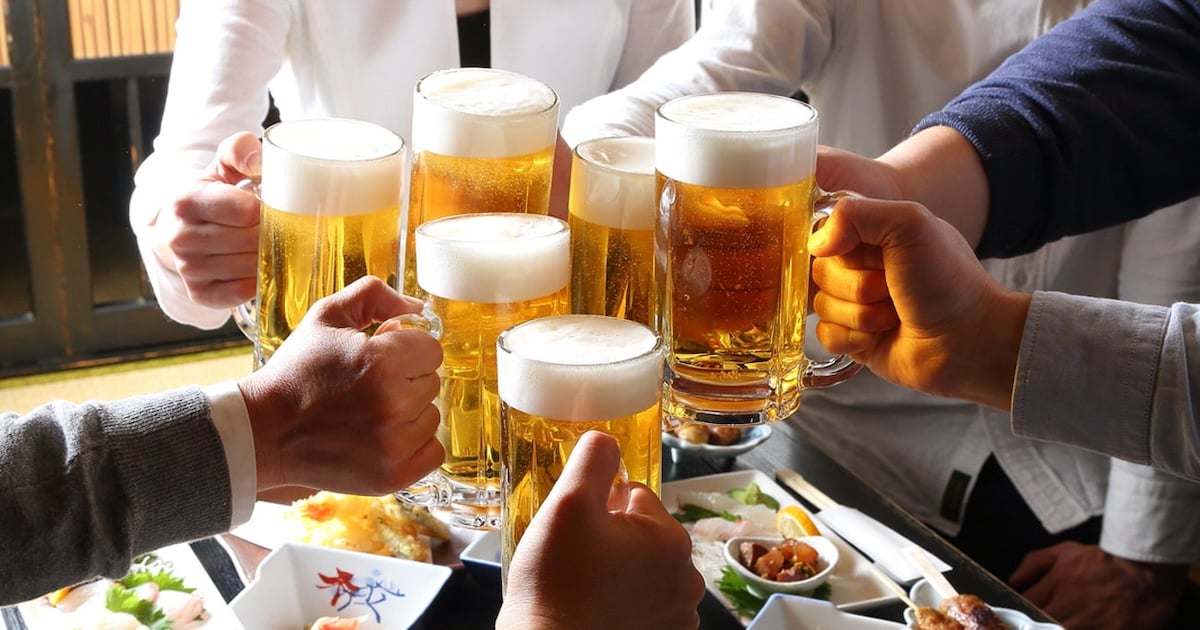
- A toast (乾杯) is made
- Food and drinks are served, usually in courses
- People mingle, move around, pour drinks for others
- A closing phrase like “yoi otoshi o” (良いお年を) wraps up the night
Nomikai Culture: Why Drinking Matters (Even If You Don’t Drink)
As mentioned before, bōnenkai are a type of nomikai, and the idea is not to drink heavily, but to create a relaxed environment where people feel more open to talk.
But what if you don’t drink alcohol?
That’s completely acceptable today. Many Japanese people themselves are light drinkers, and non-alcoholic options are always available. What matters is participating in the spirit of the event. That means being present, interacting with others, and showing appreciation. You should always have a drink at hand, however, even if it’s non-alcoholic so that you can toast colleagues or after speeches.
The act of pouring drinks, known as oshaku (お酌) is also symbolic. It’s a way of showing respect and acknowledging relationships, not of encouraging heavy drinking. Offering to pour for someone (or accepting when they pour for you) is simply part of the flow of the evening. If you do not drink alcohol, simply accepting the oshaku and then not drinking it will suffice. Usually, however, if the pourer sees that you are not drinking, they will be understanding.
What Bōnenkai Reveal About Japanese Workplace Values
For foreign professionals, attending a bōnenkai can offer insight into the social fabric of Japanese work environments. Three major themes tend to stand out:
1. Hierarchy and Consideration
Seniority influences how people behave. Senior staff often sit at the center or head of the table, give the opening remarks, and are served food or drinks first. Juniors might pour drinks or assist with simple tasks such as distributing plates.
While in some cultures this could be seen as unnecessary or perhaps even demeaning, in Japan it’s a cultural expression of respect. Acknowledging it with small gestures like waiting for seniors to begin eating or offering to pour a drink, shows attentiveness to Japanese social norms.
2. Group Identity Over Individualism
In contrast to Western office parties where individuality or personal expression may be encouraged, bōnenkai place more value on group unity. Conversation tends to avoid controversial topics, and the mood aims to be inclusive.
Being considerate of the group by listening, participating but not dominating the conversation, and staying aware of others helps build positive impressions.
3. Communication Beyond Words
Japanese workplaces often rely on nonverbal or indirect communication, and bōnenkai amplify this dynamic. Tone, politeness, attentiveness, and body language all communicate as much as the words themselves.
These gatherings might be one of the few times colleagues openly express gratitude, encouragement, or sometimes even mild criticism (but even then, it often happens subtly). Understanding these signals can help you integrate more smoothly.
A Quick Guide to Bōnenkai Etiquette for Foreign Workers
Here is a practical reference list for anyone attending their first workplace bōnenkai:
- Pay the participation fee. This will usually be collected during office hours before the party, or sometimes upon entry, and is the amount everyone pays to cover the costs of attending. Prices are usually around 4,000-5,000 yen.
- Arrive on time. On time actually means ten to fifteen minutes early—punctuality is a form of respect.
- Wait for the toast before drinking. This one is easy to forget if you receive your drink before the last person, but it’s very important to remember!
- Offer to pour drinks for others—especially senior colleagues. This is a great way to start a conversation with coworkers.
- Accept when others pour for you, even if you’re drinking something non-alcoholic. You don’t have to drink it.
- Be mindful of seating (wait to be directed).
- Participate in conversation, but keep topics light and inclusive.
- Use “yoi otoshi o” when saying goodbye—a polite year-end greeting.
These small gestures show cultural awareness and help build rapport.
Why Bōnenkai Matter for Foreign Professionals
For foreigners working in Japan, attending a bōnenkai is a chance to understand how teams function, how communication flows, and how colleagues relate to one another outside the office.
It offers:
- a chance to build trust
- an opportunity to observe workplace dynamics
- insight into Japanese values like harmony, respect, and humility
- a way to show openness to cultural integration
You don’t need to drink heavily or speak perfect Japanese. Simply showing up, participating respectfully, and engaging with colleagues can go a long way.
A Tradition That Still Brings People Together
Despite changes in work styles and shifting attitudes toward corporate events, the bōnenkai continues to play a meaningful role in Japanese professional life. It offers a moment of connection, a symbolic clean slate, and a rare chance to see colleagues in a relaxed, human setting.
For foreign professionals, understanding and participating in this tradition can provide deeper insight into how Japanese workplaces build trust and maintain group harmony. The bōnenkai may be festive, but it’s also a reflection of Japan’s broader workplace culture—one that values relationships, mutual respect, and moving into the new year with a sense of unity.