After spending a year, three years, or even longer working as an Assistant Language Teacher (ALT), you may be ready for your next challenge.
But there’s an awkward moment that comes when you start applying for jobs outside education: you have several years of professional experience in Japan, yet your job title still says Assistant Language Teacher.
How do you turn that experience into an application for a job in marketing, administration, recruiting, customer service, international business, or even if you want to stay in the educational sector?
The answer isn't to pretend you did something other than teach. Instead, you need to understand how Japanese job applications work and learn how to present your actual ALT experience in a way that gives employers a clear picture of what you can contribute.
Start With the Right Documents
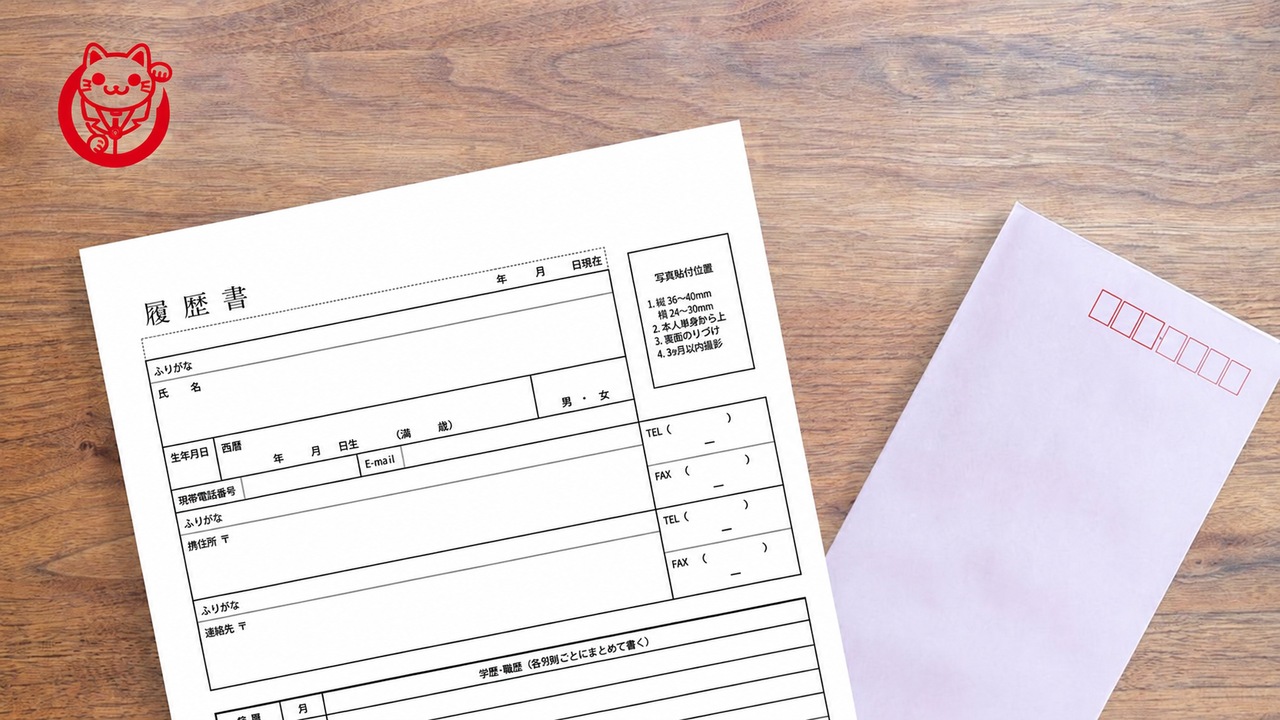
If you're applying to jobs in Japan, you may be asked for two documents: a 履歴書(りれきしょ) and a 職務経歴書(しょくむけいれきしょ).
They're not simply two versions of the same resume.
The 履歴書 is a standardized overview of your background. It generally includes your personal information, education, employment history, qualifications, and other basic information. The Ministry of Health, Labour and Welfare (MHLW) provides a current reference format for job seekers, although individual employers may request a different format.
The 職務経歴書 is where you have more room to explain your professional experience, including what you did, what you learned, and what skills you developed. The MHLW's own reference format includes space for your employment history, duties, and the knowledge, abilities, and skills gained through that work.
That distinction is particularly useful if you're moving beyond ALT work.
Your 履歴書 documents your career history. Your 職務経歴書 tells the employer what that history actually means.
Step 1: List Your ALT Job Accurately on Your 履歴書
The 職歴(しょくれき) (work history) section of your 履歴書(りれきしょ) isn't the place to reinvent your job title.
If you were employed by a Board of Education, for example, your employment history might look something like:
2021年10月 ○○市教育委員会 外国語指導助手として勤務
2024年9月 一身上の都合により退職
Your exact wording should reflect your actual employer, position, and dates. If you worked for a dispatch company rather than directly for a Board of Education, list the actual employer.
Keep this section factual and concise. You don't need to turn each employment entry into a list of accomplishments. That's what the 職務経歴書 is for.
Before writing anything else, make sure you have:
- Your exact employment dates
- Your official job title
- Your employer's official name
- The schools or locations where you worked
- Your employment type, if relevant
- Any positions or responsibilities you held in addition to your regular ALT duties
Having this information ready will make the rest of your application much easier.
Step 2: Use Your 職務経歴書 to Explain What You Actually Did
This is where you can start moving beyond the “ALT” label and telling people you just “taught English to Japanese students”.
That's accurate, but it tells an employer very little about the scope of your work. Instead, think about everything that went into doing the job.
For example:
職務内容(しょくむないよう)
- 日本人教員(にほんじんきょういん)と連携(れんけい)した英語授業(えいごじゅぎょう)の企画(きかく)・実施(じっし)
- 授業教材(じゅぎょうきょうざい)・プレゼンテーション資料(しりょう)の作成(さくせい)
- 複数(ふくすう)の学年(がくねん)・クラスを対象(たいしょう)とした授業運営(じゅぎょううんえい)
- 学校行事(がっこうぎょうじ)・国際交流活動(こくさいこうりゅうかつどう)への参加(さんか)・運営(うんえい)
- 日本人教員(にほんじんきょういん)および学校職員(がっこうしょくいん)との業務上(ぎょうむじょう)の調整(ちょうせい)
You don't have to use these exact descriptions. Your 職務経歴書 should reflect what you actually did.
The important difference is that you're giving an employer specific information about your responsibilities, rather than relying on the word “teacher” to tell the whole story.
And if you can quantify your experience, even better. For example, did you work at three schools? Teach hundreds of students? Create dozens of lessons each month? Organize an annual international event? Include that information where appropriate.
Step 3: Don't Underestimate the 職務要約
Depending on the format you're using, your 職務経歴書 may begin with a 職務要約(しょくむようやく) (career summary).
This is an opportunity to introduce yourself as a professional rather than simply repeating your job title.
Instead of just writing:
- I worked as an ALT for three years in Japan. I am looking for a new challenge outside education.
You can be more specific:
- Japan-based professional with three years of experience working in public schools, collaborating with Japanese educators, developing educational materials, and communicating with diverse audiences. Experienced in working independently and collaboratively in a cross-cultural professional environment.
The second version doesn't hide the fact that you were an ALT. It simply gives the employer more context.
Your goal is to answer one question quickly:
What kind of professional are you, and what do you bring to this position?
Your next step is to write a two- or three-sentence summary of your experience without using the phrase “just an ALT” or apologizing for your career path.
Then compare it with the job description you're applying for. Does your summary mention experience that actually matters to that employer? If not, revise it.
Step 4: Tailor Your Experience to the Job
You don't have to stress about creating a completely different career history for every application. However, you should want to emphasize different parts of your ALT experience depending on the position.
For example, imagine you're applying for an administrative position. Your experience with scheduling, organization, coordinating with teachers, managing materials, and handling multiple responsibilities may be particularly relevant.
For a marketing position, you might emphasize creating presentations and materials, communicating with different audiences, organizing events, and using digital tools.
For an international company, your experience working professionally with Japanese colleagues and navigating communication across languages and cultures may be especially valuable.
The same experience can therefore appear differently in different applications. You’re identifying which parts of your real experience are most relevant to the job you're seeking.
Find three job listings for positions you'd genuinely consider and highlight the skills, responsibilities, and qualifications that appear repeatedly.
Now look at your ALT experience. Which of those requirements can you support with something you have actually done? Those are the experiences you should bring forward in your 職務経歴書 and 自己PR.
Step 5: Make Your 自己PR About the Job You Want
The 自己PR (self-promotion) section of your 履歴書 or 職務経歴書 shouldn't simply be a list of positive adjectives. “Hardworking, flexible, responsible, and a good communicator” could describe almost anyone.
Instead, connect your strengths to evidence from your experience. Instead of:
- I have excellent communication skills.
Try explaining:
- Through my work as an ALT, I regularly collaborated with Japanese teachers who had different teaching styles and expectations. I learned to adjust my communication and approach to ensure that we could work effectively toward the same classroom goals.
Then connect that experience to the position you're applying for.
The MHLW's current career-document resources similarly encourage applicants to connect their professional history with the knowledge, abilities, and skills they gained through that work.
Show the employer where your skills came from instead of simply telling them that you have those skills.
Step 6: Don't Try to Turn ALTing Into Something It Wasn't
There's an important line between presenting your experience effectively and exaggerating it. You don't need to describe yourself as a “cross-cultural project manager” because you helped organize an English speech contest.
Similarly, you don't need to call making worksheets “content strategy”, or transform every classroom responsibility into corporate terminology. Just focus on describing what you actually did in professional, specific language. If you coordinated an event, say what you coordinated. If you created materials, explain what you created and who used them. If you worked with multiple schools, say how many. If you collaborated with Japanese teachers, explain what that collaboration involved.
Specificity is way more convincing than buzzwords.
Your ALT experience just needs to be described well enough that an employer can understand the experience behind the title.
Step 7: Start Building Your Next Chapter Before You Finish ALTing
If you're still working as an ALT, don't wait until your final month to think about your next career. It comes fast, and you’ll probably be too busy to give it the effort it deserves. Instead, look at the jobs you'd eventually like to apply for now.
Especially because if they consistently ask for skills you don't have, you still have time to develop them.
If you’re interested in marketing, you can start building a small portfolio or take on content-related projects. Or is you’d like to explore administration, you can develop your spreadsheet and organizational skills. If you prefer customer-facing work, think about the communication and relationship-building experience you've already gained and look for ways to expand it.
This is your chance to build your professional identity in Japan beyond ALTing! Use your previous experience to build on what you’ve already got.
Your ALT-to-Next-Job Checklist
Before you start sending applications, make sure you've:
- Recorded your exact ALT employment information Employer, dates, official title, schools, and employment type.
- Written a clear 職務要約 Describe yourself as a professional, not just by your job title.
- Documented your actual responsibilities Include teaching, collaboration, materials development, events, coordination, technology, and other relevant duties.
- Added numbers where possible Schools, students, classes, projects, events, or other useful measures of scope.
- Studied your target job listings Look for recurring skills and responsibilities.
- Tailored your 職務経歴書 Emphasize the parts of your ALT experience that relate to the position.
- Written a specific 自己PR Use examples from your experience instead of relying on generic adjectives.
- Checked the employer's requested format The MHLW provides current reference formats for both 履歴書 and 職務経歴書, but individual employers may request their own documents or formats.
Your ALT Years Belong on Your Resume
If you've spent several years as an ALT, it's easy to feel like your experience has pigeonholed you into teaching. But your job title is only one line in your career history.
Your 履歴書 establishes that you worked in Japan. Your 職務経歴書 gives you the opportunity to explain what that work actually involved. And your 自己PR can show an employer how that experience connects to the contribution you hope to make in your next role.
Your experience as an ALT is full of important lessons and acquired skills that will make you an asset in other fields. You just have to learn how to connect the two.