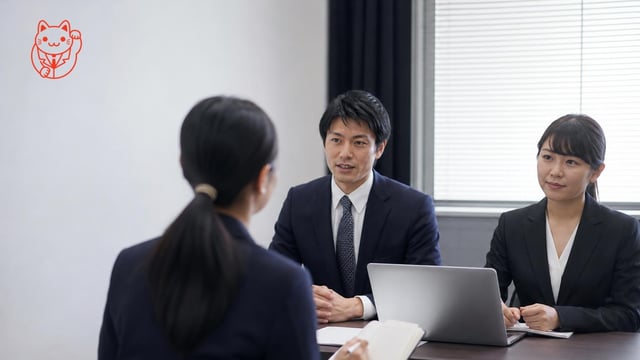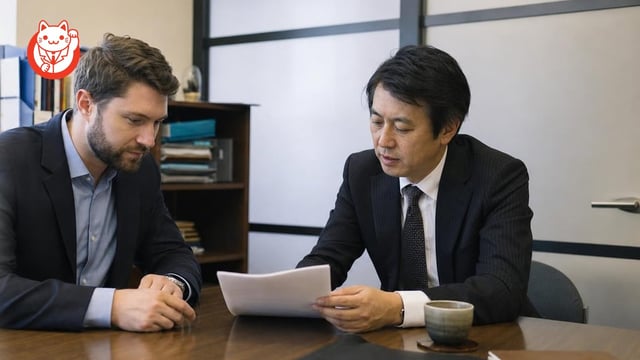
AI can help you apply to jobs faster, but speed is not the real advantage.
The real advantage is customization. A strong job application connects your resume to the exact job, the exact company, and the exact problem the employer is trying to solve. AI can help you do that in minutes instead of staring at a blank page for an hour.
Used badly, AI makes your application sound generic. Used well, it helps you write a clear cover letter that sounds like you, matches the job, and gives the employer a reason to reply.
Here is how to use AI to apply for jobs without sounding like everyone else.
Do not ask AI to "write me a cover letter" with no context
A weak prompt creates a weak letter.
If you ask an AI tool to "write a cover letter for this job," it will usually guess. It may invent details, overstate your experience, or write something so polished that it no longer sounds like you. Employers can often spot this. Even when they cannot, the letter usually fails because it does not say much.
A useful AI cover letter needs three things:
- Your resume or CV
- The job description link
- The hiring company's website link
That gives the AI enough context to compare what the employer wants with what you have done. It also helps the letter mention the correct job title, company name, and application source.
If your resume is not ready yet, start there. JOBS IN JAPAN has a guide to turning your English resume into a Japanese resume, or rirekisho, using the JOBS IN JAPAN Japanese Resume Builder. Use it if you need a Japanese-format resume before applying.
Use AI as a writing assistant, not as your personality
Your cover letter should still sound like you.
AI is good at structure. It can find matching points between your resume and a job ad. It can tighten long sentences. It can help you avoid sounding too casual or too stiff.
But AI is not good at knowing what you actually care about. It does not know which experience you are proud of. It does not know which parts of the job genuinely fit your goals in Japan. You need to add that.
Before using AI, take one minute to answer these questions:
- Why do I want this specific job?
- Which two parts of my experience match the job description best?
- What can I do for this employer that another applicant might not?
- Is there anything in my background that needs a simple explanation, such as a career change, a gap, or limited Japanese?
Those answers make the final letter much stronger.
If you are still figuring out what kind of job to target, read the JOBS IN JAPAN complete guide to getting a better job in Japan as a foreigner. It gives a broader way to think about career direction, Japanese level, visa needs, and moving beyond the first job you find.
Copy and paste this AI prompt
Use the prompt below in ChatGPT, Claude, Gemini, or another large language model. Attach your resume or CV document, then paste the job description link and the hiring company website link.
If the job is on JOBS IN JAPAN, use the JOBS IN JAPAN job listing URL as the job description link. If the employer has a company page or website, include that too.
Generate a concise cover letter based on the following resume(s) and job description.
Resume(s): (attach resume or resumes)

Job Description: (link to job description)

Hiring Company Description: (link to company website)
Instructions:

Write a professional, tailored cover letter that highlights the candidate's most relevant skills and experiences for this job.
Ensure the position name, company name, and mention of "JOBS IN JAPAN" appear in the first paragraph. Note: only mention JOBS IN JAPAN if the job description link is from JOBS IN JAPAN. Otherwise, use the name of the website where the job is listed.
Match at least two items from the job description to relevant skills from the resume.

Keep the letter between 200 and 400 words, focusing on impact and brevity. Use bullet points (•) if appropriate.

Maintain a similar tone and vocabulary level as the resume, avoiding overly formal or unnatural language like "esteemed company."
Start the letter directly with a formal salutation, such as "Dear Hiring Manager," followed by the content.
You can improve the result by adding one more line at the end:
After writing the cover letter, list the exact parts of my resume and the job description that you matched, so I can check for accuracy.That final check matters. AI can sound confident even when it is wrong.
Peter's Tips
Do not use the same cover letter for every job.
For each application, change the job description URL and the company URL in the prompt. This forces the AI to write for the job in front of you, not for a generic job category.
Applications that are customized to each job receive more positive replies from employers than copy and paste applications that are not customized. Employers call the lazy version "Spray and Pray." That means sending the same basic application everywhere and hoping someone replies.
Employers dislike Spray and Pray applications because they create extra work. The hiring manager has to guess whether you read the job ad, whether you understand the company, and whether you actually want that role. A customized letter answers those questions quickly.
A customized application does not need to be long. It just needs to show evidence that you paid attention.
Change these parts every time:
- The job title
- The company name
- The job listing URL
- The company website URL
- The two or three skills or experiences you choose to emphasize
- Any sentence explaining why this job fits your goals
This is where AI saves time. You are not asking it to blast out the same letter faster. You are using it to customize each application without getting stuck.
What a good AI-assisted cover letter should include
A strong cover letter for a job in Japan usually does five things.
First, it names the job and company clearly. If you found the role through JOBS IN JAPAN, say that naturally in the first paragraph.
Second, it explains why your background matches the job. Do not list every skill you have. Choose the points the employer asked for.
Third, it gives proof. If the job asks for customer service, say where you handled customers. If it asks for lesson planning, mention what age groups or class types you taught. If it asks for bilingual communication, say how you used Japanese and English at work.
Fourth, it stays short. A cover letter does not need to tell your whole life story. For most applications, 200 to 400 words is enough.
Fifth, it sounds natural. Avoid phrases like "your esteemed company," "I am uniquely qualified," or "I would be honored to contribute to your success." Those lines sound like a template. Write like a professional human being.
For jobs in Japan, your resume format may matter as much as the letter. If an employer asks for both a rirekisho and shokumu keirekisho, the JOBS IN JAPAN article on Japan's two-resume system explains the difference and why employers may want both.
Check the letter before you send it
Never submit the first AI draft without reading it.
Check for these problems:
- Wrong company name
- Wrong job title
- Experience you do not actually have
- Claims that sound exaggerated
- English that sounds too formal for your real voice
- Missing visa, location, or availability details if the employer asked for them
- Make sure that AI did not leave you notes or blanks to fill in such as the following example:

- A letter that could be sent to any company without changing a word
That last one is the biggest warning sign. If the letter would still make sense after replacing the company name with another company, it is not customized enough.
You can ask the AI to help you review it:
Review this cover letter before I send it. Tell me if it sounds generic, if it makes any claims not supported by my resume, and which sentence should be customized more for this job.This second AI pass is often more useful than the first draft. It helps you catch problems before an employer does.
Be careful with private information
You do not need to give an AI tool every personal detail you have.
Your resume may include your phone number, home address, visa status, date of birth, photo, or other personal information. Before uploading documents to an AI tool, think about what you are comfortable sharing and which tool you trust.
A practical approach is to upload a version of your resume that includes your work history, education, skills, and qualifications, but removes anything the AI does not need to write the letter. You can add contact details back into your actual application later.
Also check the letter for visa language. If you need visa sponsorship, say it accurately. If you already have a valid status of residence, do not let the AI make vague claims. Employers in Japan care about whether you can legally work, when you can start, and whether sponsorship is needed.
If Japanese level is part of your job search, do not let AI oversell it. Saying "business Japanese" when you are conversational can lead to an awkward interview. It is better to be honest and specific: "conversational Japanese for daily workplace communication" is more useful than a vague claim.
If you are targeting jobs that do not require Japanese, JOBS IN JAPAN has a guide on how to work in Japan without speaking Japanese. It explains where those jobs exist and why you still need to be strategic.
Use AI to prepare for the interview too
The cover letter is not the end of the process.
If the employer replies, use the same job description, company website, and resume to prepare for the interview. Ask the AI to predict likely interview questions, identify weak spots in your application, and help you prepare short answers.
Try this:
Using my resume, the job description, and the company website, list 10 interview questions I should prepare for. For each question, explain what the employer is probably trying to learn and suggest a concise answer based on my experience.You should also prepare questions for the employer. Many job seekers waste the final part of the interview by saying, "No, I think you answered everything." A better approach is to ask about the role, the team, training, expectations, visa support if relevant, and what success looks like in the first few months.
The JOBS IN JAPAN article on what to ask when an interviewer says "Do you have any questions for me?" gives examples that help you sound prepared without sounding aggressive.
A simple workflow for each job application
Use this process every time you apply.
- Read the job ad carefully.
- Open the company's website and understand what they do.
- Attach your resume or CV to the AI tool.
- Paste the job listing URL and company URL into the prompt.
- Ask for a 200 to 400 word cover letter.
- Ask the AI to show which resume details it matched to the job description.
- Edit the letter so it sounds like you.
- Check names, dates, job title, and claims.
- Submit the application.
- Save the final letter so you can prepare for the interview later.
This takes longer than sending the same application everywhere, but not much longer. More importantly, it gives employers a reason to believe you are applying on purpose.
The best cover letter is specific, honest, and easy to read
AI can help you write a better cover letter, but it cannot replace judgment.
The best applications are specific to the job, honest about your background, and easy for the employer to understand quickly. They do not try to sound impressive for the sake of it. They show fit.
If you are applying through JOBS IN JAPAN, browse current openings and filter by visa sponsorship, Japanese level, location, and job type. When you find a role that fits, use the prompt above with your resume, the job listing URL, and the company URL to write a customized application instead of a Spray and Pray one.
Suggested internal links:
- Japanese resume builder: This supports readers who need a Japanese-format resume before applying.
- Complete guide to getting a better job in Japan: This helps readers choose better targets before applying.
- Understanding Japan's two-resume system: This explains rirekisho and shokumu keirekisho for readers applying to more traditional employers.
- How to work in Japan without speaking Japanese: This helps readers choose realistic jobs based on Japanese level.
- Do you have any questions for me?: This connects the application stage to interview preparation.