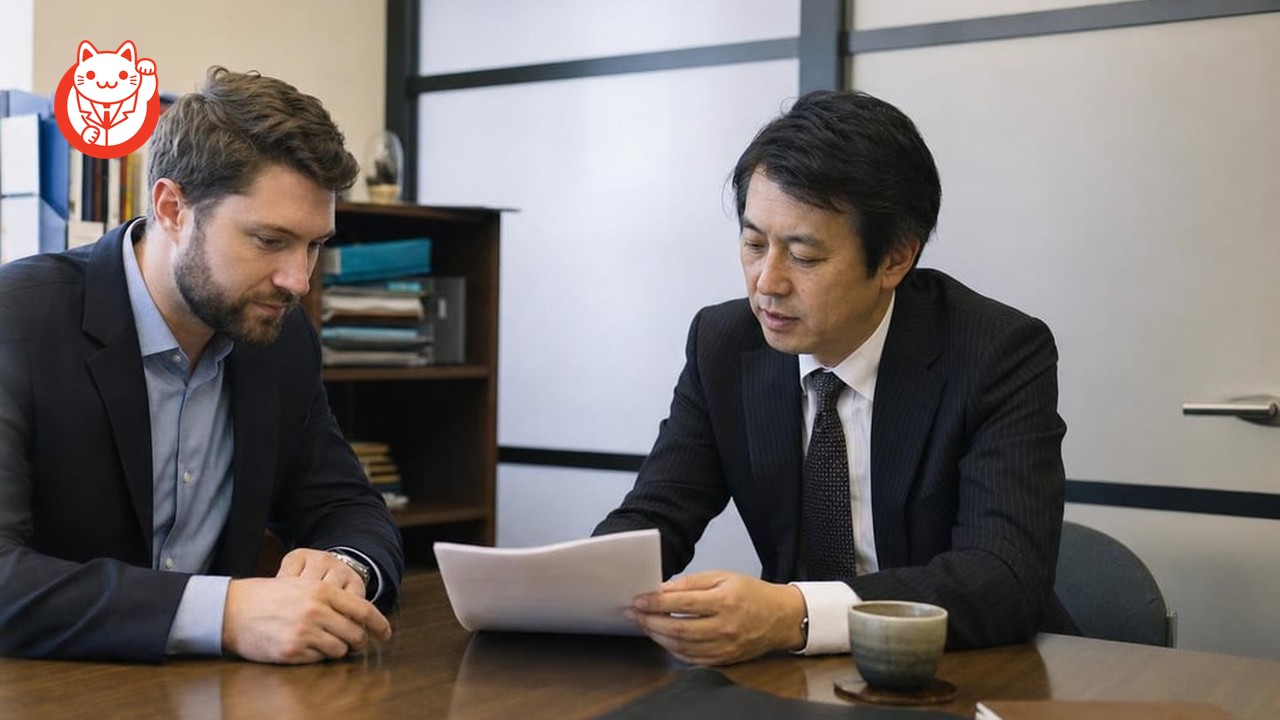
A probation period in Japan is not a legal free trial.
That is the mistake many people make. An employer may call it a probation period, trial period, training period, or provisional employment period, but once you are hired and working for wages, you are usually already an employee. That means labor laws still apply.
This article is general information, not legal advice. Labor rules can change, and the facts of each case matter. If your job or company is dealing with a real dismissal, contract dispute, visa issue, or unpaid wages, check the Ministry of Health, Labour and Welfare, a labor standards inspection office, a union, or a qualified professional.
1. A probation period is still employment
In Japan, a probation period usually means the employment contract has started, but the employer has reserved the right to decide whether the person is suitable for the job.
That matters because probation is not the same as "we can do anything for three months." The employer still has to follow the contract, the rules of employment, the Labor Standards Act, and the Labor Contract Act.
For you as an employee, this means:
- You should receive clear working conditions.
- You should be paid for work performed.
- Minimum wage rules still apply.
- Working hour rules still apply.
- Dismissal rules still apply.
- If you are a foreign worker, your status of residence and job category still matter.
For employers, probation is useful, but only if it is handled properly. It gives the company time to assess performance, attendance, attitude, role fit, and whether the person can actually do the work. It does not give the company a blank check to fire someone for vague reasons.
If you are job hunting and trying to understand how contracts work in Japan, also read JOBS IN JAPAN's guide to Common Eikaiwa Contract Traps to Watch Out For. That article goes deeper into contract wording that foreign workers often overlook before accepting a teaching job.
2. How long can a probation period be in Japan?
There is no single statutory length that every probation period must follow, but three months is common. Six months is also seen, especially in roles where skills take longer to assess.
A probation period should not be unreasonably long. MHLW employment guidance discusses around three months as a common reference point and notes that extension to around six months should be handled carefully, especially with the worker's consent.
In practice, the important questions are:
- Is the probation period written in the employment contract or working conditions notice?
- Does the company's rulebook explain probation?
- Are the evaluation standards clear enough?
- Can the employer explain why an extension is needed?
- Is the extension allowed by the contract or rules of employment?
- Did the employee agree, if agreement is required?
A company should not keep extending probation just because it feels convenient. If an employer wants a longer evaluation window, it should say so before hiring and explain the conditions clearly.
A sample clause might say:
"The first three months of employment will be a probation period. During this period, the company will evaluate attendance, job performance, communication, compliance with workplace rules, and suitability for the role. The probation period may be extended where reasonably necessary, in accordance with the company's rules of employment."
That kind of wording is not magic, but it is much better than saying nothing and hoping everyone understands later.
3. What employers can do during probation
Employers can evaluate whether the employee is suitable for the job. That is the point of probation.
Reasonable evaluation can include:
- Whether the employee can perform the core duties.
- Whether they attend work reliably.
- Whether they follow workplace rules.
- Whether they communicate appropriately with coworkers, customers, students, or managers.
- Whether they can improve after feedback.
- Whether there were serious false statements during hiring.
- Whether safety, trust, or compliance issues appear after hiring.
Employers can also set different conditions during probation, such as a different salary or training schedule, but only if those conditions are lawful and made clear before or at the start of employment. A lower probationary wage still must meet minimum wage and must match the contract or written working conditions.
Employers can give warnings, coaching, performance reviews, and written feedback. In fact, they should. If an employer later claims the employee was unsuitable but never gave feedback, never explained the problem, and never gave a realistic chance to improve, the company's position becomes weaker.
For employers hiring foreign staff, probation should also connect to practical onboarding. A foreign employee may be learning the company's Japanese communication style, customer expectations, school rules, or internal tools. Not everything is a character problem. Some issues are training problems.
If you are preparing for interviews and want to reduce the chance of misunderstandings before hiring, JOBS IN JAPAN has a useful job interview checklist for Japan. It is written for job seekers, but employers can also use it to see what serious candidates are trying to clarify.
4. What employers cannot do during probation
Employers cannot ignore labor law just because the employee is on probation.
Here are the common lines employers should not cross.
They cannot use unpaid "trial work" like normal labor
If someone is doing real work that benefits the company, they generally need to be paid. Calling it a trial, training, shadowing, or assessment does not automatically make it unpaid.
A short interview task is different from productive work. Asking someone to teach real classes, serve real customers, translate real documents, or cover real shifts is work. If the company benefits from that work, unpaid trial periods become risky fast.
They cannot pay below minimum wage
A probation salary can be lower than the regular post-probation salary if it was clearly agreed and lawful. It cannot fall below applicable minimum wage.
They cannot change key conditions without a proper basis
If the written conditions say the employee will work full time at a certain salary in a certain role, the employer should not casually change those terms after the person starts. Japanese labor rules require working conditions to be made explicit when entering into a labor contract. If actual conditions differ from what was promised, the worker may have remedies.
They cannot dismiss someone for discriminatory reasons
The Labor Standards Act prohibits discriminatory treatment in working conditions based on nationality, creed, or social status. Employers should be especially careful with foreign employees. "Not Japanese enough," "customers prefer Japanese staff," or "your visa situation is annoying" are not proper reasons to dismiss someone.
They cannot use probation to avoid visa responsibilities
If a company hires a foreign worker who needs sponsorship or documentation, the employer should be honest about what it can and cannot support. A probation period does not remove immigration requirements.
If visa sponsorship is part of your job search, read How to Get Visa Sponsorship in Japan on JOBS IN JAPAN. It explains what sponsorship usually means in real hiring situations, which helps you ask better questions before accepting an offer.
5. Can an employer fire someone during probation?
Yes, but not freely.
Japan's Labor Contract Act says a dismissal is invalid if it lacks objectively reasonable grounds and is not considered appropriate in general societal terms. That standard still matters during probation.
Courts may give employers somewhat more room during probation than after full confirmation, because the purpose is to assess suitability. But the employer still needs a real reason. "We just do not feel like continuing" is not enough.
Stronger reasons may include:
- Serious performance problems tied to the actual job.
- Repeated lateness or absence without a good explanation.
- Refusal to follow basic workplace rules.
- Serious misconduct.
- A major safety issue.
- A clear mismatch between the employee's claimed skills and actual ability.
- Important false statements during the hiring process.
- Failure to improve after specific feedback.
Weaker reasons include:
- Vague personality concerns with no examples.
- The manager personally dislikes the employee.
- The company hired too quickly and changed its mind.
- The employer failed to train the person, then blamed them for not knowing internal procedures.
- The company wants to replace the person with someone cheaper.
- The employee asked normal questions about pay, overtime, visa paperwork, or working conditions.
This is where documentation matters. A company that gives clear feedback on March 10, follows up on March 24, offers training, and then explains the remaining problems is in a very different position from a company that says nothing for three months and suddenly announces, "You failed probation."
6. Does the employer need to give 30 days' notice?
Often, yes.
Under Article 20 of the Labor Standards Act, an employer who wishes to dismiss a worker generally must give at least 30 days' advance notice or pay dismissal notice allowance. The allowance can shorten the notice period by paying average wages for the missing days.
There is an important probation-related exception. Article 21 says the 30-day notice rule does not apply to a person who is in a probationary period, but that exception stops applying once the person has been employed consecutively for more than 14 days.
In plain English:
- If the employee is dismissed during the first 14 days of probation, the 30-day notice rule may not apply.
- If the employee has worked more than 14 days, the employer generally needs 30 days' notice or dismissal notice allowance.
- Even within the first 14 days, the dismissal still should not be abusive or discriminatory.
This is a common misunderstanding. Some employers think "three-month probation" means "no notice for three months." That is not how the 14-day rule works.
Employees should also understand that notice pay and unfair dismissal are separate issues. An employer might pay notice allowance and still face a dispute if the reason for dismissal was not objectively reasonable.
7. What about fixed-term contracts?
Fixed-term contracts need special care.
If you are hired on a one-year contract with a three-month probation period, the employer has two different concepts in play: the fixed contract term and the probation period. The probation period does not automatically erase the fixed-term protections.
Under the Labor Contract Act, an employer generally may not dismiss a worker during a fixed-term contract before the term ends unless there are unavoidable circumstances. That can be a stricter standard than many employers expect.
Non-renewal at the end of the contract is a different issue from dismissal during the contract. But even non-renewal can become complicated if contracts have been repeatedly renewed or the employee has a reasonable expectation of renewal.
For foreign workers, this matters because contract length may affect visa planning, apartment applications, schooling for children, and whether changing jobs is realistic. Before signing, ask whether the role is indefinite-term employment, fixed-term employment, dispatch work, contractor work, or something else.
8. Can probation pay be lower?
Yes, sometimes. But it must be clear, lawful, and not below minimum wage.
A company may say, for example, that the salary is 260,000 yen per month during probation and 280,000 yen after successful completion. That can be acceptable if it is properly explained in the written working conditions and follows wage laws.
Problems arise when:
- The job ad promises one salary, but the contract quietly says less.
- The employer says the lower wage was "obvious" but never wrote it down.
- The wage falls below minimum wage.
- The employee works overtime but is not paid properly.
- The company deducts training fees or penalties from wages.
- The company says, "You are still training, so we do not need to pay you for all hours."
The safer rule is simple: if the employee is required to be there, doing work or training under the employer's direction, the company should assume wage rules apply.
9. What employees should check before accepting an offer
Before signing a contract in Japan, check the probation wording. Do not be embarrassed to ask. Serious employers expect serious candidates to read contracts.
Ask these questions:
- How long is the probation period?
- Can it be extended?
- If it can be extended, under what conditions?
- Is salary different during probation?
- Are benefits different during probation?
- Are working hours, overtime rules, and days off the same?
- What standards will be used to judge performance?
- Who gives feedback during probation?
- When will confirmation be decided?
- If visa support is needed, when does the company start paperwork?
You can ask politely like this:
"Thank you for the offer. I would like to confirm the probation period before signing. Could you please clarify how long it is, whether salary or benefits are different during that period, and how successful completion is evaluated?"
If you need visa support:
"I understand there is a probation period. Since my status of residence is also connected to my employment, could you please confirm how the company handles immigration documentation during probation?"
If the employer reacts badly to basic contract questions, pay attention. That does not automatically mean the job is bad, but it tells you something about how the company handles communication.
10. What employers should do to avoid trouble
Probation disputes are often avoidable. Many start because the company was vague at the beginning, silent while problems developed, and abrupt at the end.
Employers should do the basics well:
- Put the probation period in the contract or working conditions notice.
- Make salary, benefits, working hours, job duties, and location clear.
- Explain what will be evaluated.
- Give feedback early, not only at the end.
- Keep written records of warnings, coaching, and improvements.
- Apply standards consistently.
- Be careful with foreign employees' visa timing and documentation.
- Do not use probation as a substitute for proper hiring.
If the company has 10 or more employees, its rules of employment should also cover important matters such as working hours, wages, separation from employment, and grounds for dismissal. If probation affects those points, the rules and the contract should not contradict each other.
For employers new to foreign hiring, JOBS IN JAPAN's quick step-by-step guide for hiring foreign workers in Japan gives broader context on contracts, immigration paperwork, and onboarding. Probation should fit inside that larger hiring process, not sit outside it.
11. Red flags during probation
Some probation situations are normal. Some are warning signs.
Be careful if you see these patterns:
- The company will not give you written working conditions.
- The employer says labor law does not apply until probation ends.
- You are asked to work unpaid trial shifts.
- Salary is lower than promised and no one can explain why.
- Your role is completely different from the job ad.
- You are told not to record overtime.
- Visa paperwork keeps being delayed without a clear reason.
- The company threatens dismissal when you ask about wages or status of residence.
- The employer says you failed probation but cannot name specific issues.
If the issue is serious, document dates, messages, schedules, pay slips, warnings, and contract documents. Do not rely only on memory. If you need help, consult a labor standards inspection office, a general labor consultation corner, a union, or a qualified professional.
12. A practical way to think about probation
Probation should answer one fair question: can this person do this job, in this workplace, under the conditions both sides agreed to?
That is a legitimate question. Employers should not be trapped forever with someone who clearly cannot do the job. Employees should not be left thinking they have no rights for three or six months.
A healthy probation period has clear expectations, early feedback, lawful pay, proper documentation, and a fair decision at the end.
A bad probation period is vague, unpaid, undocumented, discriminatory, or used as a shortcut around dismissal rules.
Quick summary
A probation period in Japan is still employment. Employers can evaluate performance and suitability, and in some cases they can dismiss someone during or at the end of probation. But they still need a real reason, lawful process, clear working conditions, and, after the first 14 days, usually 30 days' notice or dismissal notice allowance.
If you are a foreign job seeker in Japan, read the probation clause before you sign. Ask about salary, benefits, evaluation, contract length, and visa support. A good employer will not be offended by reasonable questions.
Ready to look for a better job in Japan? Browse current openings on JOBS IN JAPAN and use filters such as visa sponsorship, Japanese level, location, job type, and industry to find roles that match your situation.