Before you say yes, though, take some time to look beyond the job title and headline salary.
Japanese employers are required to provide workers with information about important working conditions, including the contract period, workplace, duties, working hours, wages, and conditions for leaving the job. But understanding those conditions is still your responsibility as a potential employee.
Here are some questions worth asking before you accept.
1. What Exactly Is My Salary?
The salary in a job listing isn't necessarily the amount you'll receive in your bank account each month.
First, find out whether the advertised figure is your gross salary before taxes and other deductions. Then look at how that figure is made up.
Ask about | Why it matters |
Base salary | Shows your regular salary before allowances or bonuses |
Allowances | May include commuting, housing, or other payments |
Bonuses | May be separate from your stated monthly salary |
Salary increases | Find out whether raises are guaranteed, performance-based, or discretionary |
Deductions | Your take-home pay will be lower than your gross salary |
Don't be afraid to ask for clarification if an offer contains several different salary components. You want to know what you're actually being paid, not just the biggest number appearing on the job posting.
Peter’s Advice: Look beyond the headline salary |
|---|
One company I worked for kept the base salary (kihonkyū) low and made up much of the total with allowances for rank and responsibilities. The allowances varied between positions such as kakarichō, kachō and buchō. With that kind of structure, losing a position-related allowance could leave you earning considerably less, even if your base salary hardly changed. Not necessarily a red flag, but, I would ask for a breakdown of every allowance and what happens to it if your role changes. |
2. Does the Salary Include Fixed Overtime?
This is particularly important when reviewing Japanese job offers.
You may see fixed overtime pay (固定残業代(こていざんぎょうだい)) included in the compensation package. This means part of your salary is designated as payment for a specified amount of overtime.
If you see it in your offer, ask:
How many hours of overtime are included?
How much of my salary represents fixed overtime pay?
What happens if I work beyond those hours?
How is additional overtime compensated?
Overtime is subject to rules under Japan's Labor Standards Act, including requirements concerning overtime agreements and premium pay.
The important thing is not to assume that “fixed overtime” means unlimited unpaid overtime. Understand exactly what the offer includes.
Peter’s Advice: “One hour of overtime included in salary” is not a perk |
|---|
Another company that I worked for included an hour of prepaid overtime in the salary. It was a sales job with a lot of overtime, so this was a sneaky cost-cutting measure. Of course, this was pitched as a benefit as you get this pay whether you work that much overtime or not. Besides for telling you the company is cheap, you can be assured that there is going to be a lot of overtime. |
3. What Are My Actual Working Hours?
“9:00–18:00, Monday through Friday” sounds straightforward. But it doesn't necessarily tell you what a typical week looks like.
Ask about:
Break times
Expected overtime
Weekend or holiday work
Busy periods
Whether early or late meetings are common
Whether employees regularly stay beyond their scheduled hours
Japanese labor rules generally limit statutory working hours to eight hours per day and 40 hours per week, subject to exceptions and approved working-time arrangements. Overtime also has specific legal requirements.
You aren't being difficult by asking what the normal working week actually looks like. You're trying to understand the job you're accepting.
Peter’s Advice: Ask when work really starts |
|---|
Yet another company I worked for (yes, I have had a lot of jobs) had an official start time of 9:45 a.m., but made everyone feel guilty about arriving after 9:00 because client calls and emails would naturally start coming in from 9 o'clock. We still had the later scheduled finish, so the working day was longer than the stated hours suggested. Arriving early "by choice" allowed these cheapskates to get extra work out of us as this was technically not "overtime." |
4. How Much Paid Leave Will I Get?
Look beyond a listing that simply says “120 annual holidays” or “paid vacation available,” because those can refer to different things.
Ask separately about:
Company holidays
Weekends and national holidays
Annual paid leave
When you become eligible to use paid leave
Other types of leave offered by the company
Japan's annual paid leave system has statutory requirements, including leave granted after meeting the relevant length-of-service and attendance conditions.
It's also useful to ask how employees actually use their leave. Even if you get a generous number of days on paper, that doesn't necessarily tell you whether taking time off is straightforward in practice.
5. How Does the Bonus Work?
A job posting that mentions “two bonuses per year” can sound very different from one that says “bonus may be paid depending on company performance.”
Ask:
Is the bonus guaranteed?
How often is it paid?
How is the amount determined?
Is it based on company or individual performance?
Are new employees eligible?
Is the bonus separate from the stated salary?
Don't automatically treat a potential bonus as guaranteed income when comparing offers. There’s often some fine print or a technicality that they’re hoping you overlook.
6. What Will I Actually Be Doing?
Your job title may tell you less than you think.
“Marketing,” “international sales,” “general affairs,” and even “English teacher” can cover a surprisingly wide range of responsibilities.
Before accepting, make sure you understand:
What will I actually be doing on a typical day?
Also ask who you'll report to, what your main responsibilities will be, and whether those responsibilities are expected to change.
The written employment conditions should identify your workplace and the duties you are expected to perform. Current rules also require information about the potential scope of changes to the workplace and duties.
If the job was described one way during interviews but the written offer looks substantially different, ask about the discrepancy before signing.
7. Where Will I Actually Work?
This matters especially for hybrid and remote positions.
“Hybrid” can mean two days at home and three days in the office. It can also mean something much less predictable.
Ask:
What is my primary workplace?
How many days am I expected to work remotely?
Can that arrangement change?
Will I need to travel to other offices?
Could I be transferred to another location?
If location or remote work is important to you, don't rely on a casual comment from a recruiter. Make sure you understand what the formal employment conditions say.
8. What Happens During the Probationary Period?
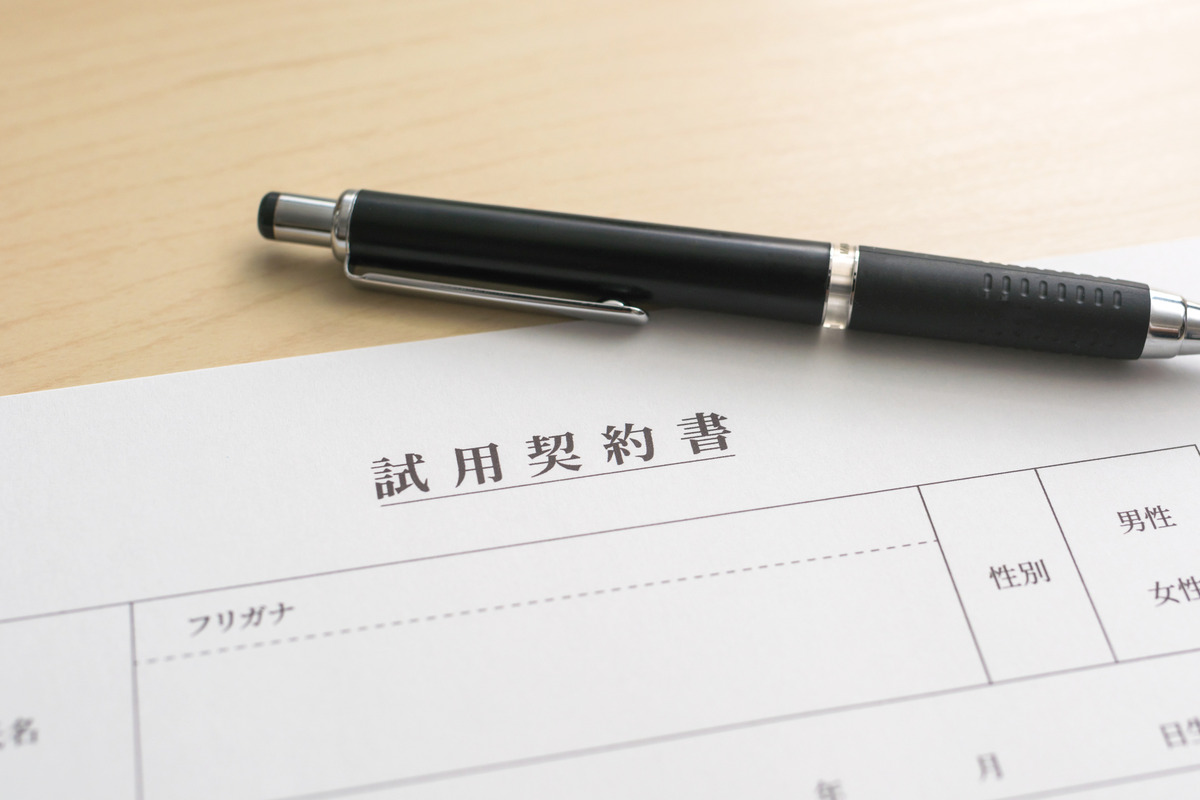
Many Japanese positions include a probationary period (試用期間(しようきかん)).
Ask how long it lasts and whether your employment conditions change during that period.
For example:
Is the salary the same?
Are the benefits the same?
Are the working hours the same?
Is the probationary period automatically extended under certain circumstances?
Don't assume that “probationary” means you're working under an entirely different contract. Ask the employer to explain the specific conditions attached to your offer.
9. What Does the Job Mean for My Residence Status?
As a foreign worker in Japan, this question is definitely something you want to make sure you can answer.
Your ability to work isn't determined solely by whether a company is willing to hire you. Your residence status and the type of work you will perform can also matter.
If you're changing jobs or residence statuses, make sure you understand whether the new position fits your current status and whether you need to complete any immigration procedures.
If the employer says it will “sponsor your visa,” ask what that actually means and what support the company provides.
For anything specific to your individual immigration situation, check current guidance from Japan's Immigration Services Agency or consult a qualified immigration professional rather than relying solely on an employer's interpretation.
10. Get Important Promises in Writing
Finally, pay attention to the difference between what you're told and what you're offered.
Maybe the recruiter says you'll work from home twice a week, or that the bonus is usually two months' salary. Maybe you're assured that transfers aren't normally required.
If something is important enough to affect your decision, ask whether it can be included in your written employment conditions or otherwise confirmed in writing.
Japanese employers are required to communicate key employment conditions to workers, and MHLW provides model documents for this purpose.
Don't Let the Excitement Make the Decision For You
Getting a job offer is an achievement. You don't need to approach it assuming there's something wrong with the company or looking for reasons to reject it.
Instead, take the opportunity to understand exactly what you're being offered.
A good job offer isn't just a salary and a start date. It's a set of working conditions that will shape a significant part of your everyday life.
Before you say yes, make sure you know what you're saying yes to.