
Despite its complexity, Japan’s rail system is relatively easy for tourists and newcomers to the country to get to grips with. That said, there are many things about it that no one ever explains that you’re expected to pick up on your own. Major cities throughout the country have made a lot of effort over the last few decades in making things easier for foreigners in terms of preparing multilingual signs and directions but there are still things that remain confusing for non-Japanese speakers.
In this article, we’re going to focus on some of these little things that no one ever really explains, as well as some useful Japanese words and expressions to help you navigate the Japanese railway network with ease.
Japan Train Service Types
Japan’s rail network is vast and at times confusing. There are multiple services and lines run by multiple operators in many major cities. While JR is obviously the biggest and most widespread throughout the country, many other companies such as Keio, Tobu and Kintetsu all run their own lines and services throughout Japan.
Most trains on local networks stop at every station but if you’re travelling long distances or on lines that run express services, you need to keep a close eye out on which service you’re catching. There’s nothing quite like suddenly realizing that the train you’re on is actually an express that will overshoot your stop by twenty stations. So here are some of the different services you should keep an eye out for before boarding:
- Shinkansen (新幹線) – Japan’s famous bullet trains. These typically travel express over long distances stopping only at a few stations.
- Limited Express (特急) – Limited express trains will usually only stop at the bare minimum of places on their route, usually only major stations.
- Express (急行) – These stop at more stations than Limited Express trains but still largely restricted to major stations.
- Rapid (快速) – Stops at more stations than the Express.
- Semi-Express (準急) – These will skip some minor stations on a line.
- Local (普通列車) – Local trains will stop at every station on a particular line which can be a good thing or a bad thing depending on how fast you want to get somewhere.
One thing to note about these is that the many unspoken train rules in Japan can differ between services. For example, it’s perfectly ok to eat food on the Shinkansen and long distance Limited Express trains but extremely frowned upon on any other services.
Japanese Train Tickets
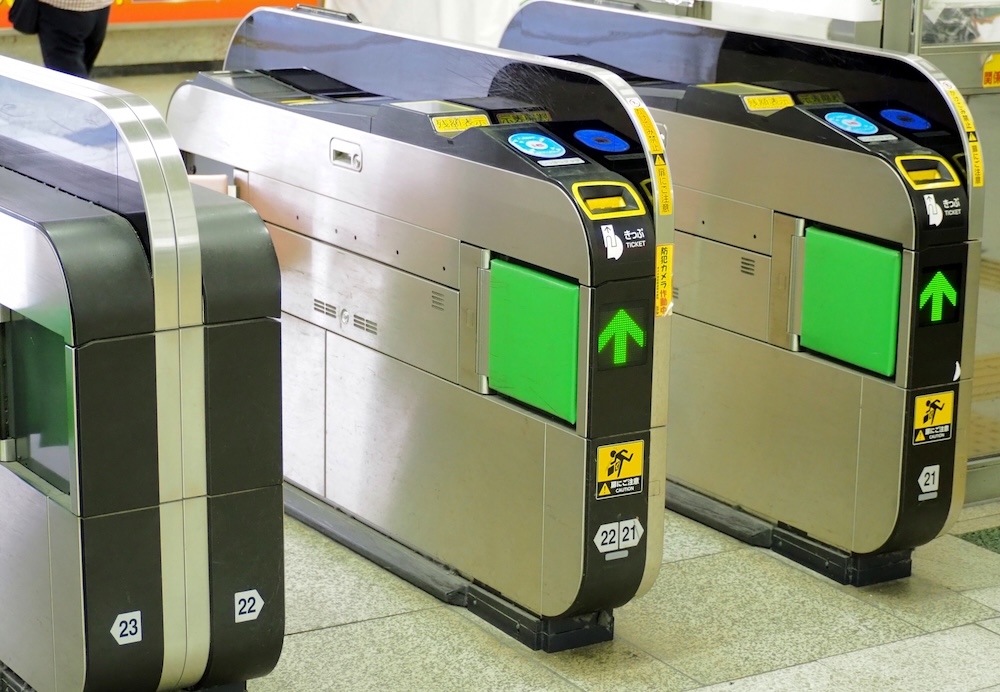
Ticketing is another thing that can be a little confusing though it is simple enough once you work it out. At its most simple level, you pay a basic fare for most services based on your destination. If you’re riding a Shinkansen, a Limited Service or any other service that requires reserved seating, you need to purchase a specific ticket for that service and possibly reserve your seat in advance depending on the service.
For the sake of brevity, we’re going to focus on commuter services. Typically for a one way trip you pay a fare based on your station and then another fare for your return journey. You can buy a paper ticket at the station or you can use a rechargeable IC card like SUICA, PASMO or ICOCA. These are also available as apps on your phone. The benefits to the rechargeable cards is that they will automatically calculate your fare based on the station you get on and off at.
If you need to regularly commute, you can also purchase a commuter pass (定期券). A commuter pass allows you to select a particular route and disembark or board at any station between the start and end point on your route. A commuter pass can be purchased for monthly, six monthly or yearly use. One thing to note is that commuter passes are registered in your name and it’s illegal for anyone but you to use it.
What happens if you make a mistake?
It can be surprisingly easy to go through the wrong gate or miss your station or even buy the wrong ticket. Here is where knowing some Japanese will definitely help. Stations in Japanese cities are almost always staffed and are genuinely understanding of mistakes. You can always approach the staff manning the ticket gates at the station and they will try their best to help you out.
Some phrases that will help you out here are:
- I lost my ticket – 切符をなくしました – kippu o nakushimashita
- I bought the wrong ticket – 間違った切符を買いました – machigatta kippu o kaimashita
- Sorry, I went through the wrong gate – すみません、改札を間違えました – sumimasen, kaisatsu o machigaemashita
If all else fails, you can try to use English. Most train staff won’t understand, but they will still try to help to the best of their ability.
Other Things to Look out For
Mild-air conditioning cars
Usually everyone’s first experience with a mild-air conditioning car goes like this: it’s the middle of summer and you’re hurrying to catch a train, you’re a sweaty mess from being outdoors already when the train pulls into the station and you jump on board and… it’s HOT! Is the air-con on? Is it broken? Not at all.
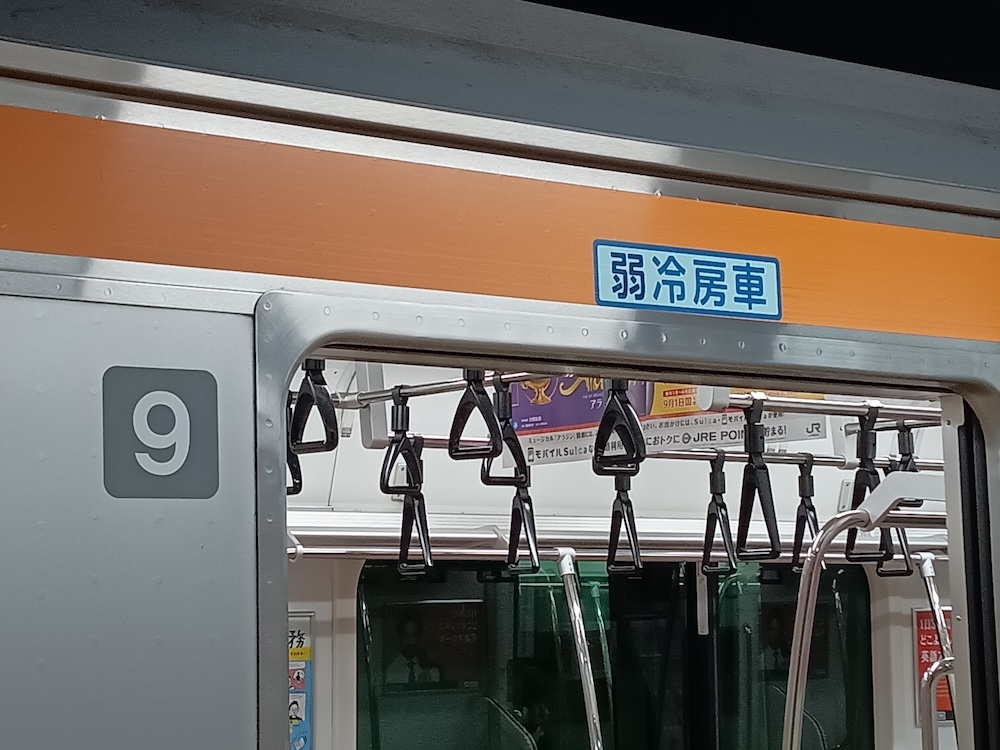
Almost all railway companies in Japan have one or two mildly air-conditioned train cars on every train where the air-con is set at a higher temperature to the rest of the train. In Japanese, these are called jakureibousha (弱冷房車). These cars were created to provide more comfort to people who may be vulnerable to colder temperatures or air-conditioning in general. They typically operate throughout the year but are particularly noticeable in summer and can be quite uncomfortable if you’re on the opposite end of the scale and more sensitive to heat.
To avoid these, just keep an eye out for the 弱冷房車 sign on the window of the carriage. Train operators also usually keep these to the same numbered carriage so if it’s a line you catch regularly, you can also remember which carriage is which.
Women Only Cars
As well as the mild-air conditioning cars, many city commuter lines run carriages that are specifically designated for women to ride in. If you’ve ever caught a peak hour train on a busy line where you’re crammed uncomfortably besides hundreds of other people with no personal space, you would probably understand why this is a thing.
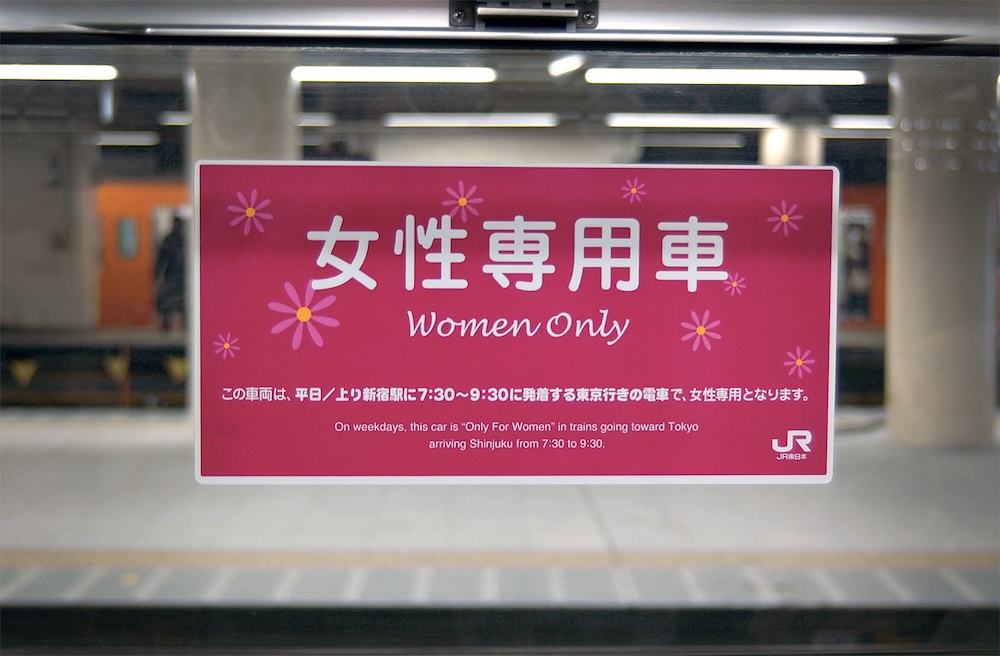
Most lines operate these only during peak morning hours while others operate them throughout the whole day. They are usually clearly signposted but just like with the mild-air conditioning cars, it’s possible to end up on one by mistake. The women only car works on the honor system in that if you’re the wrong gender and end up in the carriage, you’re certainly not breaking any laws, but you will have to deal with uncomfortable stares or possibly even a mild scolding from other passengers.
The Japanese train network is a vast and complicated thing, but once you gain a basic understanding of it, using it becomes second nature. Hopefully these small tips can help you with getting around some of the more unexpected problems you might come across.