Tokyo is one of the most exciting cities in the world to live in. It’s safe, clean, efficient, and full of culture. That’s a big reason why so many foreigners start their journey working in Japan by teaching English there.
But once the excitement of arriving fades, most new teachers start asking the same question: Can you actually live comfortably in Tokyo on an English teacher’s salary?
The short answer is yes, but it depends heavily on how you live.
The Typical English Teacher Salary in Tokyo
Most entry-level private English teaching jobs fall into a fairly narrow salary range. Public-school ALT work varies more, especially when you separate private dispatch ALT jobs from the JET Programme.
Typical monthly gross salaries look like this:
- Eikaiwa (conversation schools): ¥250,000–¥300,000
- Private dispatch ALT roles: roughly ¥235,000–¥280,000, with some jobs outside Tokyo lower than this
- JET Programme: ¥4,020,000 per year in the first year as of April 2025, which is about ¥335,000 per month before deductions. Second to fifth year JET salaries rise from ¥4,140,000 to ¥4,320,000 per year.
- International schools: ¥350,000–¥600,000+
For many people working their first private teaching job in Tokyo, ¥250,000–¥300,000 per month before deductions is a realistic range. JET and international school jobs can sit above that, but they are more competitive and do not represent the average first private teaching job in Tokyo.
However, the number on your contract is not what you actually take home.
On a ¥250,000–¥300,000 gross monthly salary, many teachers budget from about ¥200,000–¥240,000 after income tax, health insurance, pension, employment insurance, and other deductions. Residence tax can also become a bigger factor from your second year in Japan.
If you are on the current first-year JET salary, your gross pay is higher than the private eikaiwa or dispatch ALT examples above, but your exact take-home pay still depends on your deductions, municipality, tax situation, and whether residence tax has started.
What Living in Tokyo Really Costs
Tokyo can be surprisingly affordable in some areas, but housing and lifestyle choices make a big difference.
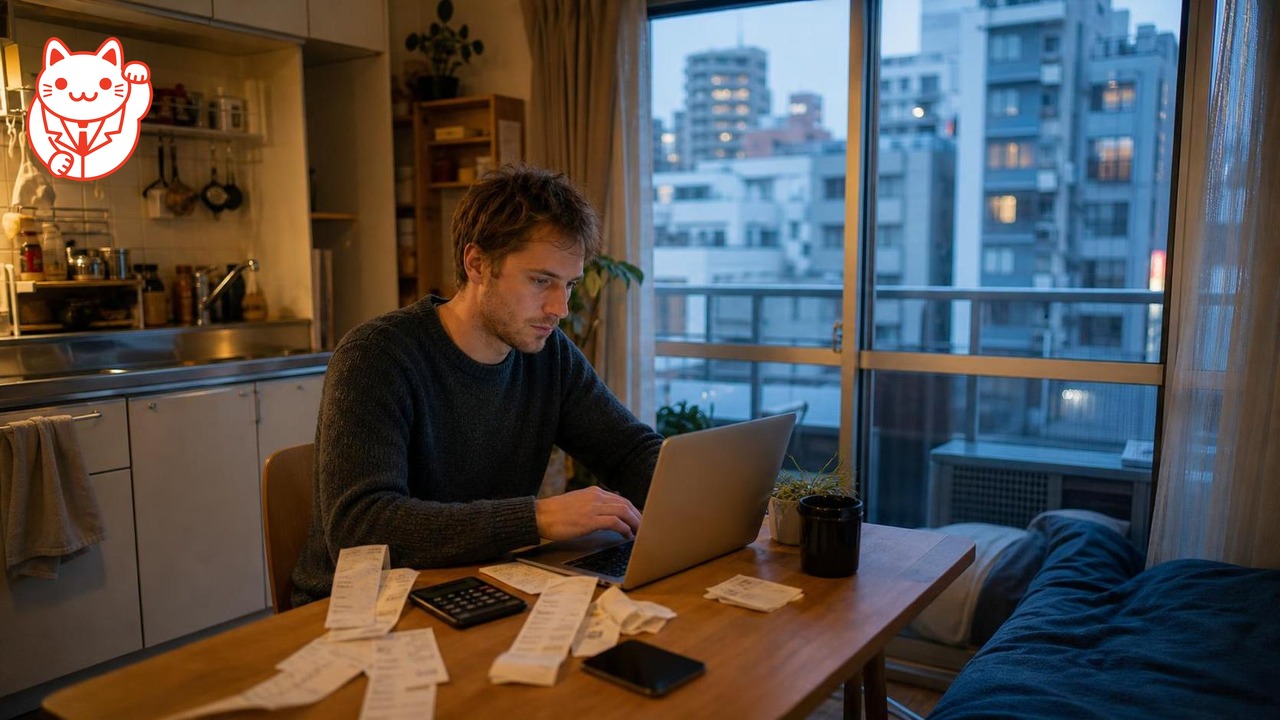
Here’s a realistic monthly breakdown for a single English teacher living alone.
Rent
Housing is the biggest expense.
- Small studio apartment: ¥70,000–¥120,000
- Shared housing: ¥40,000–¥70,000
Many first-year teachers end up in very small apartments, often called 1K apartments, where the kitchen and main room are basically the same space.
If your employer helps arrange housing, it might simplify the process but isn’t always cheaper.
Utilities and Internet
Basic utilities in Tokyo usually include:
- Electricity, gas, water: ¥15,000–¥25,000
- Internet: ¥4,000–¥6,000
Winter and summer generally push electricity bills higher due to heating and air conditioning.
Food
Food costs depend heavily on habits.
- Groceries: ¥30,000–¥50,000
- Eating out regularly: ¥40,000–¥70,000+
One of the advantages of Tokyo is that affordable food is everywhere. You can easily eat a meal for under ¥1,000 if you stick to casual restaurants or convenience store food.
Transportation
Most teachers commute by train.
Typical monthly cost:
- ¥10,000–¥15,000
Many employers pay for or reimburse commuting costs, which can help with this.
Phone, Entertainment, and Daily Life
Other everyday expenses add up quickly:
- Phone plan: ¥3,000–¥7,000
- Social life and entertainment: ¥10,000–¥30,000
- Gym, streaming, subscriptions, etc.
Tokyo has endless things to do, and it’s very easy to spend money without realizing it.
A Realistic Monthly Budget
Here’s what a typical budget might look like for a teacher earning ¥270,000 per month.
| Category | Monthly Cost |
| Take-home pay | ~¥210,000 |
| Rent | ¥80,000 |
| Utilities + Internet | ¥20,000 |
| Food | ¥40,000 |
| Transportation | ¥10,000 |
| Phone | ¥5,000 |
| Entertainment / misc | ¥20,000 |
Total expenses: ~¥175,000
Possible savings: ~¥30,000–¥40,000
This aligns with typical teacher spending ranges of ¥193,500–¥296,000 per month depending on lifestyle.
Why Some Teachers Save Nothing
Some teachers manage to save money in Tokyo, while others finish the month with almost nothing left.
Usually the difference comes down to a few lifestyle choices:
Housing size
A larger apartment in central Tokyo can easily double your rent.
Nightlife and travel
Tokyo has endless entertainment — bars, restaurants, weekend trips — and it adds up quickly.
Imported goods
Foreign food, imported groceries, and Western products are significantly more expensive.
Ways Teachers Make Their Salary Go Further
Many teachers find ways to improve their financial situation after their first year.
Common strategies include:
- Taking private students (often ¥3,000–¥6,000 per hour), if your visa status, employment contract, and tax setup allow it. JET participants and some school employees are not allowed to take outside work.
- Moving to cheaper neighborhoods outside central Tokyo
- Sharing housing
- Transitioning into higher-paying roles like corporate training
Even an extra ¥30,000–¥50,000 per month can significantly change your financial comfort.
The Reality of Living in Tokyo as a Teacher
Living in Tokyo on an English teacher’s salary won’t make you rich. But it can offer a comfortable lifestyle if you budget carefully.
Most teachers can afford:
- Rent in a small apartment
- Daily meals and groceries
- Weekend outings
- Some travel around Japan
Large savings, however, are harder to achieve unless you increase your income or keep expenses very low.
Final Thoughts
For many foreigners, teaching English is the gateway to working in Japan. Tokyo offers the most job opportunities, but it also requires the most careful budgeting.
The good news is that even on a typical teaching salary, you can still enjoy what makes Tokyo special — incredible food, efficient transportation, and access to one of the most dynamic cities in the world.
You just have to live a little smaller than you might expect.