
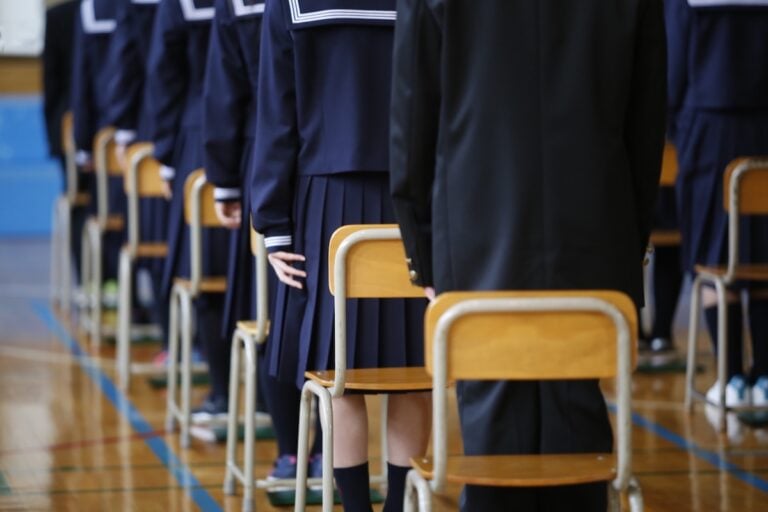
One of the most unexpected parts of my JET experience was the chance to see two very different sides of school life in Japan. I wasn’t placed at just one school, I rotated between four: two elementary schools and two junior high schools. What made the experience unique, though, was that half of these schools were small, while the other half were quite large.
My smallest elementary school had fewer than 70 students. My smallest junior high hovered around 100. On the other end of the spectrum, my large junior high had over 450 students. Big enough that I sometimes felt like I was walking into a small city each morning!
At first, this setup seemed ideal. I thought I’d get the best of both worlds: the intimacy of a small community and the excitement of a bustling, active school. But as the months went by, I started noticing something: my feelings about teaching (and about myself as a teacher) changed drastically depending on the size of the school.
The Small School Experience: Names, Faces, and Belonging
At the smaller schools, everything felt more personal. It didn’t take long before I could recognize almost all the students by sight. With fewer classes to rotate through, I saw the same kids more often, which gave me a chance to remember their names and notice their personalities.
I’ll never forget the moment a shy second-year junior high student greeted me by name for the first time. It had taken me weeks to finally remember his name, but he noticed! And that recognition turned into a small but real bond. Multiply that by dozens of other little interactions, and suddenly I wasn’t just “the ALT who comes in once or twice a week.” I was part of their world.
The teachers at the small schools also seemed more approachable. With fewer students to manage, they weren’t constantly buried under piles of paperwork or rushing between classrooms. We’d chat in the staff room, sometimes about lessons, sometimes just about weekend plans (or how my hometown in the midwest was undergoing a once-every-17-year cicada armageddon, which many of them found fascinating). At my smallest elementary school, the teachers included me in assemblies, and chatted with me after lunch about life in Japan. This gesture made me feel more like a colleague than a guest.
In these smaller environments, I felt grounded, seen, and genuinely useful.
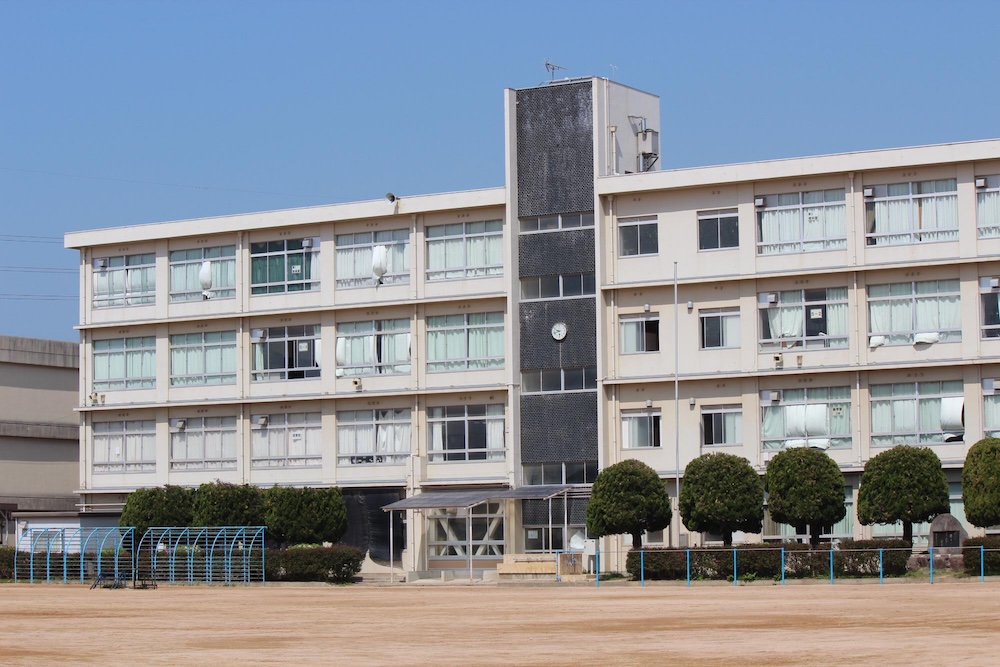
The Large School Experience: Lost in the Crowd
The larger schools, especially my 450-student junior high, were an entirely different world.
Walking through the halls, I felt anonymous. I taught so many classes that keeping track of names became nearly impossible. I’d wave and say hello in the hallways, but more often than not, the students just giggled or stared shyly, unsure if I even knew who they were. Unlike at my small JHS, where I could recognize a good portion of the student body, at the big school I often felt like I was meeting strangers every single day.
The teachers, too, seemed farther away. Not because they were unfriendly, but because they were simply swamped. Managing hundreds of students meant more grading, more paperwork, and more after-school club responsibilities. There were days when I barely exchanged more than a polite “otsukaresama desu” (お疲れ様です) with my coworkers before everyone buried themselves back into their tasks.
At first, I took this personally. I thought maybe I was doing something wrong, or that I wasn’t making enough of an effort. When I compared myself to friends on JET who worked at only small schools, I felt even worse. They told stories of knowing every student’s name, of being invited to staff outings, of feeling deeply embedded in their school communities. Meanwhile, I struggled to remember which third-year class I was walking into next.
It was disheartening. There were evenings I went home convinced I was failing as a teacher.
The Comparison Trap
Looking back, I realize how unfair I was being to myself. I wasn’t comparing apples to apples. My friends weren’t “better” teachers just because they had closer relationships with their students or colleagues. They were teaching in environments that made those kinds of connections much easier, if not simply possible.
At my smaller schools, I experienced that intimacy too. I just didn’t recognize it at the time because I was too busy measuring myself against others.
It took me months to understand that the size of the school fundamentally changes the kind of relationships you can build. At small schools, it’s natural to get to know everyone. At large schools, it’s near impossible. And that’s okay.
Rethinking Success
Eventually, I realized I needed to redefine what “success” looked like at each school.
At my large JHS, success didn’t mean memorizing hundreds of names or having long chats in the staff room. Success meant making the 45 minutes I had with a class engaging and memorable, even if I never learned every student’s name. It meant creating small moments of joy: getting a quiet student to volunteer an answer, making the whole room laugh during a warm-up game, or seeing the lightbulb go off when someone finally understood a tricky grammar point.
At my smaller JHS, success looked different. It was about deeper, long-term relationships. Things like being a familiar face in the hallways, watching students grow over the course of the year, and becoming a trusted presence in the classroom.
Both forms of success were real. Both mattered.
Teacher Relationships: Another Layer
One aspect I didn’t anticipate was how much school size affected my relationships with teachers.
At my smaller schools, teachers had more breathing room. They weren’t juggling as many classes or students, and that gave them space to connect with me. They’d check in about lessons, invite me to join their conversations, or even ask for help practicing English. Over time, I felt like someone they could rely on, not just a visitor passing through.
At the large JHS, the difference was stark. The teachers worked incredibly hard, but they were constantly pressed for time. Between supervising hundreds of students, managing clubs, and endless paperwork, building a relationship with the ALT just wasn’t a priority. They were friendly, of course, and a few really tried interacting with me whenever they could. However, this was the exception, rather than the rule.
Early on, I misread this as disinterest. I thought I was being ignored. But as time went on, I realized it wasn’t about me at all. These teachers weren’t cold, they were exhausted. Recognizing this made me more compassionate, and it helped me stop taking their busyness personally.
Lessons Learned
Teaching at both big and small schools forced me to adapt, but it also gave me perspective. I stopped comparing myself to my friends who only had small schools. I stopped comparing my small JHS to my big one. Instead, I learned to see each environment on its own terms.
At big schools, my role was more about energy and presence. I was bringing something different to classes that students might not otherwise experience. At small schools, my role was more about continuity and personal connection. Both were valuable, even if they looked very different in practice.
And perhaps most importantly, I learned that my worth as a teacher wasn’t defined by how many students knew my name, or how often teachers stopped to chat with me in the staff room. My worth came from showing up, doing my best, and recognizing the impact I could have, whether it was wide but shallow, or narrow but deep.
Lessons Beyond School Size
The JET Program places ALTs in an incredible variety of schools. Some spend all their time at a single tiny elementary/junior high school hybrid school on a remote island; others rotate between massive junior highs. It’s easy to fall into the trap of comparing experiences, but the truth is, no two placements are ever alike.
For me, bouncing between big and small schools taught me that relationships in education don’t all look the same. Sometimes they’re broad and fleeting; sometimes they’re deep and lasting. Both types matter. Both change students’ and our own lives.
If you’re on JET now, or about to start, my advice is this: don’t measure your success by someone else’s yardstick. Every placement is unique, every school has its own rhythm, and every relationship is shaped by its environment. What matters most is showing up with patience, openness, and a willingness to adapt.
Because in the end, whether you’re teaching 50 students or 500, you still have the chance to make a difference.