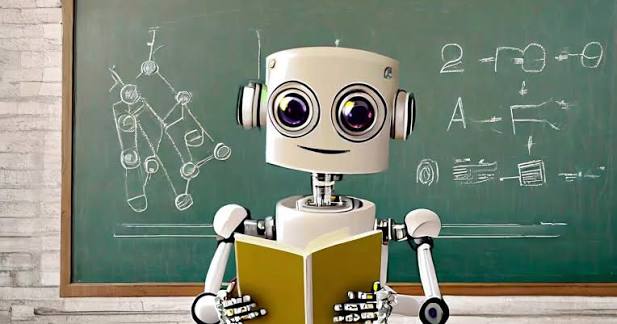
Just a few years ago, the idea of artificial intelligence replacing English teachers sounded like science fiction. Today, AI-powered translation tools, conversation apps, and writing assistants are becoming part of everyday life.
It’s understandable, then, that many people considering teaching English in Japan wonder whether these advances will reduce the need for foreign teachers.
The short answer is: probably not.
There’s no doubt that AI is changing education, but rather than replacing English teachers, it’s changing the role they play. The skills that schools value most are shifting away from simply explaining grammar and vocabulary, and toward something technology still struggles to replicate: genuine human communication.
AI Is Already in Japanese Classrooms
Artificial intelligence isn’t some distant possibility. Many schools and language learners already use it.
Students can ask AI to explain grammar points, generate vocabulary lists, practice pronunciation, or receive instant feedback on written English. Translation tools have also become dramatically more accurate, making it easier than ever to understand unfamiliar words or phrases.
Teachers are benefiting as well. Many now use AI to brainstorm lesson ideas, create worksheets, simplify reading passages, or generate classroom activities more efficiently.
In many ways, AI has become another educational tool, much like projectors, tablets, or online dictionaries before it.
Language Learning Is More Than Correct Answers
But here’s the thing.
If learning English were simply about memorizing grammar rules, AI would already have solved the problem.
Language learning, however, isn’t just about knowing the correct answer. It’s about communicating with another person.
Students need opportunities to:
- build confidence speaking aloud
- navigate unpredictable conversations
- understand different accents and communication styles
- make mistakes without fear of judgment
- develop cultural awareness alongside language skills
These experiences are difficult to recreate through AI alone.
One of the biggest reasons Japanese schools hire foreign teachers is because they see them as more than just a walking dictionary. It’s because they bring authentic communication into the classroom.
Cultural Exchange Is Part of the Job
For many students, their English teacher is also their first opportunity to interact regularly with someone from another country.
That exposure alone has value beyond language itself.
Students ask questions about customs, holidays, food, education, and everyday life overseas. And in return, they get answers unique to the individual being asked. They learn that English isn’t simply a school subject but a way to connect with people from different backgrounds.
Likewise, teachers learn about Japanese culture through their students, creating a two-way exchange that AI simply cannot provide.
This cultural component has always been one of the defining features of programs like the JET Programme and many ALT positions.
AI Can Make Teachers Better
Rather than viewing AI as competition, many teachers are beginning to use it as an assistant.
For example, AI can help:
- generate discussion questions
- adapt lesson materials for different proficiency levels
- create quizzes and worksheets
- explain difficult grammar in multiple ways
- reduce time spent on administrative tasks
This allows teachers to spend more time doing the parts of the job that require human interaction: encouraging students, facilitating conversations, and responding to the unique dynamics of each class.
In that sense, AI has the potential to make teaching more effective, not less.
The Classroom Is Unpredictable
No two classes are exactly alike.
A lesson that works perfectly with one group may fall flat with another. Students lose confidence, become distracted, ask unexpected questions, or simply need encouragement on a difficult day.
Great teachers constantly adjust.
They read body language, or notice confusion before a student says anything. They might decide to change activities when energy drops. Most importantly, they celebrate small successes that help students gain confidence. These are all deeply human skills.
While AI can generate information remarkably quickly, it cannot build genuine relationships with students in the same way a trusted teacher can.
A Counterpoint Worth Considering
That doesn’t mean AI won’t change the profession.
Some routine tasks may become automated. Schools may rely more heavily on digital learning tools for grammar practice, vocabulary review, or homework.
In some cases, fewer hours may be dedicated to activities that AI can already support effectively.
Teachers who rely solely on explaining textbook exercises may find that technology increasingly fills that role.
However, this doesn’t necessarily reduce the need for foreign teachers. Instead, it raises expectations. Schools are likely to place greater value on teachers who can deliver things that AI can’t in the same way: inspiring discussions, encouraging participation, adapting lessons creatively, and building positive classroom relationships.
In other words, AI makes the human side of teaching even more important.
What This Means for Future Teachers
If you’re considering teaching English in Japan, don’t think of AI as something you need to compete against. Instead, think about the qualities that make you uniquely human.
Your ability to encourage a shy student to speak for the first time, your sense of humor during a difficult lesson, your experiences growing up in another country, or your empathy when a student struggles, and definitely your enthusiasm for sharing language through real conversation.
These are the things students remember long after they’ve forgotten individual grammar points.
The teachers who thrive in the years ahead won’t necessarily be the ones who know the most English. They’ll be the ones who know how to create an engaging, supportive classroom where students feel comfortable communicating.
Teaching Beyond Technology
Artificial intelligence is changing education around the world, and Japan is no exception. It will almost certainly continue to reshape how lessons are planned, how students study, and how teachers prepare their classes.
But learning a language has always been about more than just information. So much more of it is about confidence, connection, curiosity, and communication.
Those qualities are built through relationships, not algorithms.
As AI becomes a more common classroom tool, the role of the English teacher is evolving. And for teachers who embrace both technology and the uniquely human side of education, the future remains full of opportunity.