
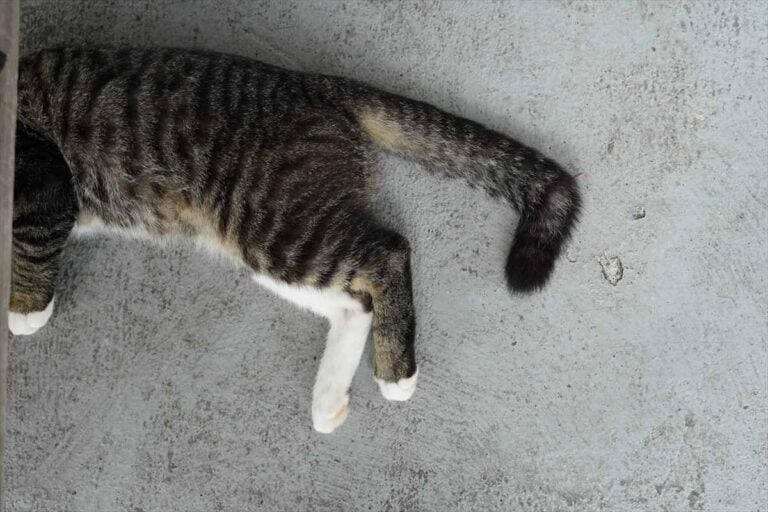
Japan is famous for its obsession with cats. From whimsical cat cafés to islands practically ruled by feline residents, and from beckoning maneki-neko statues to entire stores dedicated to cat merchandise, the love for cats runs deep. But in the hilly port city of Nagasaki, there’s a lesser-known type of cat that holds a special place in local hearts called the omagari-neko (尾曲ネコ), or bent-tail cat.
These unique felines are easy to miss if you’re not looking closely. Their tails are crooked, kinked, or hooked in a way that almost looks like punctuation. In some cases, these cats even look bobtailed. Wander around most Nagasaki neighborhoods long enough and you’re sure to see them. Locals treat them with affection, and there’s even a bit of folklore behind their curious tails. This article explores cat culture in Japan through the lens of Nagasaki’s beloved bent-tail cats.
Living in Japan: Exploring Nagasaki’s Offshore Wonders on the Gotō Islands
Japan’s Feline Fascination
If you spend enough time in Japan, you’ll start to notice how often cats pop up in daily life. There are entire “cat islands,” like Aoshima in Ehime and Tashirojima in Miyagi, where cats outnumber people. Cat cafés are easy to find in major cities, and stores are packed with cat-themed merchandise. Chopstick rests, calendars, and even designer handbags are just a few of the goodies that can be found. Cats have also appeared in Japanese art for centuries, sometimes painted as elegant companions, other times as mysterious, even magical beings.
Living in Japan: Nagasaki’s Shōrō Nagashi – Where Spirits Set Sail and Firecrackers Roar!
In Shinto and Buddhist beliefs, cats are seen as protective, lucky animals. This is where the iconic maneki-neko (招き猫) comes in (the little cat figurine that waves from shop windows, believed to bring in fortune and customers). Cats show up in shrines, folktales, and children’s stories too. While many Japanese families are proud cat owners, cats are, in many ways, considered more than just pets in Japan. This national adoration sets the perfect stage to look deeper into regional cat lore—like the charming, twisted-tailed cats of Nagasaki.
What Are Omagari-Neko?
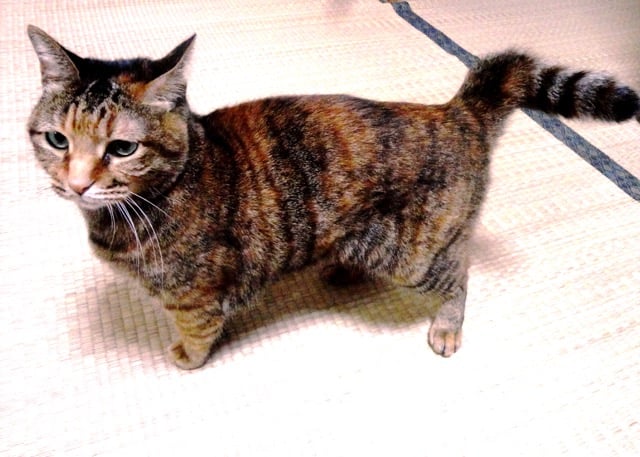
The term omagari-neko (尾曲がり猫) literally means bent-tail cat These are domestic cats whose tails don’t extend straight out like most others. Instead, their tails curl like a hook, twist into a knot, or have one or more sharp bends. The first time I saw one in Nagasaki, I thought I had seen a weirdly-shaped rabbit. In fact, it was simply one of these sharply bent tails, making it look more like a cotton ball than a tail. Believe it or not, this tail shape is entirely natural and, in this part of Japan, fairly common.
While you might spot the occasional bobtail in other parts of Japan, the kinked-tail variety is strongly associated with Nagasaki and parts of Kyūshū. Scientists believe the trait may result from a genetic mutation or a recessive gene that became more common in isolated breeding populations. Others think it could be a mix of natural selection and local interbreeding. Whatever the case, the omagari-neko is a beloved part of the city’s identity. To locals, their twisted tails are as quirky as they are a sign of good fortune.
Living in Japan: Welcoming a Pet into Your Home in Japan
Origins and Folklore
The origin of the bent-tail trait is still debated, but Nagasaki’s unique place in Japanese history gives us some clues. As one of the only ports open to international trade during Japan’s centuries-long isolation, Nagasaki saw a steady influx of foreign ships. The most numerous of these were Dutch or Chinese however, there were other nationalities that dropped anchor in smaller numbers, too. These traders often brought cats aboard to control rats, and it’s believed that foreign breeds with bent or shortened tails may have intermingled with local strays.
Over generations, these genes may have taken hold in Nagasaki’s cat population, especially in areas around the port and older neighborhoods. But genetics only tells part of the story. In local folklore, omagari-neko are considered lucky, kind, and unusually clever. There’s a charming belief that their bent tails “catch” and hold good fortune. Almost like a hook that keeps happiness close!
Where to See Omagari-Neko
If you’re visiting Nagasaki and want to spot an omagari-neko in the wild, start by wandering through some of the quieter residential neighborhoods. Areas around Glover Garden, the Dutch Slope, and Nakashima River (中島川) are especially good bets. I often spot them lounging on stone walls, darting across stairways, or curled up under vending machines. They’re not shy, but they do appreciate a respectful distance.
You’ll also find artistic nods to the omagari-neko throughout the city. Some local shops feature hand-painted signs with curly-tailed cats. Street art in Minami-Yamate (南山手) even includes a few feline silhouettes if you look closely. At souvenir shops near Dejima (出島) or along Hamano-machi (浜の町) Arcade, you can buy small bent-tail cat figurines, keychains, and even lucky charms shaped like omagari-neko.
There aren’t major festivals dedicated to these cats (yet!), but they sometimes appear in local art fairs or animal-themed exhibitions at museums like the Nagasaki Prefectural Art Museum. A few cat cafés and shelters in the area, especially ones that work with stray or rescued animals, feature omagari-neko as part of their permanent feline “staff.” Whether you’re a dedicated cat-lover or just curious, keep your eyes peeled. You never know when one of these lucky little legends might cross your path.
Nagasaki’s Omagari Cat Shrine
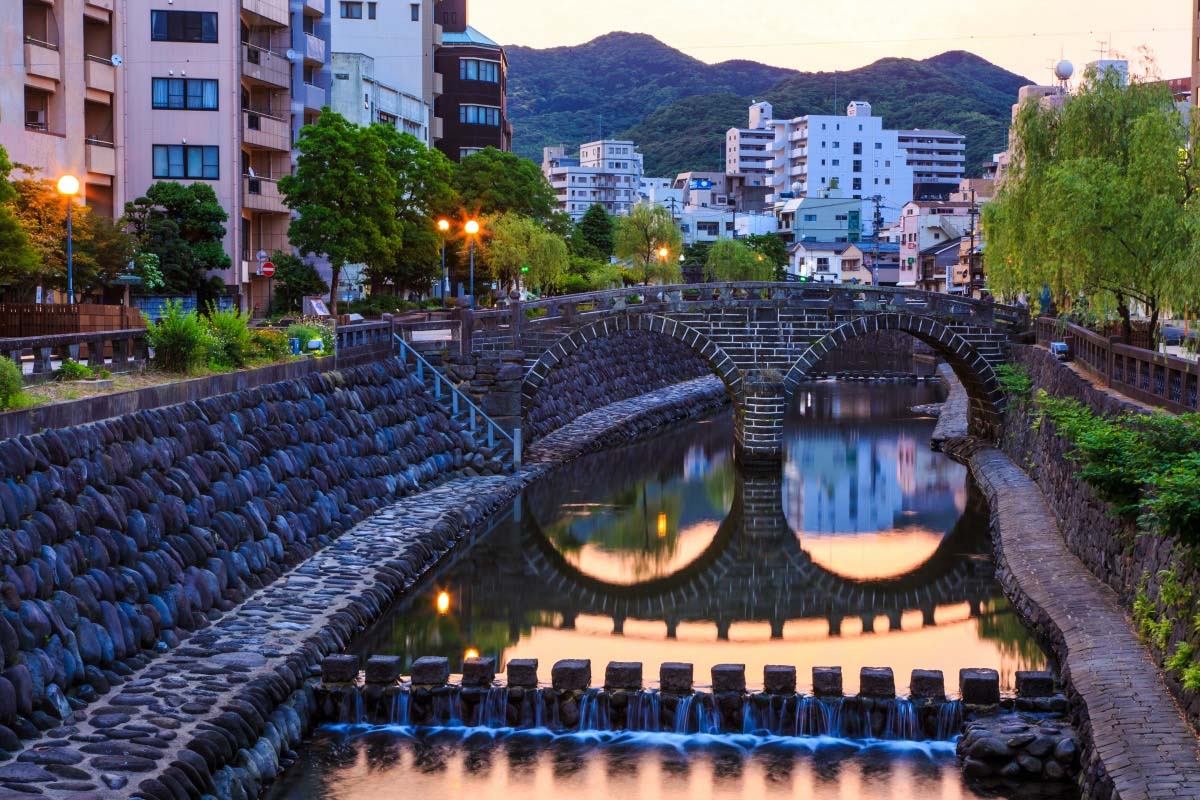
Tucked away on an unassuming side street near Nagasaki’s iconic Meganebashi (眼鏡橋) lies the shrine of every cat lover’s dreams. But the Omagari Cat Shrine isn’t just a place to embrace your inner crazy cat person! It’s also a place dedicated to the well-being of these furry companions. Purchasing any of the available merchandise, like omamori (お守り) or cat-themed items, as well as all donations go towards supporting rescue cats across the country. All the more reason to stop by if you’re in the city!
Cat Tourism in Japan: Beyond Nagasaki
Of course, the omagari-neko in Nagasaki are just one example of Japan’s deep cultural relationship with cats. Across the country, there are places where feline affection goes far beyond the ordinary. On Tashirojima (田代島) and Aoshima (青島) islands, cats outnumber people, and visitors travel by ferry just to photograph them. In Tokyo, Gōtokuji (豪徳寺) Temple is believed to be the birthplace of the maneki-neko (招き猫) statue and is filled with hundreds of white cats with one raised paw.
Many towns have adopted cat mascots, such as Kumamoto’s Kumamon (くまモン) might be more famous, but even towns like Wakayama (和歌山) have featured stationmaster cats like Tama that drew crowds and boosted tourism. Even small cafés in remote areas sometimes feature “resident cats” that locals and tourists alike adore.
In this broader landscape of cat-centric travel, Nagasaki’s omagari-neko offer something a little more subtle, more lived-in. You won’t find mobs of tourists chasing them down, but you’ll find locals smiling when they pass. It’s a quieter kind of cat tourism, but no less meaningful.
Cultural Symbolism and Modern Appeal
What makes the omagari-neko so special isn’t just their tails, it’s what they represent. In a city shaped by centuries of cultural exchange, the bent-tail cat feels like a symbol of Nagasaki itself: distinctive, resilient, and a little different from the rest of Japan. These cats reflect a mix of domestic and foreign influence, just like the architecture, the cuisine, and the local dialect.
Even today, locals view them as good luck. Tourists who learn about them often find themselves enchanted. And for those of us who call Nagasaki home—whether by birth or by choice—the omagari-neko is a quiet mascot of daily life. Every time I see one, they remind me that some of the most meaningful parts of a place aren’t the landmarks or attractions, they’re the little things that make it feel like home. If you ever find yourself walking through Nagasaki’s backstreets, take a moment to look around. With a bit of luck, you might spot a twisted tail disappearing around the corner.