If you’re serious about learning Japanese, one of the first things you’ll likely invest in is a textbook. But with so many available, choosing the right one can feel overwhelming. Each book has its own approach, and what works for one person might not work for another.
Over the years, I’ve collected and used several textbooks, including Minna no Nihongo, Genki, Tobira, Nihongo Fun & Easy, and Everyday Expressions and Vocabulary. Depending on your learning style, study environment, and goals, each of these books has its own strengths. Most are priced around 5,000 yen or more, especially when you need to buy companion books or workbooks.
Here’s a closer look at what to expect from each one.
Nihongo Fun & Easy

Simple, light, and made for absolute beginners.
Nihongo Fun & Easy was the first Japanese textbook I ever bought in Japan, and it’s still one of the friendliest ones I’ve used. It’s made with simple, clear illustrations, and the lessons are designed in a way that even elementary school students could follow. Everything from vocabulary to expressions is kept at a very basic level, and the tone of the book is encouraging and non-intimidating.
It won’t take you far in terms of fluency, but it’s a gentle way to get started with the language. For nervous beginners or people who want a casual start, it’s a solid introduction. The book is also small and light, so it’s easy to carry around.
- Price range: Around 2,000 to 3,000 yen
- Best for: Absolute beginners and casual learners who prefer visual and easy-to-understand material
Minna no Nihongo

Immersive and grammar-focused.
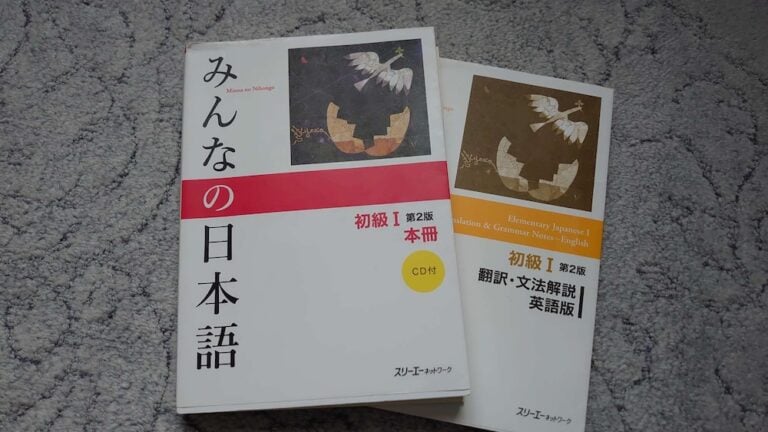
Minna no Nihongo is one of the most widely used textbooks in Japanese language schools. The main textbook is written entirely in Japanese, with no English at all. This makes it very immersive, but also a challenge for beginners who are not yet confident in reading Hiragana and Katakana.
It includes detailed grammar points and a lot of structured drills. The practice exercises are repetitive in a good way, helping you absorb grammar and vocabulary naturally over time. However, if you rely on English explanations, this book alone won’t be enough. You will need to purchase a separate translation and grammar notes book, which is often available in multiple languages.
I used Minna no Nihongo during a one-month full-time course in the Philippines, and it helped me mentally shift into Japanese mode. It’s a strong choice if you are studying in a classroom setting or already have a teacher guiding you.
- Price range: 3,000 to 6,000 yen per book, not including companion materials
- Best for: Structured classroom learning and immersion-style study
Genki
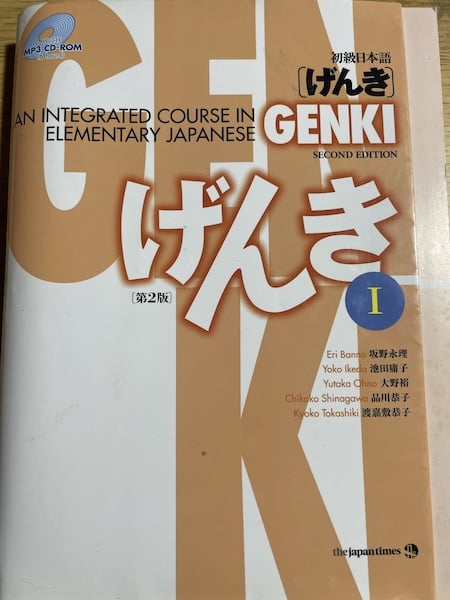
Beginner-friendly and English-supported.
Genki is a popular textbook for beginners, especially for self-study learners. What makes it different from Minna no Nihongo is the amount of English support it offers. Every chapter is clearly broken down into sections like vocabulary, grammar, reading, conversation, and listening, with plenty of English explanations throughout.
Some learners say Genki has more English than Japanese. While that might sound excessive, it actually helps make complicated grammar points easier to understand. The book also includes cultural notes, writing exercises, and listening resources, making it a good all-in-one learning tool.
- Price range: Around 5,500 yen for the textbook, and another 3,000 to 4,000 yen for the workbook
- Best for: Self-study beginners and university-level classroom learners
Tobira
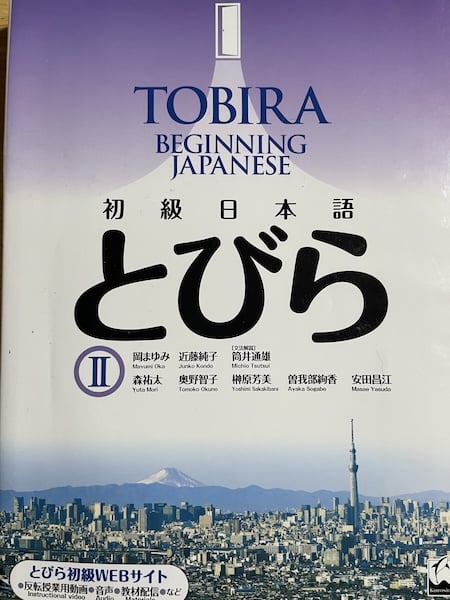
Visually engaging and great for intermediate learners.
Tobira is often recommended for learners transitioning from beginner to intermediate level. What stands out about Tobira is how visually rich and thoughtfully structured it is. The book includes illustrations, verb images like miru and yomu, and content divided into practical themes.
Each chapter includes kanji, vocabulary, grammar points, and reading passages, with translations and English explanations available. The topics also give cultural context, which is useful if you want to go beyond textbook-style conversation.
- Price range: Around 5,500 to 6,000 yen for the main textbook
- Best for: Intermediate learners and those who like visual and thematic lessons
Everyday Expressions and Vocabulary

Light and introductory.
This book focuses on daily expressions and useful words grouped by situation. It’s not designed to be a full grammar textbook, and there are no in-depth explanations or drills. But if you’re just looking for quick phrases and a general idea of how to say common things, it’s a helpful supplement.
I wouldn’t use this book alone if you’re serious about learning, but it can be a nice side resource to carry around or review during commutes.
- Price range: Usually under 2,000 yen
- Best for: Beginners looking for casual learning or quick reviews
Tips for Studying with These Textbooks
If you’re studying on your own, pairing your textbook with YouTube videos, language apps, or tutors makes a big difference. You can also use Anki flashcards to memorize vocabulary and kanji from books like Genki and Tobira. Many learners download free decks that match the chapters and revise them daily.
Where to Buy Japanese Textbooks in Japan
These books are easy to find in most major bookstores, including:
- Kinokuniya
- Junkudo
- Tsutaya
- Book Off (for secondhand deals)
Larger branches usually have a dedicated section for Japanese language learners. You can also buy them online from Amazon Japan or Rakuten, which is convenient if you live outside the city or prefer home delivery.
How to Choose the Right Textbook
The best textbook for you depends on your learning situation. If you’re attending a Japanese language school, Minna no Nihongo is often used. If you’re self-studying and need English explanations, Genki is a better fit. If you’re ready for intermediate-level material and want something more dynamic, Tobira is a great next step. If you’re just starting out and want something very simple, Nihongo Fun & Easy or Everyday Expressions can ease you in gently.
All of these textbooks have value, but none of them work alone. Regular practice, exposure, and speaking will always be key to real progress.