If you’re planning on moving to Japan, apartment hunting can be a bit of a culture shock. You might expect to walk into a place with a fridge, maybe a bed, some lighting at least. But in many Japanese apartments, “unfurnished” means exactly what it sounds like. You’re getting four walls, a floor, and little else. No furniture. No appliances. Often, no ceiling lights.
That’s when furnished apartments start to sound appealing. But, are they the smarter choice? The answer depends on how long you’re staying, how settled you plan to get, and how much time and energy you want to spend turning an empty space into a livable home!
What You’re Actually Getting (and Not Getting)
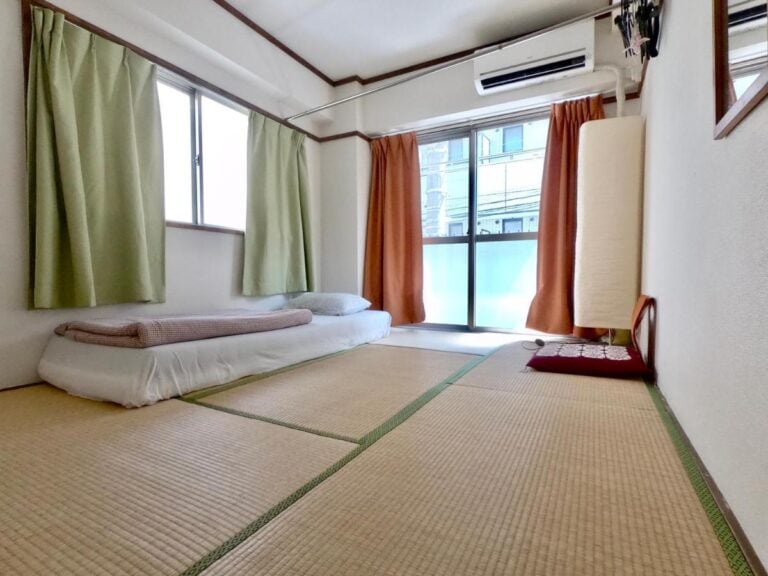
Furnished apartments in Japan usually come through foreigner-focused agencies or monthly rental companies. They’re designed to be move-in ready, especially for people staying short-term or still adjusting to life in Japan. You can expect a bed, a small fridge, a table and chair, sometimes even kitchen basics. Mine came with a (very basic) microwave! Internet and utilities are often set up when you sign for the apartment, so by the time you move in, it’s all set up.
Unfurnished apartments, on the other hand, are the standard here. And they truly start from scratch. You’ll need to bring or buy everything: lights, appliances, curtains, and of course, furniture. But hey, at least you don’t have to worry about the toilet, as this is almost always provided.
That said, everything else is fair game for the rental company to not provide. Sometimes even essentials aren’t guaranteed. Ceiling lights, for instance, are often considered the tenant’s responsibility, as are curtain rods. You may even have to install your own air conditioning unit or heater, especially in older properties. This can feel inconvenient at first, but it also opens up opportunities to customize your living environment exactly how you want it.
Making the Right Choice: What Fits Your Life?
If you’re new to Japan, staying for just a few months, or unsure about your next steps, a furnished apartment offers the least resistance. There’s no scrambling to set up Wi-Fi or find a washing machine on day one. These places are also much more likely to accept foreign tenants without requiring a guarantor or advanced Japanese skills. In my experience, they’ve been a lot more lenient during the move-out procedure than unfurnished landlords, too. Moving out of my Leopalace couldn’t have been easier, as the application process was all online, and the final apartment check took all of 30 minutes, with no added charges.
On the flip side, if you’re planning to stay for a year or more, or if you already have a job and want to put down roots, renting an unfurnished apartment is usually a better long-term move. While the setup process takes more time (and often more money upfront) you’ll end up with lower rent, more housing options, and a space that feels uniquely yours.
Another factor to consider is control. With an unfurnished apartment, you can design the space to suit your routine, storage needs, and style. Want a big desk for remote work? Prefer a futon instead of a bed? It’s entirely up to you. With a furnished unit, you’re stuck with whatever’s provided, and it’s rarely high-end or tailored.
| Feature | Furnished Apartment | Unfurnished Apartment |
|---|---|---|
| Move-in Effort | Very low | High (setup needed) |
| Upfront Costs | Minimal | High (furniture, appliances) |
| Monthly Rent | Higher | Lower |
| Lease Length | Flexible (short-term OK) | Usually 1–2 years |
| Best For | New arrivals, short stays | Long-term residents, families |
| Guarantor Needed | Rarely | Often required |
A Note on Costs and Surprises
One thing worth knowing: the cost of getting settled in an unfurnished apartment isn’t just about buying a bed or a fridge. You may also run into key money (a non-refundable gift to the landlord), lock-changing fees, agency fees, and cleaning fees. These can stack up quickly. That said, over time, unfurnished places typically cost less month to month, and the initial investment can pay off if you’re staying multiple years.
Common costs to expect when renting unfurnished:
- Key money (reikin 礼金): Often 1–2 months’ rent, not returned
- Deposit (shikikin 敷金): Usually refundable if there’s no damage
- Agency fee: Typically one month’s rent
- Lock exchange: A few thousand yen, mandatory in many leases
- Furniture and appliances: Costs vary widely depending on quality and size>
Furnished places skip most of that hassle. But because they’re so turnkey, they come at a premium. And over time, the convenience may start to feel like you’re living in someone else’s space, not your own.
Is One Better Than the Other?
Not really. It’s less about which type is better and more about where you are in your journey. Furnished apartments are great when you want a low-stress start. Unfurnished apartments become the smarter, more personal choice once you’re ready to commit a little deeper.
There’s a certain satisfaction in picking out your own furniture, making a space feel like it reflects who you are. But there’s also nothing wrong with wanting to just unpack your suitcase and crash on a real bed after a long flight. One choice isn’t more “authentic” than the other, it’s just a matter of timing and priorities.
You might also find your priorities shift over time. What felt like a perfect furnished setup at first may feel restrictive months later. Or you might begin in an unfurnished space and come to miss the ease and predictability of a rental that “just works.” That’s normal. Your living preferences evolve as your daily life in Japan takes shape.
What Makes a Place Feel Like Home?
Whether you end up in a minimalist monthly rental or a fully kitted-out apartment of your own design, what matters most is that your home in Japan helps you feel at home and grounded. For many, the first place is just a place to get your bearings. Later, you can find a space that better fits your lifestyle. Others might stay in their furnished apartment for years, and still others might prefer to start from scratch right when they first arrive.
Whatever timeline you choose, always prioritize whatever is going to make you feel comfortable and ready to build your life in Japan.