
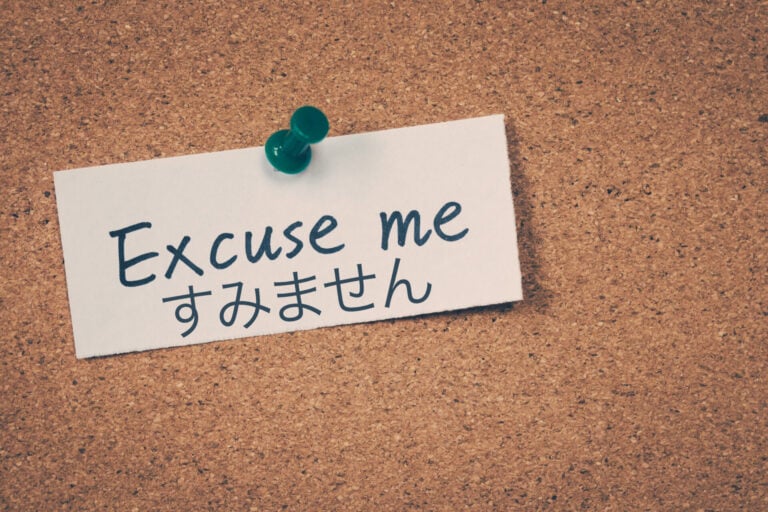
If you’re moving to Japan, you don’t need to memorize a hundred survival phrases before you land. In fact, you can get by surprisingly well with just one magic word: sumimasen. This little powerhouse of a phrase will help you apologize, grab someone’s attention, squeeze past people on a packed train, and even express gratitude—all without sounding rude.
During my five years in Nagasaki, I probably said sumimasen more times than my own name. I used it to navigate bustling streetcars, to awkwardly hand cash to a cashier when I forgot how to use the ticket machine, and even once when a deer in Nara snatched a senbei right out of my hand (old habits die hard). So, let’s break down just how ridiculously useful sumimasen is—and why it should be the first word you master when moving to Japan.
Working in Japan: How To Win Your Way in Japanese Corporate Culture
The Basics of すみません
First things first—sumimasen is usually written in hiragana as すみません. If you’re still getting used to reading Japanese, don’t worry! Let’s break it down: す (su) sounds like “Sue” from accounting, み (mi) rhymes with “me,” ま (ma) is just “ma” like in “mama,” and せん (sen) sounds like “send” without the “d.” Put it all together, and you get “Sue-me-mah-sen”!
In English, sumimasen is often translated as “sorry,” but it’s so much more than that. While it can be an apology, it also works as “excuse me,” a way to get someone’s attention, or even a soft way to express gratitude. Think of it as the Swiss Army knife of Japanese phrases! A fun way to remember it? Imagine you accidentally stepped on Sue’s foot—“Sue, me ma’ bad—send me the medical bill!”—because sumimasen often comes in handy when you need to say sorry. Luckily, Sue is a very forgiving person. Now that you’ve got the pronunciation down, let’s dive into the many ways this word will save your life in Japan.
Living in Japan: How to Politely Say No in Japanese
The Day sumimasen Changed My Life
When I first arrived in Japan, I was hopeless. I had studied a few basic phrases before moving, but the moment I stepped off the plane, my brain deleted all of them. I walked into a convenience store, pointed wildly at a rice ball, and grunted at the counter. I fumbled with train tickets, stood frozen at crosswalks, and had no idea how to ask someone to move when I needed to squeeze past them. Every social interaction felt like a tiny disaster. I was that foreigner—the one who meant well but was clunky, awkward, and constantly in the way.
Then, one night, over beers with a more seasoned expat friend, I was let in on the biggest secret of survival in Japan.
“Dude,” he said, leaning in like they were about to share classified intel. “Just say sumimasen. It works for everything.”
They weren’t exaggerating.
The very next morning, I put it to the test. I walked into a café, hesitated at the entrance, and instead of panicking, I looked at the waiter and said, “sumimasen.” Instantly, they turned to me with a welcoming nod, and I managed to get a seat without feeling like I had just disturbed the natural order of the universe. Later, on the tram in Nagasaki, I needed to squeeze past an old man who was dozing off with his newspaper. Instead of awkwardly hovering and debating whether to climb over the seat, I simply said, “sumimasen.” He shifted without even opening his eyes. It was magic.
Living in Japan: Japan’s Honorific Culture: Why do I Have to Be So Polite All the Time in Japan?
I started using sumimasen everywhere. At work, when I misheard instructions or needed to interrupt a conversation, I led with sumimasen, and suddenly I wasn’t the clueless foreigner anymore—I was just another polite coworker. At drinking parties, when I wanted to jump into a conversation, I’d say sumimasen before chiming in, and instead of talking over someone, I was seamlessly inserting myself into the flow. I even tried it with a taxi driver once, realizing halfway through the ride that I had no idea how to say “Can you drop me off here?” in Japanese.
“Uh… sumimasen,” I said, hoping he’d somehow read my mind. He glanced at me through the rearview mirror, slowed down, and asked, “Koko?” (Here?). “Hai!” Crisis averted.
It was like I had unlocked Japan’s cheat code. sumimasen wasn’t just a word—it was a social lubricant, the key to blending in. I wasn’t just surviving in Japan anymore; I was navigating it like a pro. And to think, all of this power had been sitting right under my nose the whole time.
Common Uses of sumimasen
1. Using sumimasen in a Restaurant
If you come from a country where waiters glide to your table the moment you make accidental eye contact, Japanese restaurants might throw you off at first. Here, the staff won’t automatically approach you unless you call for them. You could sit there forever, politely waiting, and nothing would happen. The trick? Shout “sumimasen!”
I know—it feels weird at first. In most Western countries, yelling for a waiter is a one-way ticket to being labeled “that rude customer.” But in Japan, it’s completely normal. In fact, it’s expected. Walk into a busy izakaya, and you’ll hear a chorus of sumimasen from every direction as people summon waiters to order more drinks.
The first time I tried it, my voice barely made it past a whisper, and naturally, no one noticed me. The second time, I put some confidence behind it—“sumimasen!”—and within seconds, a waiter appeared at my table, ready to take my order. It wasn’t rudeness; it was efficiency. From that moment on, I never hesitated to use sumimasen whenever I needed service. It’s the magic word that gets things moving, and trust me, the staff appreciates the directness.
Living in Japan:“I Miss You”: Why There’s No Exact Japanese Equivalent
2. Using sumimasen on Public Transport
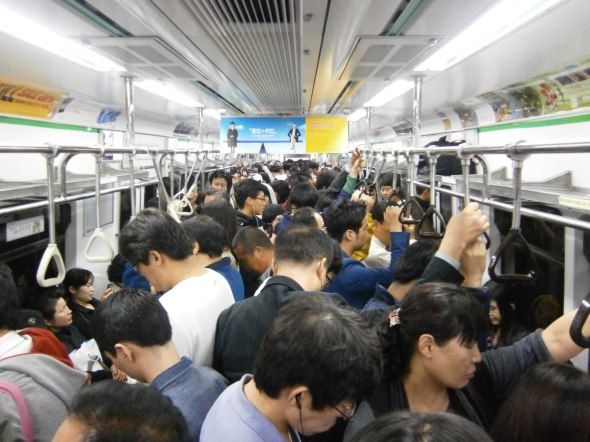
Japan’s public transport is a marvel—efficient, punctual, and usually packed tighter than a can of sardines. If you’re riding a rush-hour train in Tokyo or squeezing onto a tram in Nagasaki, you will bump into someone at some point. When that happens, don’t panic—just hit them with a quick “sumimasen” and a small bow or head dip.
The first time I found myself wedged between salarymen on a morning train on a trip to Tokyo, I felt like a human game of Tetris. At one particularly sharp turn, I lost my balance and practically fell into an old lady clutching her shopping bag. I flailed, sputtered an awkward “Ah, uh, sorry!”—and got nothing but a blank stare in return. Then I remembered my magic word. “sumimasen.” I dipped my head slightly, and like flipping a switch, she nodded back in silent understanding before returning to her newspaper.
The beauty of sumimasen in these moments is that it smooths over social friction without the need for long apologies. A single word, a slight head nod, and you’re good. Even if the person barely acknowledges it, trust me—they noticed. In a country where politeness is key, a well-placed sumimasen keeps the gears of daily life running smoothly.
3. Using sumimasen at Work
While sumimasen is incredibly versatile, it still holds its ground as a genuine apology when you need it. For example, if you’re running late to work or a meeting, a simple sumimasen is often all you need to express regret without overdoing it. In the workplace, I used sumimasen countless times—whether it was for being a few minutes late to a meeting or accidentally missing an email reply. The beauty of sumimasen in these moments is that it’s polite without being too heavy. It’s not a deep, emotional “I’m so sorry!” like we might express in English, but it’s a sincere acknowledgment of your mistake. For instance, if I was late for a class with students, I’d simply walk in and say sumimasen, followed by a quick bow, and everyone would understand. It’s short, it’s sweet, and it gets straight to the point.
Working in Japan: 5 Keigo Japanese Phrases that Will Save Your Work Day
Conclusion
You don’t need to be fluent in Japanese or be able to debate politics to live in Japan -you just need sumimasen. This little word will carry you through almost every situation, from navigating tricky social moments to getting help when you need it. The rest will fall into place as you go, and before you know it, you’ll be picking up more Japanese with every interaction. So, take a deep breath, say “sumimasen” with confidence, and know that you’ve already got the most important tool to thrive in Japan.