
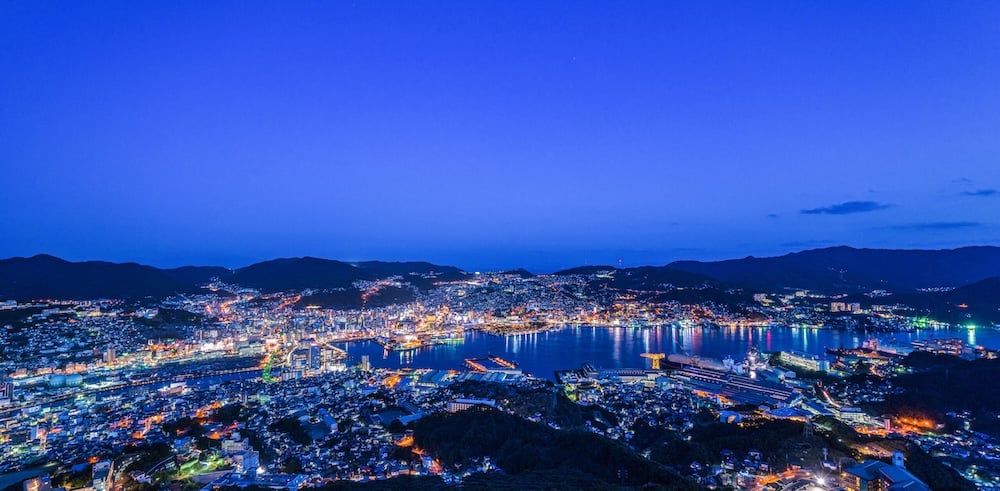
Let me tell you about the most devastating moment of my life in Japan. It wasn’t struggling with the language barrier, navigating bureaucracy, or even the culture shock of my first few months. It was standing in Nagasaki Airport at 6am on a rainy Tuesday morning, clutching my boarding pass and trying not to cry as I said goodbye to what had unexpectedly become my second home.
The heartbreaking truth about moving to Japan isn’t what you’d expect. It’s not the challenges of adapting to a new culture or the loneliness of being far from family. The real heartbreak comes later, when you realize that Japan has quietly woven itself into your soul so completely that leaving feels like tearing away a piece of yourself. It’s the kind of beautiful devastation that only comes from experiencing something so profoundly meaningful that you’re forever changed by it.
If you’re considering making the move to Japan, prepare yourself for this bittersweet reality: the hardest part isn’t arriving, it’s having to leave.
The Friends Who Become Family
When I first moved to Nagasaki, I thought I understood what friendship meant. I had my uni mates back home, my work colleagues, my childhood friends. But Japan taught me there’s a different kind of bond that forms when you’re navigating a foreign country together, sharing the unique experience of being an outsider who slowly becomes an insider.
There’s Kenji, who patiently taught me how to properly bow and never once laughed at my terrible pronunciation of “ryōri” (料理). He became the brother I never had, the one who’d text me every morning to make sure I made it to work okay during my first winter, when I was convinced the trains were speaking in code and I’d end up in Osaka instead of Nagasaki City.
Then there’s Marcus, a fellow expat from Canada who arrived 3 months after me. We bonded over our shared confusion at convenience store etiquette and our mutual obsession with finding the perfect bowl of ramen. What started as survival companionship evolved into the kind of friendship where you don’t need words. He knew when I was homesick before I did, showing up at my apartment with comfort food and terrible Netflix movies dubbed in Japanese.
And Hiroshi from my office, who took it upon himself to become my cultural mentor. Every Friday after work, he’d take me to a different local spot, patiently explaining the unspoken rules of each place. Through him, I learned that friendship in Japan isn’t about grand gestures; it’s about consistency, thoughtfulness, and the gradual building of trust that creates bonds stronger than steel.
These weren’t just work friends or acquaintances. They became my chosen family, the people who celebrated my victories and caught me when I stumbled. When I got food poisoning from that sketchy yakitori stand, Kenji brought me homemade okayu (rice porridge) and stayed until I was feeling better. When I finally mastered using chopsticks properly, Marcus insisted we commemorate it with an expensive sushi dinner. When I got promoted at work, Hiroshi organized a surprise party with half my office attending.
The devastating realization hit me about 6 months before I was scheduled to return home: I had accidentally built a life here. These people weren’t just helping me survive Japan; they had become integral to who I was becoming as a person.
The Rituals That Root You
Japan has a way of creating meaning in the smallest moments. It starts innocently enough, with your morning routine of stopping by the same convenience store for coffee, exchanging polite greetings with the staff who begin to recognize your order. Before you know it, these tiny interactions become the rhythm of your days.
I developed my own Nagasaki soundtrack: the specific chime of the trams that meant I was almost home, the sound of my neighbor’s wind chimes that marked the changing seasons, the gentle hum of the vending machine outside my apartment that somehow became a comforting white noise. These weren’t just background sounds; they became the heartbeat of my daily existence.
The seasonal celebrations became my calendar. Not just the big holidays, but the subtle transitions: the first cherry blossom buds that meant winter was ending, the tanabata decorations that appeared in July, the way the city transformed for hanami season. I found myself planning my life around these rhythms, anticipating each change with the same excitement I used to reserve for Christmas.
Even my work routine became sacred. The after-work nomikai (drinking parties) that I initially attended out of obligation became highlights of my week. These weren’t just social events; they were where real relationships formed, where my Japanese colleagues let down their professional guards and invited me into their world.

The cruel irony is that by the time you realise how deeply these rituals have embedded themselves in your life, you’re already counting down to your departure date.
The Language of Belonging
Learning Japanese was supposed to be a practical necessity. I needed to navigate daily life, communicate with colleagues, order food without pointing like a confused tourist. What I didn’t expect was how each new word, each grammatical breakthrough, would make Japan feel more like home.
The first time someone complimented my Japanese and I could tell they genuinely meant it, not just being polite, I felt a surge of pride unlike anything I’d experienced. When I could finally understand the jokes my coworkers made during lunch breaks, it wasn’t just about language comprehension; it was about belonging to something bigger than myself.
I started thinking in Japanese phrases for concepts that don’t exist in English. Ikigai (生き甲斐), that sense of purpose that gets you up in the morning. Mono no aware (物の哀れ), the bittersweet awareness of the impermanence of all things. These weren’t just vocabulary words; they became lenses through which I viewed my entire experience.
The most devastating moment came when I realized I was dreaming in Japanese. Not just random words, but full conversations, complete with the nuanced levels of politeness that had taken me months to master. My subconscious had apparently decided that Japanese was now an official language of my inner world.
When you leave Japan, you don’t just lose access to a country; you lose access to an entire way of thinking and expressing yourself. Parts of your personality that only exist in Japanese get locked away, accessible only through memory and the occasional video call with friends who are still there.
The Neighborhood That Knows Your Name
In my first month in Nagasaki, I was anonymous. Just another foreign face in a sea of millions, navigating the city with the help of Google Maps and a lot of pointing. But Japan has a way of making you feel seen, of transforming you from observer to participant in the daily theater of neighborhood life.
It started with the elderly man who ran the small grocery store near my apartment. At first, our interactions were purely transactional: bows, polite phrases, exact change. But gradually, he began setting aside the good vegetables for me, knowing I came by every Tuesday after work. When I was sick and didn’t show up for a week, he asked my neighbor if I was okay.
The woman at the local yakiniku restaurant remembered that I liked my meat well-done and always made sure to give me extra rice without my asking. The postal worker knew my schedule and would wait an extra minute if he saw me running to catch him with a package. These weren’t just services; they were acknowledgments of my place in the community fabric.
My neighbors, initially distant but polite, slowly warmed to my presence. The family next door started including me in their seasonal gift exchanges. The elderly couple downstairs would wave from their balcony when they saw me coming home. During a particularly bad typhoon, three different neighbors checked on me to make sure I had enough food and water.
I became part of the ecosystem. Local shop owners would recommend new products they thought I’d like. Children in the neighborhood would practice their English with me, and I’d help them with pronunciation in exchange for patience with my Japanese mistakes. I had accidentally become a fixture in this small corner of Japan.
When you leave, you’re not just moving away from a place; you’re extracting yourself from a community that had slowly, quietly, made space for you.
The Second Home Syndrome
The cruelest part of the Japan experience is how it sneaks up on you. One day you’re a tourist, marveling at the efficiency of the trains and the politeness of the people. The next day, you’re arguing with your friend about the best konbini chain and having strong opinions about which elevator etiquette is appropriate for different buildings.
Japan becomes home in a way that’s different from where you grew up. It’s a chosen home, a place you deliberately made space for yourself rather than simply inheriting. Every friendship was intentional, every tradition was learned rather than assumed, every comfort zone was expanded rather than taken for granted.
This makes leaving particularly brutal. You’re not just moving away; you’re abandoning a version of yourself that only exists in Japan. The confident person who can navigate Tokyo’s train system, who knows exactly how much to tip (nothing) and when to bow (often), who has favourite spots in three different neighborhoods. That person has to stay behind.
The Beautiful Ache of Missing Home
But here’s the thing about this particular heartbreak: it’s the good kind. It’s the ache that comes from having been loved deeply, from having belonged somewhere completely, from having experienced something so meaningful that it changed your fundamental understanding of what’s possible in life.
Missing Japan isn’t just nostalgia; it’s proof that you were brave enough to open yourself completely to a transformative experience. Every pang of homesickness for Nagasaki streets is evidence that you successfully built a life somewhere that initially felt impossible. Every time you miss your Japanese friends is a reminder that you formed real, lasting connections across cultural and linguistic barriers.
The most beautiful part? This feeling never really goes away, but it evolves. The acute grief softens into a warm gratitude for having experienced something so profound. You carry Japan with you, not as a burden, but as a gift. Your perspective is permanently expanded, your capacity for adaptation proven, your ability to find home anywhere confirmed.
And then there’s the knowledge that Japan is still there, waiting. Your friends are still sending you photos of the cherry blossoms, still saving spots for you at your favorite restaurant, still asking when you’re coming back to visit. You didn’t just live in Japan; you became part of its story, and it became part of yours.