Have you ever heard the word, ameonna (雨女)? If you’re as unlucky as I am in the ways I will tell you about in a second, then someone has probably mentioned it to you. In what way am I unlucky, you ask?
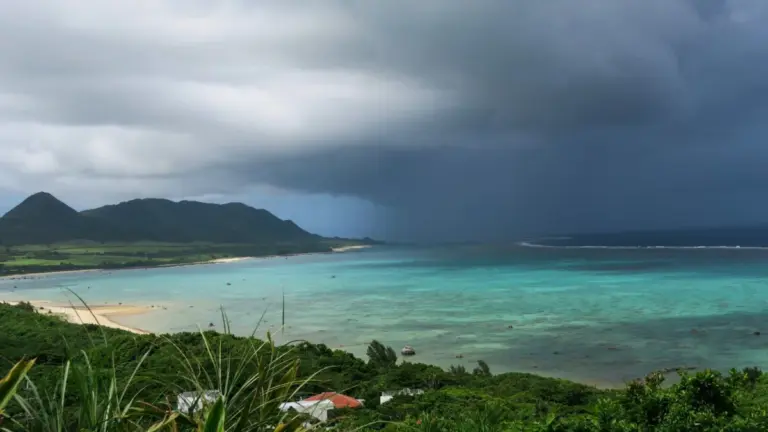
Let’s just say I’ve been to Okinawa, Japan’s island paradise—the Hawaii of Japan—three times for a total of around three weeks during completely different times of the year, and every single one of those days (save for one glorious 24 hours) has been cloudy and/or rainy. Yup. I don’t understand how I’ve managed it, and frankly I’ve now accepted my fate to never see a sunny day there again.
After returning to Nagasaki from the third of these trips and telling coworkers about the weather yet again, I got many chuckles and was bestowed the term ameonna, which refers to a woman who seems to be followed by rain wherever she goes. (There is also the term ameotoko [雨男], for any men feeling left out.)
With all that being said, would I plan another trip to Okinawa? Yes, in a heartbeat! So, if you’re planning on visiting this area of Japan, particularly Naha, but find yourself with similarly unlucky weather, fret not! I’ve learned to appreciate and enjoy my time in Okinawa regardless of if there’s blistering sun or overcast skies above.
Scuba Diving

The good thing about Okinawa’s underwater landscapes is that their beauty holds up even in cloudy weather. Of course, this won’t be available if a hurricane or thunderstorm is coming, but if it’s simply overcast (sometimes even lightly raining is okay), you’ll have no problem booking a dive or two. Even if you’ve never gone diving before, most tour companies offer “Discovery Dives”, where you are assigned a qualified instructor who will guide you through your dives.
Most single dives will cost you around ¥10,000, however if you bundle multiple dives, the average price of each will decrease.
Living in Japan: Hidden Depths: Why Japan is a Top Destination for Scuba Diving
Taiken
Okinawa is home to many local forms of art. One of the most emblematic figures you will see all over the islands is that of the shisa (シーサー). In traditional Ryukyu culture, shisa are seen as a kind of protector from evil and bad spirits, in the form of a dog-gargoyle-looking creature. As such, they are placed on and around houses, and especially at the entrances of homes. Designs for these creatures vary all the way from stoic or almost frightening, to cute and cartoon-like. Although they share physical similarities to Komainu or variations in other Asian countries, shisa are decidedly Okinawan, and openly celebrated wherever possible.
Now, Taiken (体験), which literally means “experience”, is a popular form of workshop that you can find all across Japan, in which you pay to be guided through the making of an art form or traditional arts and crafts. Painting shisa is a popular variation of this in Okinawa, and you can find many shops that allow you to do so. Many will even let you form your own out of clay, then paint. A simple Google search of Okinawa Shisa Tsukuri Taiken (沖縄シーサー作り体験) should return many options.
Here is where I went:
- 手作り体験工房 てぃあんだー (Tedzukuri Taiken Koubou Teiantaa)
Address: 103 1 Chome-9-8 Matsuo, Naha, Okinawa 900-0014, Japan
Keep in mind that these workshops might be busy with every other tourist in Okinawa trying to fill a rainy day!
Living in Japan: Japanese Islands to Visit Off the Beaten Track
Eating (and Drinking) Local Specialties
This option was probably on your list to do anyway, but there’s even more opportunity when you’re limited by the rain! Some of my favorite Okinawan dishes to have when I go back include:
Jīmāmi Dōfū (ジーマーミ豆腐)
Although tofu might be in the name, did you know that this dish isn’t made from soybeans? This tofu is actually made from peanuts, giving it a nuttier, richer flavor that is complemented by a savory-sweet sauce that comes with it. Even many native Japanese have never heard of this dish, so it’s a fun one to introduce to coworkers and friends when you return to your home city.
Champurū (チャンプルー)
Literally meaning “something mixed” in Okinawa, this is Okinawan stir fry. The most traditional of these uses Gōya (ゴーヤ, bitter melon) as the main ingredient. Although there are many varieties, I think this one is the most Okinawan. However, when gōya is included, this dish can be a bit polarizing, given the bitterness of the vegetable. Either way, it’s a must-try if you’ve never had it.
Taco Rice (タコライス)
Did you double-check that you were on Jobs in Japan and not Mexico? Well, you read right. Due to a strong American military presence on the island for decades, some staples of American cuisine have migrated over and taken on a more Japanese flavor. Imagine the ground meat from a crunchy American taco (read: not traditional Mexican tacos) served over Japanese rice with some lettuce, tomatoes and cheese, and you get Taco Rice. While not the best Okinawa has to offer, in my opinion, it’s not a bad option if you’re craving something Tex-Mex-adjacent.
Okinawa Soba (沖縄そば)
Another must-try is Okinawa soba. These noodles are made with wheat flour rather than the usual buckwheat, then served in a dashi broth with slices of pork, green onions, fish cakes and red ginger, or benishōga (紅ショウガ). You can find this anywhere in Okinawa, and often for quite cheap!
Orion Beer (オリオンビール)
Japan is a great place for beer lovers, and something about Okinawa just takes the experience to another level. The heat and humidity most times of the year makes it an excellent atmosphere for cracking open a cold can of one of the most iconic Japanese beers.
There is no shortage of tasty treats to be had on this island. If you’re wondering why I didn’t mention any seafood, it’s because, well, obviously that should be on your list—it’s an island within a nation of islands.
Visit the Churaumi Aquarium

Personally, I don’t normally like going to aquariums (or zoos) because, like many, I’m not a fan of seeing animals in tanks or cages. But if you find yourself struggling to find something to do in the rain, it might be worth considering. If you are traveling from Naha, I recommend renting a car because you’re basically going from the southern end of the island to the very north.
Gyokusendo Cave (Limestone Cave)
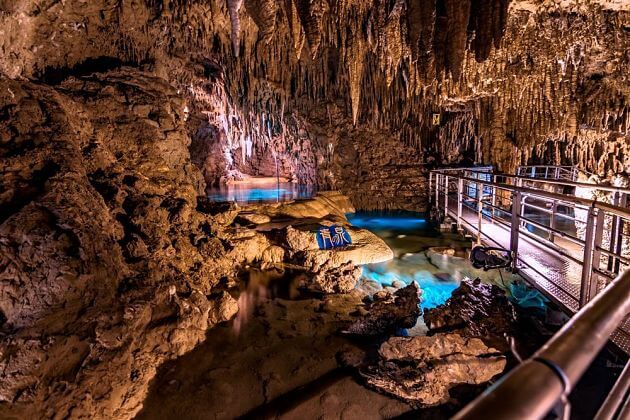
Located within Okinawa World and known as one of the most beautiful limestone caves in East Asia, this five-kilometer-long underground labyrinth is an incredibly popular attraction. But don’t worry, a path has been marked to lead you throughout the cave! Although the interior has been outfitted with some atmospheric lighting, something about it still feels prehistoric and larger-than-life.
Visit the Okinawa Prefectural Museum
Ah yes, a classic of the rainy day itinerary. It had to come at some point—a museum! This one really is worth your while, though, as the permanent exhibit stretches all the way from the prehistoric Jōmon period to the modern day. This is a great option for the beginning of your trip, since many of the names and terms you read about here will likely come up here and there as you explore the rest of the island. The last few sections which talk about World War II in Okinawa are sobering, but important to learn about and worth sticking it out until the end for.
There is also a special exhibit which changes every once in a while, so if you’ve already been here on a previous trip (or just want more of the museum to explore), then this can be a good option. If it’s your first time, however, I think the permanent exhibit is more than enough, unless you’re a big museum buff.
Stroll Along Kokusaidōri

Once you’ve explored as much of the island as you can, head to the main shopping street in Naha, Kokusaidōri (国際通り). In this covered shopping arcade, you’ll find clothes, souvenirs and plenty of omiyage (お土産) to take back to your coworkers or friends. There are plenty of izakaya (居酒屋) and restaurant options here for when you get hungry, too.
Living in Japan: Venture Beyond Fuji: Japanese Volcanoes to Visit
Although I’ve had my fair share of rainy days in Okinawa, I’ve realized that there are other ways to enjoy and explore both the main island and the smaller ones. You just have to look a little harder. Remember that, in many ways, experiencing this part of Japan in the rain is a much more authentic look at life here. Of course, there are plenty of sunny days in Okinawa, however, that is what every tourist comes looking for, and because of this, can miss many of the wonderfully unique sides to this archipelago within Japan. Just remember, there’s always the next trip for some sun!