
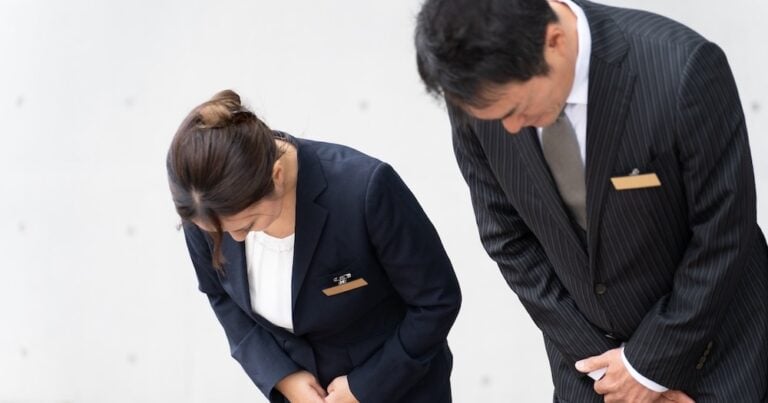
“Do I need to bow? How formal is everyday life in Japan?” These questions inevitably cross the mind of anyone planning to move to this fascinating country. Many newcomers worry about committing social blunders or failing to show proper respect due to unfamiliarity with Japanese customs.
While Japan does indeed have a rich tapestry of etiquette woven throughout daily life, what awaits isn’t an intimidating world of rigid rules, but rather a beautiful culture of mindfulness that can profoundly enrich life and relationships.
The Art of the Bow: More Intuitive Than You Think
The bow (お辞儀, ojigi) is perhaps Japan’s most iconic form of etiquette, but it’s far more nuanced and natural than outsiders might imagine. Many newcomers initially focus on precise angles and timing, following rigid instructions found online. However, bowing in Japan isn’t about performing the perfect angle—it’s about expressing sincere respect and gratitude.
Once this fundamental understanding takes hold, bowing begins to feel less like a foreign custom and more like a natural extension of human connection.
The Three Basic Bows
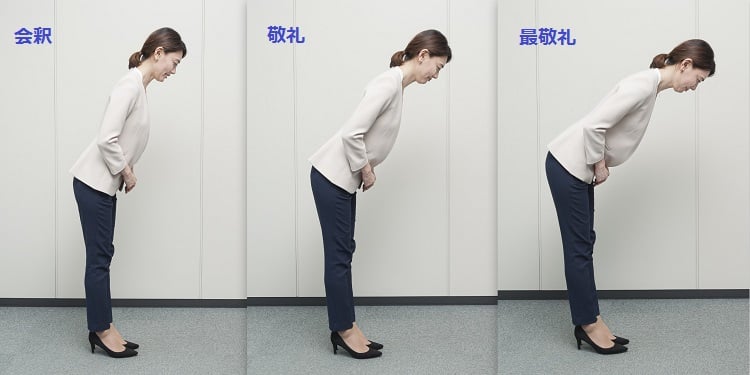
While there are many variations, three main types of bows will cover most situations:
1. The Casual Nod (会釈): A slight incline of about 15 degrees, similar to a nod but with more intention. This is perfect for brief encounters, greeting shop staff, or passing acquaintances in hallways. This becomes second nature quite quickly.
2. The Standard Bow (普通礼): A deeper bow of approximately 30 degrees used in business meetings, when greeting elders, or thanking someone for their help. This is the most common formal bow used in everyday situations.
3. The Respectful Bow (敬礼): A profound bow of about 45 degrees reserved for formal apologies, expressing deep gratitude, or showing reverence in traditional settings like temples or ceremonial occasions.
What surprises many foreigners is how quickly bowing becomes intuitive. Within a few months, many find themselves automatically bowing during phone calls—an amusing habit that often carries over even when traveling abroad.
The Beautiful Psychology Behind Bowing
What makes the bow so special isn’t the physical movement but what it represents. In Western culture, people are taught to stand tall and make direct eye contact as signs of confidence. The Japanese bow offers a different perspective—one of humility, mutual respect, and acknowledging the other person’s importance.
This simple act creates a moment of mindfulness in each interaction. When you bow, you pause, focus attention on the other person, and create a brief but meaningful connection. These small moments of presence punctuate the day in a uniquely enriching way.
Beyond Bowing: Everyday Formality as Mindful Living
Japanese formality extends far beyond bowing, encompassing a rich vocabulary of polite expressions, gift-giving customs, and situational awareness. While this might sound overwhelming, the underlying principles are beautifully simple: consideration for others, attention to detail, and appreciation for harmony.
The Gift of Keigo: Japan’s Polite Language
Japanese language features various levels of politeness, known collectively as keigo (敬語). While mastering all the nuances takes time, even basic politeness goes a long way.
Starting with just a few phrases—”arigatou gozaimasu” (thank you), “sumimasen” (excuse me/I’m sorry), and “onegaishimasu” (please)—visitors are typically met with genuine appreciation for their efforts, not criticism of mistakes.
What makes keigo special is that it’s less about rigid language rules and more about creating psychological comfort for others. Using the appropriate level of formality signals respect and creates an atmosphere where everyone feels valued.
The Rhythm of Everyday Formality
Daily life in Japan has a gentle rhythm of formal and informal moments:
- The cheerful “irasshaimase!” (いらっしゃいませ) that greets you when entering shops
- The careful way items are wrapped and handed with two hands at stores
- Morning greetings exchanged with neighbors
- The small bow of thanks to bus drivers when alighting
These moments of connection and acknowledgment create a social fabric that feels supportive and warm, despite (or perhaps because of) its formality.
When Formality Relaxes: The Balance of Tatemae and Honne
One of Japan’s most misunderstood concepts is the balance between tatemae (建前)—the formal, public behavior—and honne (本音)—one’s true feelings and informal self. Many Westerners mistakenly view this as “fake versus real,” but the reality suggests something far more nuanced and meaningful.
The Nomikai: Where Formality Melts Away
Company nomikai (飲み会)—after-work drinking parties—often provide revelations for newcomers. Colleagues who maintain unfailing formality during office hours suddenly transform: ties loosen, laughter flows freely, and even department heads tell self-deprecating jokes.
“This is where real relationships are built,” is a common explanation. “The office is for work, but nomikai is for bonding.”
Formality in Japan isn’t a wall that separates people—it’s a framework that creates safe spaces for different types of interactions. The contrast between formal and informal settings actually enriches relationships by allowing for multiple dimensions of connection.
Home Visits: The Transition from Guest to Friend
When first invited to a Japanese home, the formality can feel pronounced—removing shoes, presenting gifts, using polite language. However, there’s a beautiful pattern in home visits: the initial formality gradually softens as evenings progress.
By the time meals finish and tea is served, conversation flows more naturally, polite language relaxes, and genuine connections form. The initial formality doesn’t prevent intimacy; rather, it creates a pathway that leads to it.
Navigating Formality as a Foreigner: The Grace Period
Perhaps the most reassuring discovery for newcomers to Japan is the considerable leeway given to foreigners (外国人) when it comes to etiquette. Most Japanese people understand that their cultural norms aren’t intuitive to outsiders and appreciate sincere efforts more than perfect execution.
The Power of Trying
The key is demonstrating sincere effort and willingness to learn. A slightly awkward bow with a genuine smile will be received far better than technically perfect etiquette performed with indifference. The generosity of spirit shown toward foreigners making genuine attempts to engage with the culture is remarkable.
Areas Where Attention Matters Most
While forgiveness exists for many cultural missteps, certain areas of Japanese etiquette deserve particular attention:
1. Shoe etiquette: The rules around where shoes can and cannot be worn are taken seriously. Always observe what locals do, and when in doubt, ask.
2. Table manners: Basic chopstick etiquette (don’t stab food, don’t pass food chopstick-to-chopstick) and saying “itadakimasu” (いただきます) before eating show respect for food and those who prepared it.
3. Gift-giving customs: Bringing small gifts when visiting someone’s home for the first time and presenting them with both hands demonstrates thoughtfulness.
4. Respecting public space: Keeping voices down in public transportation, not eating while walking, and being mindful of others in shared spaces reflects core Japanese values.
How Formality Enhances Rather Than Restricts
The most beautiful revelation about Japanese formality is how it ultimately enhances freedom rather than restricting it. By creating clear frameworks for interaction, Japanese etiquette actually reduces social anxiety and creates more comfortable environments for everyone.
The Freedom of Knowing the Rules
While social gatherings in many cultures come with unspoken expectations and ambiguous social cues, the more structured nature of Japanese social interactions provides clarity that can be surprisingly liberating.
When you know how to properly greet someone, how to show appreciation, or how to politely decline an invitation, you can focus on the substance of interactions rather than worrying about the form. Paradoxically, formality creates the conditions for more authentic connection.
The Mindfulness of Everyday Life
Perhaps the greatest gift of Japanese formality is how it infuses everyday life with mindfulness. Each bow, each expression of thanks, each careful consideration becomes a small moment of presence in an otherwise busy day.
These thoughtful pauses—the brief bow before a transaction, the careful attention to how objects are handed over, the mindful greetings—become not obligations but enrichments to daily experience.
Understanding the Philosophy Behind Japanese Formality
Japanese formality isn’t arbitrary; it’s rooted in philosophical principles that prioritize harmony (和, wa), respect, and collective well-being. These customs developed over centuries as ways to minimize conflict and maximize social cooperation.
Every formal interaction in Japan is built on the principle of showing respect to others. This respect isn’t conditional on social status or personal relationships—it’s extended universally as a fundamental aspect of human dignity.
The structured nature of Japanese social interactions serves to prevent misunderstandings and conflicts before they arise. When everyone understands the expected behaviors, social friction is minimized, and harmony is preserved.
Japanese formality reflects a broader cultural appreciation for craftsmanship and attention to detail. Just as artisans perfect their crafts, social interactions are refined to create the most positive experiences possible.
Practical Tips for Embracing Japanese Formality
Begin with basic phrases and simple bows. Master these fundamentals before worrying about more complex etiquette situations. Watch how Japanese people interact in various settings and gradually incorporate what you observe into your own behavior.
Most Japanese people are happy to explain customs when asked politely. Showing interest in learning proper etiquette is itself a form of respect. Cultural adaptation takes time. Be patient with yourself as you learn, and remember that effort is more important than perfection.
Rather than viewing formality as a burden, try to appreciate how it creates moments of mindfulness and connection throughout the day.
The Deeper Meaning of Japanese Formality
What makes Japanese formality truly special isn’t the specific rules or behaviors—it’s the underlying philosophy of treating every interaction as important and worthy of care. This approach to social interaction creates a culture where people feel valued, respected, and connected to their community.
For newcomers to Japan, learning to appreciate this formality isn’t just about fitting in—it’s about gaining access to a different way of experiencing human connection. The careful attention to others, the mindful approach to communication, and the structured pathways to intimacy offer valuable insights into building meaningful relationships.
Embracing the Beauty of Mindful Interaction
Japanese formality represents a beautiful approach to human connection that many find profoundly enriching. The attention to others, the care in interactions, and the thoughtful acknowledgment of relationships create a social environment that many describe as uniquely supportive and harmonious.
For those preparing to experience Japan, the formality encountered isn’t about rigid rules designed to create barriers. It’s a rich tradition of mindful interaction that creates respect, harmony, and meaningful connection.
Rather than asking “Do I need to bow?” perhaps the better question is: “How might I learn to appreciate the beauty of this mindful approach to human connection?” Because beyond the specific customs lies something truly special—a culture that has elevated everyday interactions into art forms worthy of attention and care.
In our increasingly disconnected modern world, this wisdom about the importance of mindful, respectful interaction might be exactly what we need most.