
When you live in Japan, aside from regular income taxes, there are several other mandatory payments that need to be made throughout the year, such as health insurance and pension payments. While certainly not a new system, these social insurance payments have been in the news over the last few years, specifically in regards to some foreign residents not paying them. In response to this problem, the government has announced that missed payments of these fees or failure to enroll will now mean that it may not be possible to renew your visa.
Possibly the most misunderstood of these payments is the Japanese pension system. Unlike health insurance, the pension system does not provide an immediate benefit and as such, people sometimes overlook its importance. In most cases, as long as you’re employed full-time, your employer will take care of pension payments for you. There are however certain exceptions and times where you may need to enroll and pay it by yourself. In this article, we will examine the Japanese pension system, your obligations as a foreigner and things to be careful of to ensure that you never miss a payment.
The Japanese Pension Explained
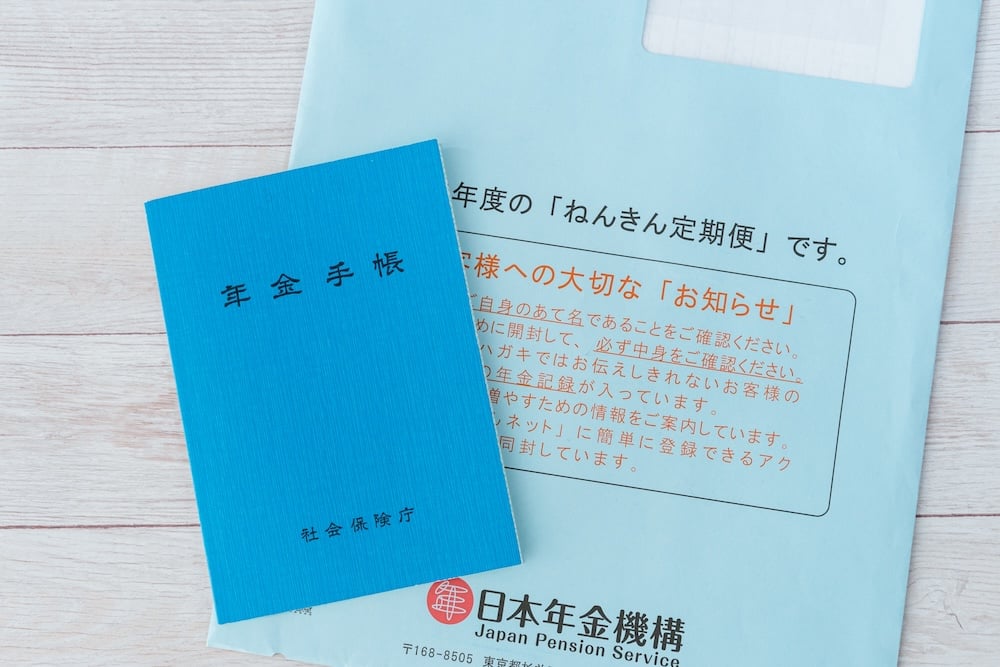
The pension system is a fund that provides financial support to people past working age or people with disabilities. It is a generational support system ensuring that the younger generation is helping to provide support for the older population who may not be able to work anymore. It is a compulsory system that all residents of Japan aged between 20 and 59 years old need to be enrolled in and pay every month. On reaching retirement age at 65, a person can claim the pension which entitles them to a monthly payment.
There are two types of pension plans, though they essentially serve the same function. The first is the kokumin nenkin which is the national pension plan run by the Japanese government. This plan is one you enroll in directly if you are not covered by an employer’s pension plan. This plan is paid to the government at a fixed monthly rate.
The second is the kosei nenkin which is a pension plan provided by a company, usually to a full-time employee. The kosei nenkin is deducted directly from your salary with your employer also paying contributions.
All residents of Japan, regardless of nationality, need to be enrolled in either one of these pension plans. If you are covered under a kosei nenkin, you do not need to enroll in the kokumin nenkin.
Eligibility as a Foreigner
Being enrolled in a pension plan is mandatory for all residents of Japan, regardless of nationality. Even foreigners who only intend to live in Japan for a short time, such as working holiday visa holders, are required to enroll and make the monthly payments. One of the only exceptions are those on a Digital Nomad Visa as this is a short-term visa with no extensions possible.
If you leave Japan permanently, you are entitled to claim some of your pension back in the form of a partial lump sum payment based on the amount of contributions you have made up to a maximum of five years. While it is not a full refund of the amount you may have paid, it is quite generous in comparison to many other countries.
So, if you reach retirement age (65 years old) in Japan, are you eligible to claim the pension as a foreigner? In short, yes, however it can also be a little complicated. First of all, to be eligible to claim any part of the pension, you need to have been making pension payments for a minimum of ten years. There are some countries, including the US, Australia, Canada and the UK, that have agreements with Japan that allow residents to count years in their own country towards this ten-year requirement.
How much you actually receive depends heavily on how long you have contributed to the pension system for. The pension is a fixed payment amount that changes every year in line with average inflation. To receive the full amount of the pension, you need to have been contributing payments for at least 40 years and unfortunately, years in your own country cannot be counted for this purpose. Even if you haven’t paid into the system for 40 years, you are still eligible to receive a percentage of the pension depending on your years of contributions as long as you meet the minimum requirements.
The actual amount of the national pension plan changes every year in line with inflation. It is not the equivalent to a full-time wage and so will not replace a working income. Kosei nenkin plans on the other hand tend to grant much higher payments depending heavily on your work history and previous income. These are things to keep in mind if you plan on retiring in Japan.

Pension Payments and Your Visa
In recent years, the government has started becoming stricter about pension enrolment. With an aging population and a shrinking younger generation, the system is important for supporting those going into retirement. There have been instances of foreign residents opting not to enroll in the system for various reasons despite it being legally mandated.
To combat this, the government has announced that non-payment will now affect visa applications and renewals and that applicants with a record of non-payment of pension or health insurance will no longer be eligible to renew or change visas. While screening of these payments has already been in effect for permanent residency applications for some time, it will now apply to all residential visas. This new screening will take effect as of 2027.
If you’re a full-time employee, in most cases your company will be taking care of the pension payments for you, however there are some exceptions to be aware of. Small companies with less than 5 employees are not legally required to enroll employees in a kosei nenkin pension plan so in these cases, employees are often responsible for enrolling themselves in the national pension system. If in doubt, make sure you check with your employer. If you have a period of unemployment or are otherwise not covered by kosei nenkin (part-time worker, student etc) you need to ensure that you are enrolled in the national pension plan.
Investing in the Future
With the new rules around pension payments being introduced, it is more important than ever as a foreign resident to ensure that you are enrolled in a pension plan. If you’re a full-time employee, chances are that you’ve been automatically enrolled. If you’re considering changing jobs, working part-time or freelancing, it’s definitely a good thing to check. Making the monthly national pension payments on your own but if you think of it as investing in your future in Japan, you can’t go wrong.