
There is no doubt that Japanese cuisine is one of the best in the world. Millions of people visit this island nation every year to try world-renowned dishes like ramen, sashimi, yakitori, and sukiyaki, just to name a few. It is so easy to walk down almost any street in Japan and find a restaurant selling food.
In a small town, this might just mean a local obasan (おばさん) serving up some good old shōgayaki (生姜焼き) in her dining room, whereas in Tokyo you could find plenty of Michelin-starred eateries if you wanted.
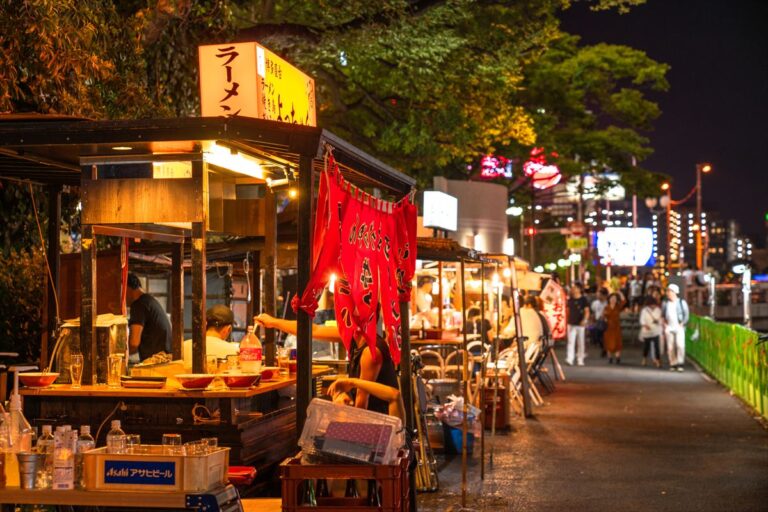
However, if you’re looking for a more unique spot to cure your hunger pangs, then head to the yatai (屋台) stands in southern Kyushu’s Fukuoka City. As one of the few remaining places you’ll find this style of freestanding food stall in Japan, it’s well worth a visit to this metropolis down south.
Living in Japan: A Love Letter to Fukuoka
Humble Origins
Yatai are small, mobile food stalls found in Japan. They are wheeled to their place of business and set up, then taken back down in the wee hours of the morning and parked elsewhere while not in use.
This type of food stall goes back centuries in Japan, but the yatai found nowadays were made popular during the Meiji era (1868 – 1912), and experienced a resurgence after WWII around 1945 as a way to feed a population that was enduring the effects of extreme economic downturn and food shortages. Back in the day, you could find yatai all over the country, as the freedom afforded by these structures meant it was easy to set up on the roadside or wherever convenient. By 1965, there were over 400 different yatai stalls in the Hakata area of Fukuoka City alone.
Over time, this number has dwindled considerably. Yatai are difficult to find in most of the country, and in fact the only place where you can get anything close to what it was like in the mid-1900s is Fukuoka. While you’ll find the occasional location dotted around the city, the biggest concentration is located on the southern end of Nakasu Island along the river.
Living in Japan: Japanese Summer Foods to Beat the Heat
Opening Times and Peak Hours
Yatai have become a popular destination for a variety of Fukuoka residents and tourists alike, particularly on weekends. They have shifted from being a budget option, to more of a trendy, atmospheric and convenient source for a late-night bite to eat. As such, many stalls begin opening between 6:30-7:00pm. In other words, this is not a brunch spot. Yatai stay open fairly late, but if you’re the type to stay out partying until early morning, don’t expect to make it. Most stalls will begin to shut down around midnight, so if you plan to be out late, grab some food before your evening begins.
Living in Japan: How Ichijū Sansai Keeps Japan Happy and Healthy
As you can probably expect considering their popularity, it’s not uncommon to wait for a seat. I highly recommend going with only one or two other people, as most places only have enough seating for a maximum of 8-10 people, and accommodating a big group is nearly impossible and puts a strain on the business. Additionally, consider planning your visit for soon after they open, or after the 8pm-10pm rush hour when yatai fill up with hungry salarymen and tourists.
The Social Charm of Yatai
One of the beautiful things about yatai is the social boundaries it allows you to break. Japanese society is well-known for being quite private. It’s rare to have a conversation with locals you meet on the street, the train, or even in bars. At a yatai, however, the space is so limited that seats are crammed close together and it’s not uncommon to share a few exchanges with people sitting close to you. Many patrons will even engage the owner behind the counter in conversation as well, so don’t be shy! If that sounds intimidating to you, you can always stick to asking about the menu and ordering in Japanese. Here are a few things you can try saying:
| English | Romaji | Kanji |
|---|---|---|
| What do you recommend? | Osusume wa nan desu ka | おすすめは何ですか。 |
| I like [dish]. | [dish] ga suki desu. | ○○が好きです。 |
| I don’t like [dish]. | [dish] wa nigate desu. | ○○は苦手です。 |
| One order of [dish], please. | [Dish] o hitotsu onegai shimasu. | ○○ を一つお願いします。 |
| It was delicious! | Oishikatta desu. | 美味しかったです。 |
A Tumultuous History of Yatai
For as popular as yatai are nowadays, they have certainly paid their dues. After their resurgence following the second world war, there came a period in the 1960s when the government began cracking down on them. The 1964 summer Olympics in Tokyo meant that they wanted to rebrand Japan as modern and clean–something that yatai were not considered. However, the yatai in Fukuoka had formed a trade association in 1950, and so were able to survive largely unscathed.
Vendors could breathe easy until 1995, when the government signed a new law into effect, which stated that ownership of yatai could only be inherited. In other words, if they decided to sell the business, a yatai owner could only do so with a spouse or children. This meant that, for a long time, the future of yatai seemed all but doomed to extinction.
Luckily, the mayor of Fukuoka eventually saw the value in preserving these venues. In the 2010s, he helped put into effect new laws that would help yatai in Fukuoka survive. Then, in 2016, the first new yatai licenses in decades were awarded, a day that most business owners probably never thought they would live to see again. The stalls in Nakasu, Tenjin and elsewhere throughout the city have since continued to flourish, drawing thousands of visitors every night.
Living in Japan: What is Omakase Dining?
What to Eat
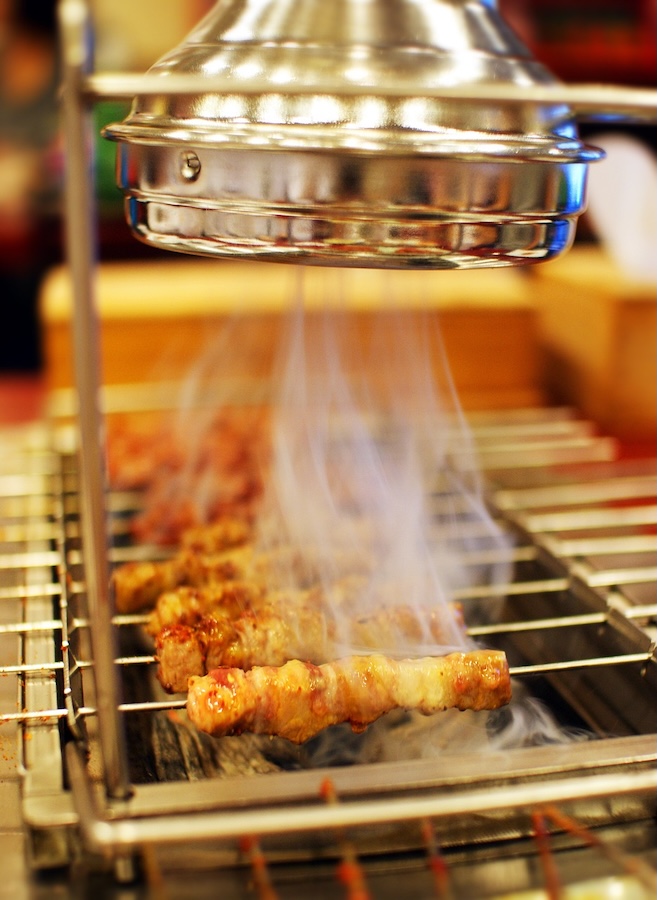
By this point, you know the history, when to go, and what to say. But what kinds of tasty treats do yatai actually serve, you ask? The variety is, in fact, fairly limited. You also won’t find any raw food, as this was prohibited long ago by the government. So no sushi, unfortunately! They will, however, almost always serve one of a few of the following: tonkotsu ramen (豚骨ラーメン – pork bone ramen), yakitori (焼き鳥 – grilled chicken skewers) or oden (おでん – hot pot). Drinks also flow freely, so consider ordering yourself a beer to participate like a local.
Just keep in mind that while the food is good, yatai are all about ambiance, and this really is where they shine. If you’re going for taste alone you can certainly find better elsewhere in Fukuoka. Even if this is the case, I highly recommend dedicating at least one evening to experiencing this unique form of dining in Japan.
Living in Japan: First Timer’s Guide to Eating at an Izakaya
As time has gone on, convenience and fast-paced dining often overshadow tradition in many parts of the world; Japan is no exception. Yatai serve as a beautiful reminder of the country’s rich culinary and cultural heritage. These charming food stalls offer not just a meal, but an experience—a chance to savor local flavors, connect with friendly chefs and fellow diners, and step into a piece of history that’s difficult if not impossible to find elsewhere in the country.
Whether you’re indulging in a steaming bowl of tonkotsu ramen, enjoying the sizzle of yakitori on the grill, or simply soaking in the lively atmosphere, visiting a yatai is an unforgettable adventure. For foreigners living in Japan, it’s an opportunity to embrace the warmth and hospitality that makes Japanese culture so unique.
So next time you’re in Fukuoka, skip the fancy restaurants and head to the riverside stalls—you’ll leave with a full stomach, a happy heart, and a story worth sharing.
Living in Japan: Ramen Making in Tokyo: A Hands-On Cultural Experience